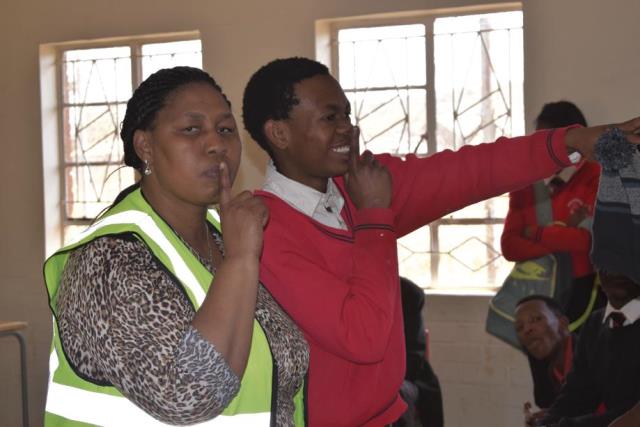
A group of primary school drug addicts captured the attention of the deputy minister of social development during drug dialogues with learners in Potchefstroom in June.
Prompted by this discovery and the high prevalence of young users in the NW405 municipality, Hendrietta Bogopane-Zulu revisited the schools recently. Her mission was to equip learners with skills and information to become change agents in their families. The dialogues have also led to more interactive visits and interventions within the municipality and the social development department plans to open a drug treatment centre in Witrand Hospital next month.
‘We want you to know what to do when a family member is a drug addict and what steps to take to access the rehabilitation. Our work is to guide you, make services available to you and create an environment where you can prosper,’ she said.
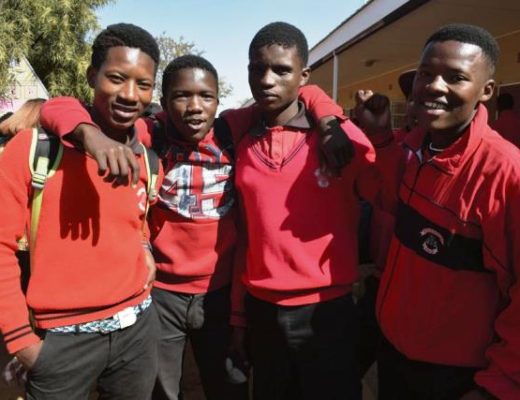
When she addressed the Gr. 9 learners of Resolofetse Secondary School, she urged them to take their education seriously and steer clear of drugs and teenage pregnancy. ‘When you have emptied your life with drugs and teenage pregnancy, you would have signed a contract with poverty. From today, I expect you to succeed; you hold the key to your own success,’ she advised.
A male learner in the school, Mogomotsi Sapie told the minister that ninety per cent of boys in the school use drugs. He was met with scorn from his peers but the deputy minister rebuked them and said this was the boy’s reality because he sees this every day.
Each drug addict costs the government R30 000 in treatment
The chief director of social development, Sizane Magangoe described the initiative as a prevention and awareness campaign. He encouraged all schools to appoint peer educators.
‘Those who already use drugs can still be treated at treatment centres. Each drug addict costs the government R30 000 in treatment. We will screen you to check how badly the substances have affected you and treat you at the centre thereafter,’ she said. ‘When you come out, we encourage you to form support groups.’
After the contact session, most learners reached out to the staff of the department, begging for assistance in leaving drugs. The 17-year-old Johannes Ngaloshe seized what he called ‘a wonderful opportunity’ to free himself from drugs. The teen, who stays with his grandparents, says he has been using drugs like crystal meth, mandrax and dagga for eight years. ‘I want help,’ he pleaded.
‘I stopped using drugs after my best friend collapsed and died in front of me’
The deputy-minister later engaged with the youth at Sarafina Hall.
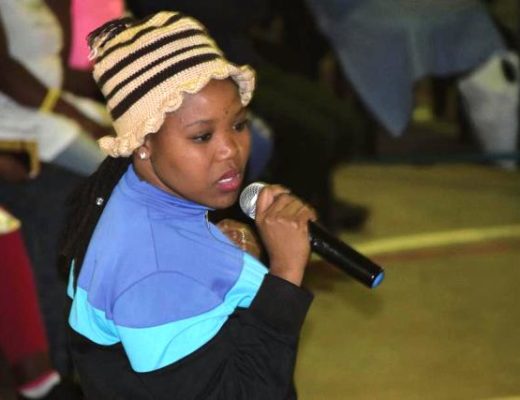
There, a former drug-addict, 27-year-old Mapaseka Mosami shared her testimony of how she left the world of drug abuse. ‘I stopped using drugs after my best friend collapsed and died in front of me after smoking it up. I was heartbroken and decided, that day, that this was not the life for me. Mapaseka used to smoke crystal meth and Cat but, through the support of her current boyfriend, Jabulani, she says she is able to also live a drug-free life.
She admits that she still suffers from the after-effects of drug abuse. ‘Right now, I suffer from low blood pressure and my heart rate is weak but I’m also thankful that, throughout the years of drug abuse, I was able to remain HIV-negative. I was in disbelief when I was tested. God gave me a second chance,’ she said.
Her message to the youth was: ‘It starts with you. You can go to rehab but the determination to stop using drugs depends on your willpower,’ she said.
The department encourages drug addicts or anyone seeking assistance with drug abuse to contact the DSD command centre on 080 042 8428 or send a please call me to *120*7867#
At Caxton, every story is written by humans. We use AI only to perform quality checks - never to generate the news. Happy reading!