
Raymond Parsons on swimming naked and how to fix South Africa’s future
Prof. Raymond Parsons an economist and professor at the NWU School of Business, is talking about his new book and how informed, eyes-open optimism helps to move things forward in the South African economy.
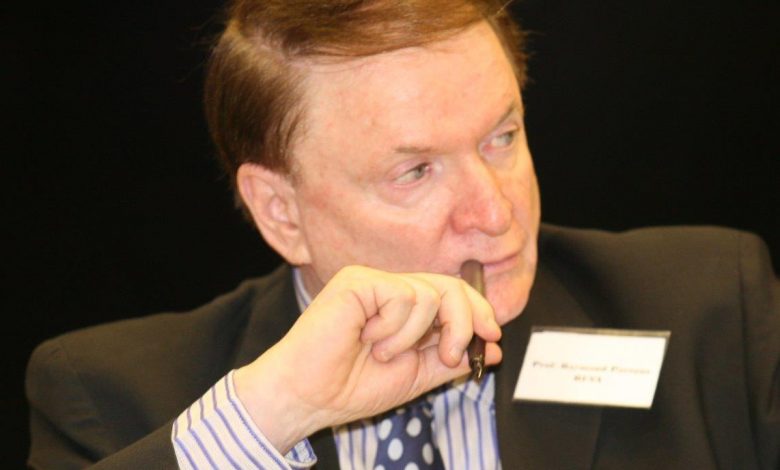
Raymond Parsons, a professor at the NWU School of Business, is humorously referring to a quote by the famous financier Warren Buffet when he is comparing the lockdown in South Africa to an economic tide that went out: “it is only when the tide goes out that you see who’s been swimming naked.”
Parsons believes that the South African economy was already in deep trouble even before Covid-19 arrived. “With the pandemic and subsequent lockdown, South Africa was highly vulnerable because in recent years it had drifted too far away from the basic policy moorings of efficiency, stability, and consistency.
“Instead, its economic performance had been steadily eroded by factors such as business-unfriendly policies, lack of delivery, a public debt crisis, weak governance, policy uncertainty, and widespread corruption.
“We now urgently need pro-growth economic reforms to turn the economy around on a sustainable basis. In essence, South Africa needs to discover its economic and moral compass for its future direction”, he says.
According to Parsons, the only way South Africa can avert an irreversible economic decline is when the country now shapes the ‘new normal’ that will emerge after Covid-19, rather than just have it imposed on it. “In that way, we can create confidence and hope about SA’s future.”
In a new book, Recession, Recovery, and Reform: South Africa after Covid-19, Parsons edited and selected 13 essays by various leading thought-leaders and public intellectuals – ranging from Thuli Madonsela to Wandile Sihlobo – dealing with key aspects of SA’s economy and society. According to him, there are no particular essays to single out, as each one contributes to the important bigger picture of how to fix South Africa’s future.
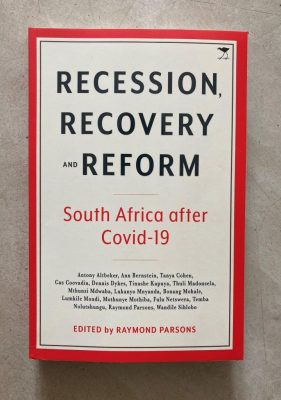
“They all help to put the socioeconomic jigsaw puzzle together. What unites the various contributions in the book is greater than what divides them, as they are agreed in wanting to see a bigger, stronger, and better economy. They in general all want solutions implemented around making inclusive growth, economic transformation, and competitiveness the key pillars of the SA economy on which to build a better life for all”, says he.
With this book, Parsons originally wanted to build on his previous book Good Capitalism, Bad Capitalism: The Role of Business in South Africa (2018). According to him, the socioeconomic status in South Africa since then had seriously deteriorated further even before Covid-19 hit the country. “It was important now to bring a collective set of views to bear on the South African situation and outlook and to draw on a cross-section of expertise to help influence the course of events”, he says.
This concerned economist’s overall goal of the book is to help define an urgent new national agenda in view of South Africa’s badly deteriorating economic performance. “With the pandemic having now devastatingly reinforced the existing fault lines of unemployment, poverty, and inequality in South Africa, the messages of the book are even more relevant than before.”
According to Parsons South Africa has to be solution-driven as we move ahead. How well countries fare post-Covid-19 will now be decided by how quickly their economies and societies recover from their respective lockdowns.
“From now on SA needs to ‘walk the talk’ more effectively and visibly to make a difference. Informed, eyes-open optimism helps to move things forward. Failing action and pessimism can only offer the empty consolation of being right. That is really the overall message of the book. South Africa must make the right policy choices and implement them sooner rather than later. South Africa badly needs good economics for hard times.”
Parsons is also positive about the man on the street’s contribution to the economy: “In the long run, a nation does not become prosperous through policies alone, but rather through the unlocking of the capacity, energy, and versatility of its people. That should be our overall aim. We must not just always look to the government for answers, but mobilize ourselves as a nation to facilitate the changes that will bring out a better life for all. South Africa must have faith in what can be initiated and administered by a multiplicity of fertile minds and adventurous wills.”
Recession, Recovery, and Reform: South Africa after Covid-19 was published by Jacana Media and released early in August. It is a must-read for everyone who is concerned about South-Africa’s socio-economic future. At the moment Van Schaik in Potchefstroom is selling the book at a special price of R180.