Voortrekker graves on the Bult have never been removed
The cemetery came into use when Potchefstroom relocated to where it is now from Oudedorp in 1842.
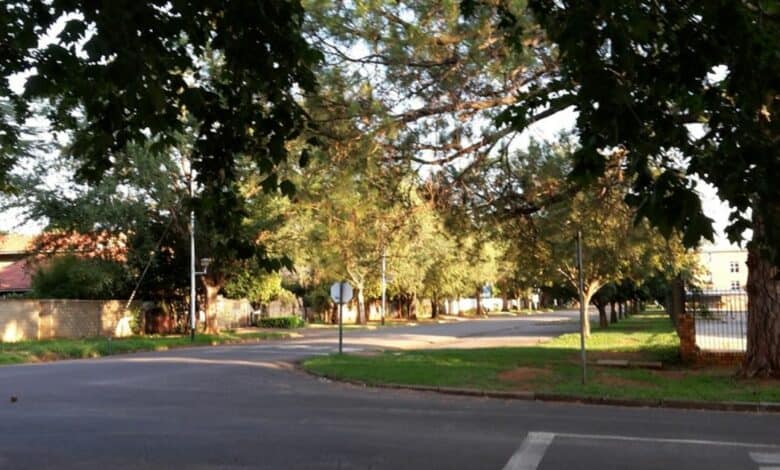
Over many years, this first cemetery of Potchefstroom had been the cause of quite a few unwelcome surprises.
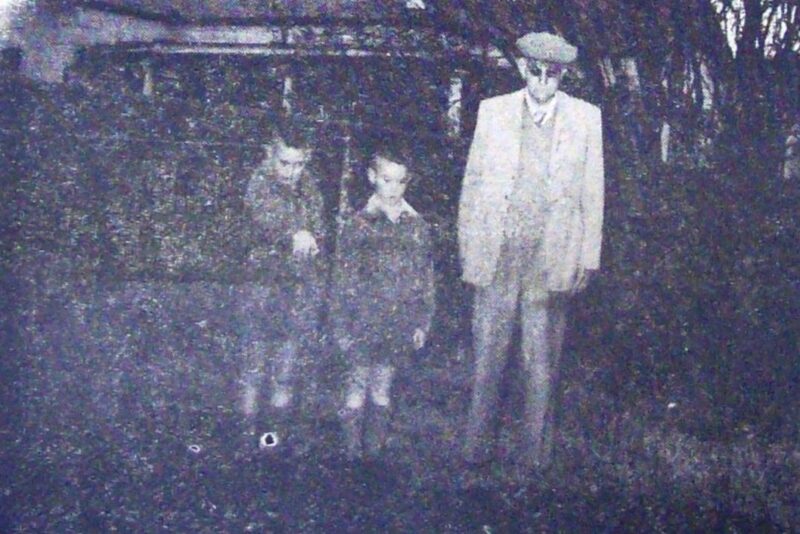
In June 1957 two boys were watching workers, just across from the Theological School in Molen Street, digging a hole to remove an ants’ nest, when they brought up human bones.
Die Weste of 14 June 1957 reported that the two boys of Dr KS van Wyk de Vries were watching the workers with much interest. After they saw the bones, they ran to their father with “big eyes”. Dr Van Wyk de Vries found pieces of wood and the handle of the coffin at the site.
Earlier – and even after this incident – human bones and the remains of coffins were found here. Die Weste spoke to a long-time resident of the area, Mr CS Klopper, who told the reporter that there were about 30 graves in this cemetery. Other sources estimate that there were as many as 50 graves. The cemetery came into use when Potchefstroom relocated to where it is now from Oudedorp in 1842.
Later investigations by the Potchefstroom Museum, when people who lived in the area were interviewed, ascertained that the cemetery encompassed the area on the north-eastern side of the corner of Molen and Borcherds Street. It stretched for about two to three erven in a northerly direction. The eastern side was about from the centre of Molen Street and the western border could be as far as the backyards of properties fronting on Tom Street (Steve Biko).
After the interview with Potchcast about the cemetery was posted on Facebook, which caused the current interest, I was told by a former owner of the property where Oukraal Restaurant is now, that bones were found in that backyard.
Some colourful characters from Potchefstroom’s early history were buried in this cemetery.
Killed by a ramrod
One of them was Piet Botha who had the nickname “Perdekop”. He died during the skirmishes between Stefanus Schoeman and Paul Kruger during 1860. Schoeman was a usurper who wanted to take over the presidency of the ZAR. He and some followers came to Potchefstroom to do so and was followed by Paul Kruger with some supporters, who wanted to prevent this.
Botha was one of Schoeman’s men and had to load their canon, named “Grietjie”. He “rammed” the rod too hard into the canon to fix the canon ball and gunpowder. This ignited the gunpowder and he was shot through the stomach by the ramrod.
Johan Wolfaardt of the President Pretorius Museum, explained that it can easily happen if the canon barrel had not been cleaned properly before the new gunpowder was loaded. Smouldering remains of the gunpowder of the previous shot can ignite the new load. An experienced gunner would know this and would not stand in front of the canon when loading the new shot whilst pushing it inside with the ramrod. He would stand next to the canon.
Wife of Piet Retief
The widow of the Voortrekker leader Retief, Magdalena or “tant Lenie” as she was known, was also buried here. (See my article: https://lenniegouws.co.za/magdalena-retief-memorable-tragic-voortrekker-woman/) Minutes of the Volksraad noted that she received a small pension from 1842. It was, however, not enough to live by and she baked and did sewing to garner an income.
She was able to buy, at the meagre price of £1 (one pound), the property on the north-eastern corner of Retief Street (named after her) and Berg Street (later Van Riebeeck and now Peter Mokaba). Since death registers were not kept before the 1900s, it is not known when she passed away. The minutes of the Volksraad, however, noted that she received the pension until 7 April 1855 and probably passed away shortly afterwards.
The grave of Bobbejaanpaal
Another person known to be buried here, was Dawid Schalk Janse van Vuuren, better known as “Bobbejaanpaal”
He is famous for two reasons.
When the first person in Potchefstroom received a death sentence, he was tasked to execute him. That was in 1852.
He received his nickname after he erected a huge structure for the execution. The condemned man was loaded on an ox-cart. This was driven under this structure. With the noose around his neck, the ox-wagon was driven away and he swung.
Onlookers, who came from far and wide to watch the execution, said that the structure looked to them like something baboons can swing on, hence the nickname “Bobbejaanpaal” or “baboon pole”.
He was a large, strong man and during the Battle of Majuba Hill in February 1880, he carried the corpse of the English commander, Major-General, Sir Pomeroy Colley, down the mountain, after he had been shot by the Boers.
Bobbejaanpaal was only buried there in 1898, many years after the Alexandra Park Cemetery was opened in 1861. It appeared that he wanted to be buried next to his first wife, who was laid to rest here. (See my article about Alexandra Park: https://lenniegouws.co.za/alexandra-park-the-lost-green-heart-of-potchefstroom/
A ten-year-old boy tragically died in April 1869 when he became entangled in the machinery of a nearby mill. He was mangled and squeezed to death before any help could arrive. He was the only son of a widow, also Van Vuuren, from Schoonspruit (now Ventersdorp) and came to Potchefstroom with an ox-wagon to have grain milled. (See my article https://lenniegouws.co.za/a-fresh-look-at-the-historic-mills-of-potchefstroom/ ) Another source said that he came from Hekpoort.
A son of the first magistrate of Potchefstroom, Nicolaas Grobler, was also buried here. His father, JH Grobler, received the contract to lay out the town when the move from Oudedorp to here was planned. Nicolaas Grobler built the first mill, which stood where the High Performance Institute is now.
The cemetery fell into decline after the Alexandra Park Cemetery came into use in 1861. In October 1867 a correspondent of the Transvaal Argus, complained that the fence around the cemetery was in such a bad state that livestock trample the graves at night.
Erven over graves
Die Weste explained why the bones were not removed. “The struggle to conserve the old cemetery already started at the end of the 19th century.”
When JFI Curlewis (See my article: https://lenniegouws.co.za/street-names-reflect-history-16-the-lost-street-names-of-potchefstroom/ ) laid out the Northern Burgher Rights Erven, he simply laid out the erven over the cemetery. This was in spite of the fact that he was reminded to create a small square where the cemetery was. When the Southern Burger Rights were created a square was planned where the cemetery of the location was. This is the square in front of the Potchefstroom Hospital.
Bobbejaanpaal, Mr Janse Van Vuuren, complained about this to President Paul Kruger, who promised that the erven encompassing the old cemetery would be set aside and camped off. Van Vuuren trusted so much in the president’s assurance, that just prior to his passing away a year before the outbreak of the Anglo-Boer War, he requested to be buried there.
After the War, the new powers-that-be did not keep the promise. Even during the war, one of the owners of an erf had the cemetery ploughed over and threw all the stones that were on some of the graves, as well as the two remaining gravestones, in a hole.
At the time a brickyard opened in the area. No traces of this exist anymore, but some years back the properties at 75 and 77 Molen Street had sunken gardens in their backyards, apparently the remains of the brickyard. It is noted that the owner of the brickyard was a German man. Simultaneously the Theological School of the Reformed Church and the rector’s residence were built further down Molen Street. (See my article: https://lenniegouws.co.za/theological-school-complex-heavy-with-history/ ) The contractor for this project was also of German origin.
It was the only large building project in the area at the time and it is therefore assumed that this brickyard supplied bricks. The hole, noted above, was apparently the remains of the brickyard. One report in the archives of the Museum noted that this brickmaker was the “first to desecrate the graves”.
The brickmaking process popular at the time, was to plough a certain piece of land. Oxen were then walked over the ploughed soil to break the clots of soil up into smaller pieces. This was mixed with water and placed into moulds to make the bricks.
Apparently the brickmaker did not have oxen and supposedly his wife would bind up her skirts with a rope and then trample the soil “as well as the oxen would have”.
Attempt to remove bones
In 1919 Potchefstroom received a reticulated water system. (See my article: https://lenniegouws.co.za/water-for-potchefstroom/
Ditches were dug in Molen Street, across from the Theological School, to lay new water pipes. Eight skeletons were found in the area (Herald, 14 February 1975). Other reports said that six to twelve skeletons were found. Mr Munstra, on whose pavement the bones were found, later reported that they gathered all the bones and kept them in a bag in their garden shed until they were buried with other bones in the concentration camp.
Subsequently, the town council decided to remove the bones of the people laid to a not so peaceful rest here and to have it re-buried at the concentration camp cemetery. Maria Van Vuuren, widow of Bobbejaanpaal, heard about this, hired a horse cart to travel from the southern end of town. She showed the workers the scars on her legs made by assegai’s and told them, quite sternly, that they are disturbing the last resting place of the pioneers who made this country liveable. The workers downed their tools then and there.
This is the reason why bones were found here long afterwards.
The bones that were already dug up, were placed in one coffin and buried at the monument erected at the concentration camp cemetery (See my article: https://lenniegouws.co.za/what-happened-in-the-potchefstroom-concentration-camp/ ) A memorial service was held at the Reformed Church, Potchefstroom on 16 December 1919, before the bones were buried at the concentration camp.
When the sewerage system was installed in town in the 1940s and trenches were dug in the area, a skull was found. The workers were simply told to dig around the cemetery so as not the desecrate the graves.
Mrs Lettie van Rooy, widow of Prof Dirk van Rooy, used to live in the area, recalled that they once dug up an old tree stump, to find a grave under it. They simply covered it.
As late as the 1980s or 1990s, bones were still found when the foundations for the house at 77A Molen Street were dug.
Not forgotten
In 1974 a small memorial stone was erected on the pavement in front of 73 Molen Street. It, however, appeared that the residents were not happy to have a “gravestone” on their pavement and it was later removed.
In 1994 a memorial stone for Magdalena Retief was unveiled in the garden of the Reformed Church, Potchefstroom Die Bult.
The Voortrekker cemetery on the Bult will forever be a controversial subject in Potchefstroom.
One of the commentors on the Potchcast interview said: “I find no humour in this. It is a shame that these people were not acknowledged. It does not matter how long ago it happened; there should be respect for people who passed away. What became of humankind?
By informing people about the forgotten history of that part of town, hopefully people will tread lightly and respect these long-forgotten, not so well treated, residents of Potchefstroom.