
Letter: Public participation on the Section 25 amendment: an opinion on the rationale.
The public is invited to comment in support of or opposition to the Constitution Eighteenth Amendment Bill. You may write a letter to: section25@parliament.gov.za or consider websites like https://dearsouthafrica.co.za/ to help capture and submit your input before Jan 31st.
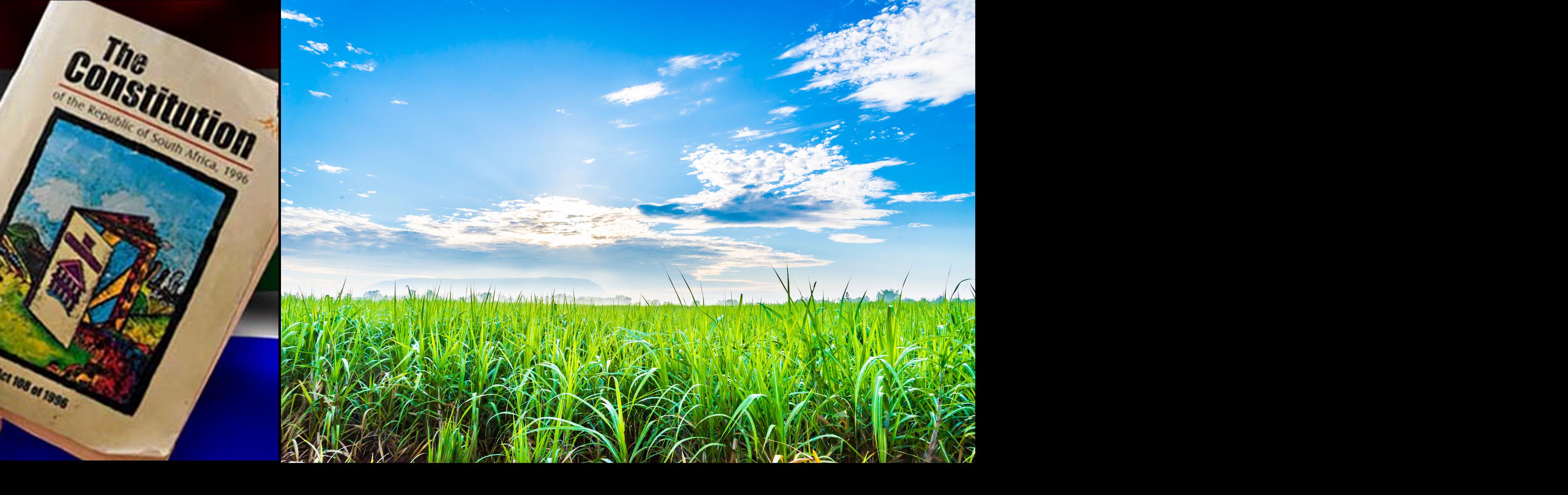
The public is invited to comment in support of or opposition to the Constitution Eighteenth Amendment Bill. You may write a letter to: section25@parliament.gov.za or consider websites like https://dearsouthafrica.co.za/ to help capture and submit your input before Jan 31st.
It has been 25+ years since the first democratic election in South Africa and the inauguration of Nelson Mandela who served as President from May 1994 until June 1999 when he stepped down. An Act (22 of 1994) was passed into law ‘to provide for the restitution of rights in land to persons or communities dispossessed of such rights after 19 June 1913 as a result of past racially discriminatory laws or practices’.
The Land Claims process was undertaken over a three-year period from 1995 to 1998. Those around at the time will remember the near miracle status that was bestowed upon anything South African: 40 million people (‘black and white’), a well-respected leader, a new society, a different optimistic mood. Most if not all acknowledging the need to correct the wrongs of the past and celebrating the successes of this process and, importantly, the closure and certainty that it brought; and again when the process was reopened in 2014 for a five-year period. More than nine out of ten cases are concluded and settled either in the form of land returned or compensation received; most beneficiaries chose the latter. Land restitution, which is ‘returning land to the dispossessed’ was never hampered by the Constitution; nor is Land reform or its slow progress the result of Constitutional limitations, it is argued in the media.
Britannica online carries an extensive article on land reform: The concept of land reform, it reads, has varied over time according to the range of functions which land itself performs, then names four: a factor of production (which failed thus far in SA), a store of value and wealth (possible under current constitution, doubtful if amended), a status symbol (then for the elite not unemployed), or a source of social and political influence (this one seems apt: the EFF’s expansion and the ANC’s clawback are cases in point, as is joint support for the amendment). The article also lists commonly proclaimed political and social objectives as (briefly): overthrowing the landlord class, freeing peasants from subjugation, creating a democracy, or to resolve a crisis or avoid a revolution (this point seemingly in line with the references to ‘a hunger for land’ and urgency).
A: If you are ‘hungry’ for land then it is likely to be for the option above to start producing food and selling it, which will be great for Gross Domestic Product when you succeed. If your hunger is instead for being employed (though you’ll accept land if it’s offered), let’s be truthful and say: preferably not land that I may still buy, but employment to earn me enough and leave me with choice on how to spend it.
B: Could some be troubled by the lack of a revolution still today? Many positives from the transition to a democracy is enshrined in the Bill of Rights. It would have drawn on global best practice and incorporated universally accepted rights as well as specifics agreed to by parties involved. A revered process and outcome. If you value your freedom and rights, then say so. If someone cares to improve on it, then trampling thereon is hardly logical.
We’ve come a long way. Today 59 million people ‘black and white’ are living in peace, with an economy doing well enough for most of this time; unemployment is too high but steady around 25% from 2010 through 2015 thereafter starting to rise to 29% for 2019 as more things started to unravel and badly so. We are facing a sovereign credit rating downgrade and severe economic hardship; a looming crisis that may avoid aggravation by postponing the amendment indefinitely.
At this juncture one cannot rule out that political will exists for ‘self-inflicted regime change’ for the benefit of the power hungry. The catalyst to effect it is not some crisis but this conundrum: cloaking the transfer of sweeping powers to the state in the sensitive issue of land reform; for if you value your freedom (and the entrenched bill of rights) and choose to oppose the amendment, then you appear to be insensitive to land reform, the political no-go. Disentanglement of issues and public discourse on the objectives and the grounds on which claims are based may lead to a better outcome.
I conclude with a call for all to let your voices be heard. Much is at stake.