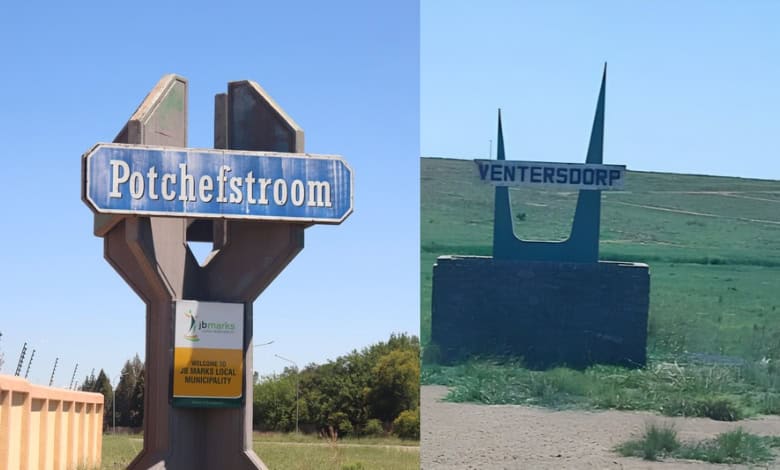
Residents must have a say in the future of Potchefstroom and Ventersdorp
A public participation process that depends heavily on written submissions, online platforms and complicated legal procedures risks reproducing the very inequalities that democratic participation should overcome.
Suliman Rajah writes:
The DA approached the High Court challenging the public participation process followed by the Municipal Demarcation Board (MDB) in dealing with the question of JB Marks municipal boundaries.
The reported court ruling requires the MDB to revisit that process and provide residents with another opportunity to participate.
The court has not decided that Potchefstroom and Ventersdorp must become separate municipalities. Nor has it decided that they must remain together.
The question of municipal boundaries remains open. What has been challenged is the process through which the decision must be considered.
But there is another important question we must confront:
Who can actually afford to be heard?
An unequal process cannot produce equal participation
The DA had the organisational resources, legal representation and access to the courts to challenge the public participation process.
Its established constituency and supporting structures may also have greater access to computers, internet facilities, petition platforms and the resources needed to prepare and submit formal representations.
But what about the black working-class communities of Potchefstroom and Ventersdorp?
What about residents of Ikageng, Promosa, Mohadin, Tshing, informal settlements, rural communities and surrounding farms?
What about unemployed people, pensioners, shack dwellers and families without reliable internet access, computers or the resources to prepare technical submissions?
A public participation process that depends heavily on written submissions, online platforms and complicated legal procedures risks reproducing the very inequalities that democratic participation should overcome.
A process may be legally open to everybody but practically accessible to only a privileged section of the population.
If better-resourced communities are able to submit extensive representations while poorer communities cannot participate, their silence must never be interpreted as consent.
That would give organised and better-resourced interests a disproportionate influence over a decision affecting everyone.
Demands to the Municipal Demarcation Board (MDB)
Public participation must be meaningful, accessible and inclusive. It must not become a process that favours those with lawyers, technology, money and established political structures.
We therefore demand:
1. Adequate time
Section 26 of the Municipal Demarcation Act prescribes a minimum submission period of 21 days. It does not require the process to be limited to 21 days.
We demand a substantially longer period, allowing working-class and rural communities sufficient time to organise, obtain information, consult residents and prepare submissions.
Twenty-one days is the legal minimum, not the democratic standard we should settle for.
2. Accessible public meetings
Hold properly advertised public meetings in Potchefstroom, Ventersdorp and affected townships, informal settlements and rural communities.
3. Accessible information
Make all relevant documents available in plain language and appropriate local languages, explaining the alternatives, their financial implications and their likely consequences.
4. Physical submission facilities
Provide accessible physical collection points for written submissions. Participation must not depend on internet access, computers or email.
5. Oral submissions
Allow residents who cannot prepare written submissions to make oral representations. MDB officials must record and transcribe their views.
6. Active community outreach
Use local radio, community organisations, public meetings and direct communication to ensure residents know about the process and how to participate.
7. Equal opportunity to participate
Provide practical assistance to disadvantaged communities so that lack of money, technology, literacy or legal expertise does not exclude them.
8. Transparency and accountability
Publish the submissions received, the evidence considered and the reasons for the Board’s eventual decision, subject to lawful privacy protections.
This is not simply a question of two municipalities
The real questions concern:
- Water, electricity and sanitation.
- Housing and informal settlement upgrading.
- Roads and public infrastructure.
- Municipal finances, debt and financial sustainability.
- Jobs and local economic development.
- Rural development and access to services.
- Democratic accountability and community participation.
Whether Potchefstroom and Ventersdorp remain together or become separate municipalities must be determined through a lawful, inclusive process informed by evidence and the interests of all affected communities.
Neither outcome should be predetermined by political parties.
The people must set the agenda
We call on civic associations, residents’ organisations, trade unions, community formations, informal settlement committees and all affected residents to organise independently and participate collectively.
Do not allow others to speak on your behalf.
Do not mistake silence for agreement.
Do not allow access to technology, lawyers and financial resources to become a substitute for the democratic voice of the people.
Nothing about us without us!
The future of JB marks must not be decided without its people.
Legal reference: Local Government: Municipal Demarcation Act 27 of 1998, particularly sections 26–28. The 21-day period is the statutory minimum for written representations, not a requirement that the entire participation process be completed within 21 days.