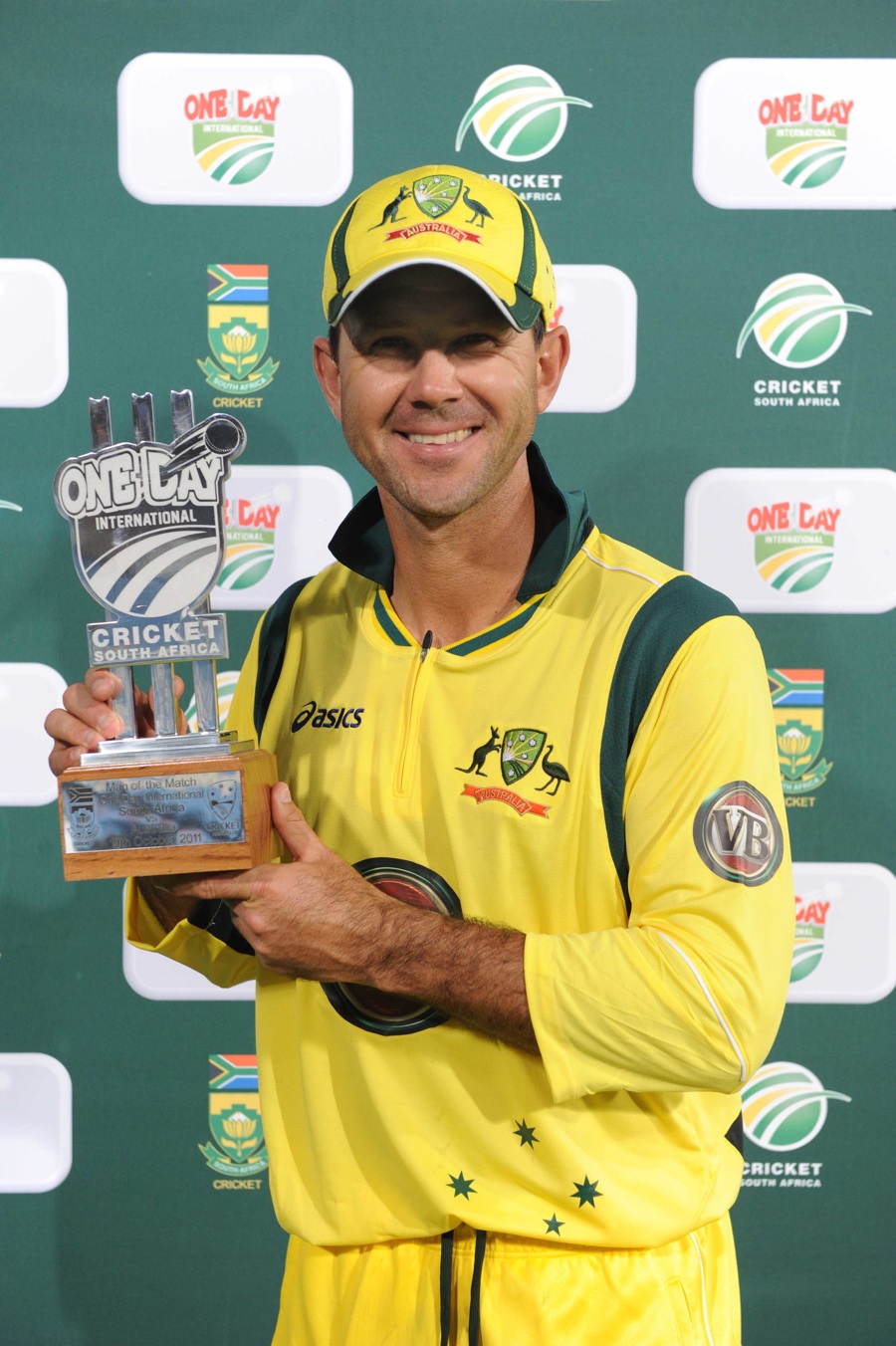
Our dreaded enemy; our mortal foes. The Australian cricket team evoke a special kind of response from South Africans (and every other test-playing nation), most notably in the form of vitriol and expressions not fit for the printed or digital page. Battles between our respective bests, especially in the red-ball format, are the stuff of legend.
About a decade ago, the dominant Aussie side, led by the likes of Mark Taylor, Steve Waugh and Ricky Ponting, was something of a distant memory. The team had lost a host of once-in-a-generation players like Shane Warne, Glenn McGrath, Matthew Hayden, Justin Langer and Damien Martyn in short succession and they were a shadow of their former, fearsome selves. The shoes these giants of the game left were too big to fill, the vestiges of their accomplishments were chains too heavy to shake loose.
Their lacklustre performance on the field vexed captain Ricky Ponting no end. Having been part of a golden generation that conquered all that came before them, he felt increasingly disillusioned about what he perceived as a group that lacked the grit to survive in the arenas of gladiators, where their predecessors thrived.
The right-handed Tasmanian is an abrasive character at best and had just suffered the ignominy of losing a home series against the Graeme Smith-led South Africans. JP Duminy’s 166 was superlative and Dale Steyn’s 76 during the second test in Melbourne in December of 2008 was defiant. That, and the heroics of the South African captain, with a broken finger, to save the final test in a series that had already been won. It even elicited applause from an always-partisan home crowd.
In his tomb of a biography – “At the Close of Play” – that could as easily double as a doorstop as it could be used as a weapon of self-defence, he describes how the team’s fortunes started to change for the better and how they regained the fortitude that made them so formidable.
It can be found in a chapter titled Six Days in Potchefstroom and chronicles the team’s short tenure in Potchefstroom where they made use of the North-West University and North West Cricket’s facilities.
It is February 2009: “I landed in South Africa with a plan. Partly because of the inexperience of our squad, I resolved to take an even more “hands- on” approach to leadership than the one I’d adopted since the 2005 Ashes series. As I’ve explained, I learnt on that ill-fated trip that a captain can never simply assume that this crew is doing everything right; he or she has to make sure that no short cuts are being taken. On this trip to Potchefstroom, where we stayed for six days, I asked the senior players and coaches to make sure everyone knew exactly what was expected of them.
Every training session was mapped out precisely. Coach Tim Nielsen and I knew exactly what we would say when we addressed the group. There’d be no confusion. At the nets, I stood behind the stumps at the non-striker’s end, as if I was an umpire, to be in the middle of things,” Ponting writes.
Over coffee and beers, the old guard and the saplings forged the face of a new Australia.
“As a team-bonding exercise, these six days were sensational. The set-up in Potchefstroom was perfect, almost cut off from the main cricket high-way. We had a terrific blend of youth, experience, talent and cricket nous. Everyone bought into what we were trying to achieve,” he writes before concluding the paragraph with: “Try as we did, after that tour, we could never quite replicate that atmosphere for the rest of my time as captain.”
Tellingly, the Australians also used Potchefstroom as a base during the 2003 ICC World Cup (which they won) and for their 2006 tour of the Republic.
Conrad de Swardt, the cricket manager at the North-West Uni- versity, vividly recalls his interaction with the Australian captain: “They, as a team, were utterly professional. Just getting to shake Ricky Ponting’s hand was an honour.
I remember using the roller on the pitch at Senwes Park and Ponting picking up the ball and throwing it onto the pitch. It bounced head high, but Ponting said: ‘No, I want it harder.’ It was astonishing, as it was one of the best pitches I was ever a part of producing.”
Punter, as he is affectionately known by his teammates, knew that his team would have to contend with what was perhaps the best bowling attack in the world on green pitches that made potent bowlers like Dale Steyn, Morné Morkel and Jacques Kallis not merely difficult to cope with, but venomous.
The Australians duly won the test series and Ponting was unequivocal in how he felt about the win after the series was in the bag. “The next day, the sun was still shining when someone at the media conference asked me how I felt about winning a series after starting (in other people’s eyes) as the genuine outsider, something Australia hadn’t done since 1989.
‘Mate, I’m as happy as I’ve been in my whole career as an Australian player.’ This was my proudest moment as a captain.”