Weather radar launched at Lekwena
On Thursday, 22 March, the Minister of Environmental Affairs, Dr Edna Molewa officially launched the state-of-the-art North-West University (NWU) Lekwena Weather Radar. This is a weather radar network that provides a high-end scientific tool to study and quantify storms and precipitation. Weather and climate impact every aspect of society. The weather radar is the quintessential …
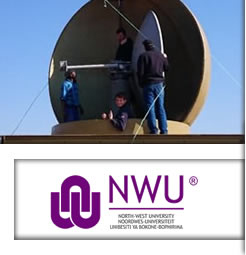
On Thursday, 22 March, the Minister of Environmental Affairs, Dr Edna Molewa officially launched the state-of-the-art North-West University (NWU) Lekwena Weather Radar. This is a weather radar network that provides a high-end scientific tool to study and quantify storms and precipitation.
Weather and climate impact every aspect of society. The weather radar is the quintessential tool for observing thunderstorms in real time and using this information to manage and mitigate the impact of this hazard. South Africa has a long history in radar science and currently boasts a world-class national network of cutting-edge radars operated by the South African Weather Service (SAWS). This project aims to support SAWS towards sustaining and making the most of this valuable resource. It hopes to do this by giving students from multiple disciplines hands-on experience in working with this technology, creating awareness around the benefits and potential use of weather radar and, lastly, to do applied research that could help create products and services that can be rolled out on the national radar network. Providing scientists access to this technology in a semi-operational, real time environment will narrow the gap between research and operations and ensure that new services make their way to the national radar network.
The NWU and the Water Research Commission have funded the acquisition, installation and upgrade of a weather radar on the Lekwena Farm just outside Potchefstroom. The project aims to develop infrastructure and build capacity to improve rainfall estimation from multiple platforms that will be accessible in real time to the scientific community.
In South Africa’s National Intended Contribution tabled with the United Nations Framework Convention on Climate Change in 2016, the country committed to enhancing its early warning system. This, together with protecting local communities from extreme weather events and promoting climate-smart agriculture practices are important. The government is currently working to transition the country to an environmentally stable, climate change resilient, low-carbon economy and a just society through the National Development Plan. It aims to achieve this by 2030.
‘Climate change is a major concern globally and in South Africa specifically. Therefore, every effort should be made to monitor and understand its drivers and triggers in order to develop and implement evidence-based mitigation and adaptation strategies,’ says Molewa.
‘The radar will assist our researchers, scientists and all South Africans by providing real time data that will be interpreted into usable information pertaining to climate change and weather conditions. This radar technology brings a substantially improved weather observation network for our country,’ she added.
The monitoring and forecasting of the climate and weather monitoring have huge implications for a number of sectors that include agriculture, water resources and others within the framework of environmental management and protection.