
New book explains how township economies really work
With his newly released book, Tshepo Moruthane aims to show why understanding economics is vital for local townships.

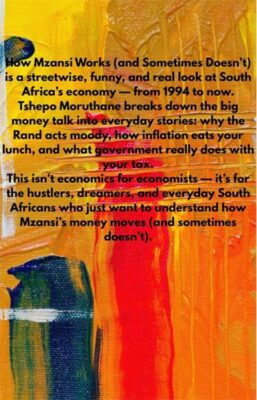
Mohlakeng author Tshepo Moruthane recently published his book How Mzansi Works (and Sometimes Doesn’t): A Township Guide to the South African Economy, sharing his insights on township struggles and adding a touch of humour to explain economics.
According to Tshepo, the book simplifies South African economics through relatable township stories and real-world examples. He aims to make economics understandable and engaging for youth and entrepreneurs who drive the township economy every day.
“I believe this story would resonate strongly with Randfontein readers, as it was written from a local perspective and grounded in our lived experience, while inspiring a national conversation about financial literacy and economic participation,” Tshepo said.
Written for the everyday South African
He said he wanted to write a book that speaks to typical South Africans, like township residents.
“Most books make life feel like you need a PhD to survive. I felt the need to explain the economy the same way I would at the taxi rank or during a braai,” he added.
The idea for the book came when he noticed how often people in Mohlakeng were dealing with economic forces without understanding them.
“Taxi fare increases, rising food prices, youth hustling – I thought, ‘If people understood the rules of the game, maybe we’d stop being played by the game,’” he explained.
A dual perspective
Tshepo grew up navigating two worlds – the ghetto and the ‘larney’ spaces. This dual perspective allows him to translate both street-smart and book-smart languages into financial concepts.
For him, it was important to write from a township perspective.
“We make up the majority of consumers, workers, hustlers, and voters, yet our voice is missing in economic discussions. If economics does not include the township experience, it is incomplete. I wanted to centre the people who are usually overlooked.”
Humour and real-life examples
Humour plays a big role in the book, reflecting how township residents cope with reality. For example, he uses the story of ‘pap and Inkomazi’ (a traditional South African sour milk product) becoming a luxury to explain inflation while making readers laugh.
Tshepo hopes to dispel the myth that the economy is only for experts.
“When you understand how money, trade, inflation, and government policies work, you stop being a passenger and become the driver. Township economies are vibrant, creative, resilient, and full of innovation, yet often underestimated.”
Challenges facing townships
He also highlights the challenges facing townships today, including poor infrastructure, crime, and lack of market access, with big retail threatening small local stores.
“Writing this book was intense but fulfilling. Translating complex economic concepts into relatable stories was challenging, but it forced me to understand the material deeply and sharpened my purpose,” he reflected.
Looking ahead
Tshepo plans to release 10 books within the year and will participate in several interviews to promote his work.
You can read a sample of Tshepo’s book on Amazon.