Tshwane set to implement one-stop solution to streamline water and sanitation service
With the innovative water and sanitation turnaround strategy being put in place, residents can now expect a much faster response time, as their queries will be handled directly by the department, rather than being passed through multiple channels.
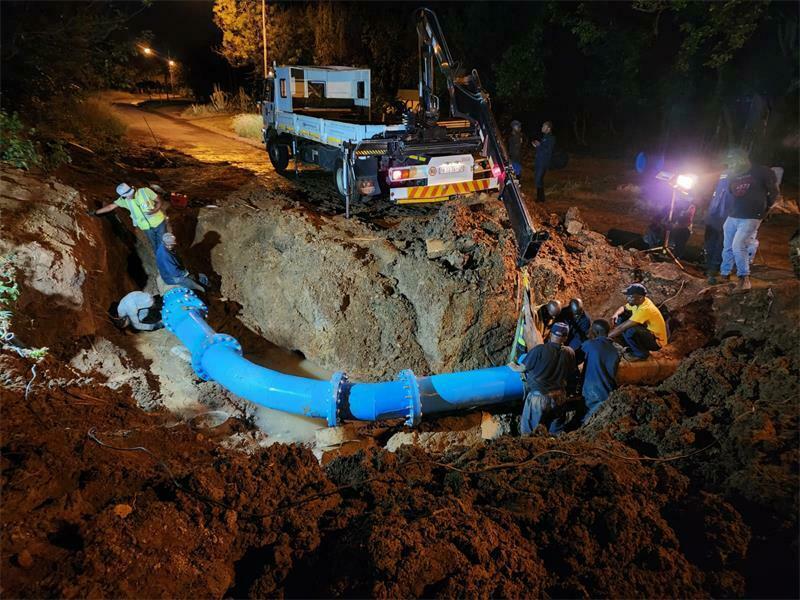
To enhance service delivery and boost response times, the Tshwane metro will undertake a new endeavour which will allow residents to report water and sanitation challenges directly to its water and sanitation department.
This move is part of the metro’s recently-approved turnaround strategy, which aims to expedite maintenance and repairs for water and sewer leaks.
The strategy will ensure faster resolutions for residents and a more efficient use of resources, said metro spokesperson Lindela Mashigo.
“Previously, residents had to report service delivery issues such as pipe bursts, sewer leakages and drain blockages to customer relations services, which would channel the same to the department of water and sanitation and this affected the response time.
“With the new strategy, a single point co-ordination will enhance operational efficiency and improve on turnaround times in dealing with service delivery disruptions,” Mashigo said.
Tshwane passed the strategy after it had been confronted with a pressing need to resuscitate its ailing water and sanitation infrastructure.
The strategy also helps council avoid forfeiting a performance-based incentive grant from the National Treasury for trading services like water from the 2025/26 financial year.
“This strategy sought to improve the performance of the water and sanitation and reposition infrastructure to meet current and future water and sanitation demands for the metro.”
Maintenance of distribution pipelines is performed by the regional maintenance team whereas maintenance of bulk pipelines is carried out by the city’s water and sanitation department, which does not bring the required synergies and efficiencies, hence the proposed alignment.
The strategy also aims to revitalise the city’s under-investment in water and sanitation infrastructure, which has led to a decline in service delivery and financial performance.
The report was supposed to be passed at the council meeting that collapsed last month on July 25. It was however given the green light in the Wednesday, July 31 sitting.
“Long-term under-investment, together with inadequate maintenance, has resulted in a serious decline in both the reliability and safety of water and sanitation provided by the metro to its residents, businesses, and other institutions.”
Mashigo said significant changes are needed to turn around this decline, exacerbated by distribution losses due to illegal connections, high water consumption and poor management capacity.
He said the new approach is informed by reforms introduced by National Treasury, which will assist municipalities with grants to implement these reforms.
Furthermore, the finances (revenue and expenditure) related to provision of water will be ring-fenced to ensure it is spent on infrastructure maintenance and new infrastructure installation.
“This will therefore address the long-term underinvestment in asset-creation and maintenance,” Mashigo said.
He added this would also assist in providing enough resources for operations and maintenance of infrastructure.
“It is further required that Tshwane must present an institutional and governance reform roadmap to the National Treasury by September 30.
“This must be complemented by the development of business and investment plans matching and supporting the turnaround strategy.
“With the separation of annual financial statements, which indicates profitability of the business unit, the city will be able to leverage loan funding that will be geared towards infrastructure asset creation.”
Mashigo said Tshwane will attend to those water and sanitation projects on hold due to a lack of funding, prioritise maintenance and security of infrastructure, and fill management vacancies with qualified and skilled personnel to address poor management.
“Where there are required resources (personnel and finances), good performance will be rewarded and consequence management for poor performance will be executed.”
The turnaround strategy has 10 commitments, including:
– Creating a water and sanitation business unit.
– Publishing financial statements for water and sanitation.
– Restructuring the financial relationship between the city and water and sanitation.
– Introducing additional management capability.
– Considering a separate corporate entity for water and sanitation.
– Increasing investment in asset renewal and expansion.
– Imbedding sustainable access to loan finance.
– Building internal technical capability.
– Achieving ongoing improvements in water and sanitation.
– Establishing regional water resilience.
According to Mashigo, the strategy is a roadmap for the creation of a future in which there will be a sustainable water and sanitation service for all in the city, is more resilient to climate change and robust to leadership changes..
ALSO READ: Several Pretoria West streets closed on Sunday
Do you have more information about the story?
Please send us an email to bennittb@rekord.co.za or phone us on 083 625 4114.
For free breaking and community news, visit Rekord’s websites: Rekord East
For more news and interesting articles, like Rekord on Facebook, follow us on Twitter or Instagram