Overtime cuts affect service delivery in Mamelodi
Residents in various wards have reported delays in service delivery, with cases of sewage issues taking up to three weeks to receive feedback.
While the Tshwane metro insisted that recent overtime cuts would not compromise service delivery, residents in Mamelodi and Nellmapius are already feeling the effects.
Residents claimed that delayed responses to power outages and water leaks have become an all-too-common experience.
Overtime has been capped for municipal workers at 40 hours per month and mostly prohibited on Sundays, except for critical emergencies involving bulk electricity, water or sewage.
However, these changes have caused concern for residents of Mamelodi and Nellmapius.
They claimed the infrastructure is under strain and services often require after-hours intervention.
Mathews Sediba from Nellmapius Ext 24 said sewer blockages need after-hours intervention.
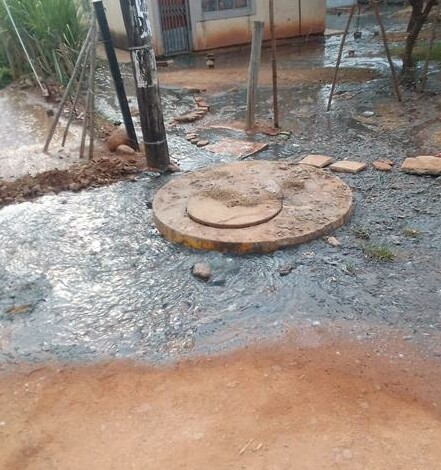
Sediba said one of the main sewers was blocked at Beeskloutjie Street and flooded a couple of houses in the street.
“The matter was reported to Tshwane metro, but it took the Tshwane workers more than 24 hours to come and fix the blocked sewer,” said Sediba.
Taking into account that service delivery is an issue, blocked sewers need to be attended to as soon as possible, because they pose a health hazard.
“Imagine [being] trapped in your yard and forced to inhale the bad smell that comes from the blocked sewer,” said Sediba.
Bongani Ramontja from Soil of Africa in Mamelodi said he strongly disagrees with the recent statements made by Tshwane metro regarding the overtime cuts and their alleged non-impact on service delivery.

Ramontja said the reality on the ground paints a starkly different picture.
“Residents in various wards, including Ward 17 Phase 3, have reported egregious delays in service delivery, with cases of sewage issues taking up to three weeks to receive feedback,” said Ramontja.
“This is unacceptable and highlights a systemic failure in the municipality’s service delivery mechanisms.
“We believe that the concerns raised by residents and ward councillors are not mere misinformation but rather a reflection of the harsh realities faced by communities,” he said.
The blanket restriction on overtime has compromised service delivery, particularly in critical departments such as Electricity and Water and Sanitation. This is evident in the non-functional streetlights and prolonged response times to service issues, which are not only inconvenient but also pose serious health and safety risks to residents.
Despite the metro’s reassurance that service delivery will not be affected, ward councillors and residents tell a different story.
Luan Botha, a resident in Pretoria North, said it had been nine days since they had electricity.
“It was a switch at the pole that was faulty; they just replaced it, and I have power.
“The reason given to me is that streetlights in Soshanguve get preference, thus they did not come to fix mine,” said Botha.
Botha said he never thought that being without power could change his life so much. He said he had to boil his bath water in a small kettle and was in bed by 18:00.
“I am a pensioner and can’t afford solar and when the power goes off, I am screwed. I lost meat and milk that would’ve lasted me the whole month.
“Service delivery from Tshwane is very poor and sometimes non-existent, and the people on the ground are bound by what they are told to do.”
Similarly, business owner Kobus Coetzee said he reported a sewage leak eight days ago, but no one has come to fix it.
“The situation is very bad, the main sewage line is blocked and spilling out of the lid.
“All the sewage came down the road into our business,” said Coetzee.
WATCH: https://youtube.com/shorts/Yejb1Es7Rbs?si=dWrW5qfF4Tbwdegb
Community leader Dana Wannenburg said the overtime restriction has had a serious and negative impact on service delivery.
“While we fully understand the importance of cost-saving measures during difficult financial times, the blanket restrictions on overtime have led to a direct decline in service responsiveness.
“Under the new plan, overtime for essential repairs such as electrical fault response and water pipe bursts is now limited strictly to approved schedules, often leaving communities without power or water for extended periods.
“This is not just an inconvenience; it is a serious health, safety and service delivery failure. Residents affected by power outages or water disruptions are often forced to wait until normal working hours for assistance, causing widespread frustration and, in some cases, escalating minor issues into major, more costly repairs,” said Wannenburg.
He argued that instead of a blanket cut, the metro should apply a flexible, needs-based approach to overtime, especially in departments like Electricity and Water & Sanitation.
Residents said they feel caught in the middle, left to navigate weekend service failures while government departments debate definitions and permissions.
Ward 50 councillor Lenise Breytenbach and Ward 2 councillor Quentin Meyer demanded uninterrupted service delivery, including repairs, seven days a week.
They said the recent overtime cuts have severely impacted residents’ daily lives.
“We expect prompt action to restore essential services and meet our community’s needs.
“As paying customers, we deserve better. It’s time for the City of Tshwane to step up and balance our services,” said Breytenbach.
Metro spokesperson Selby Bokaba said the municipality has taken note of misleading messages circulated on social media platforms by some community leaders, purporting that there will be prolonged power outages due to the city’s overtime curb.
Bokaba said it was not true that the changes to overtime have compromised service delivery.
“The adjustments to overtime hours were based on repeated findings by the Auditor-General that the metro was regularly paying several employees more than 40 hours overtime, which is a contravention of the Labour Relations Act. The act stipulates that overtime should only be limited to 40 hours per month.
“Furthermore, the metro’s resources are also under strain, and this prompted us to make hard choices regarding the management of overtime, without compromising the delivery of services to the consumers,” said Bokaba.
He said the changes were extensively canvassed with the Regional Directors for Electricity.
ALSO READ: Pretorians reflect on what Freedom Day means 31 years later
Do you have more information about the story?
Please send us an email to bennittb@rekord.co.za or phone us on 083 625 4114.
For free breaking and community news, visit Rekord’s websites: Rekord East
For more news and interesting articles, like Rekord on Facebook, follow us on Twitter or Instagram or TikTok.