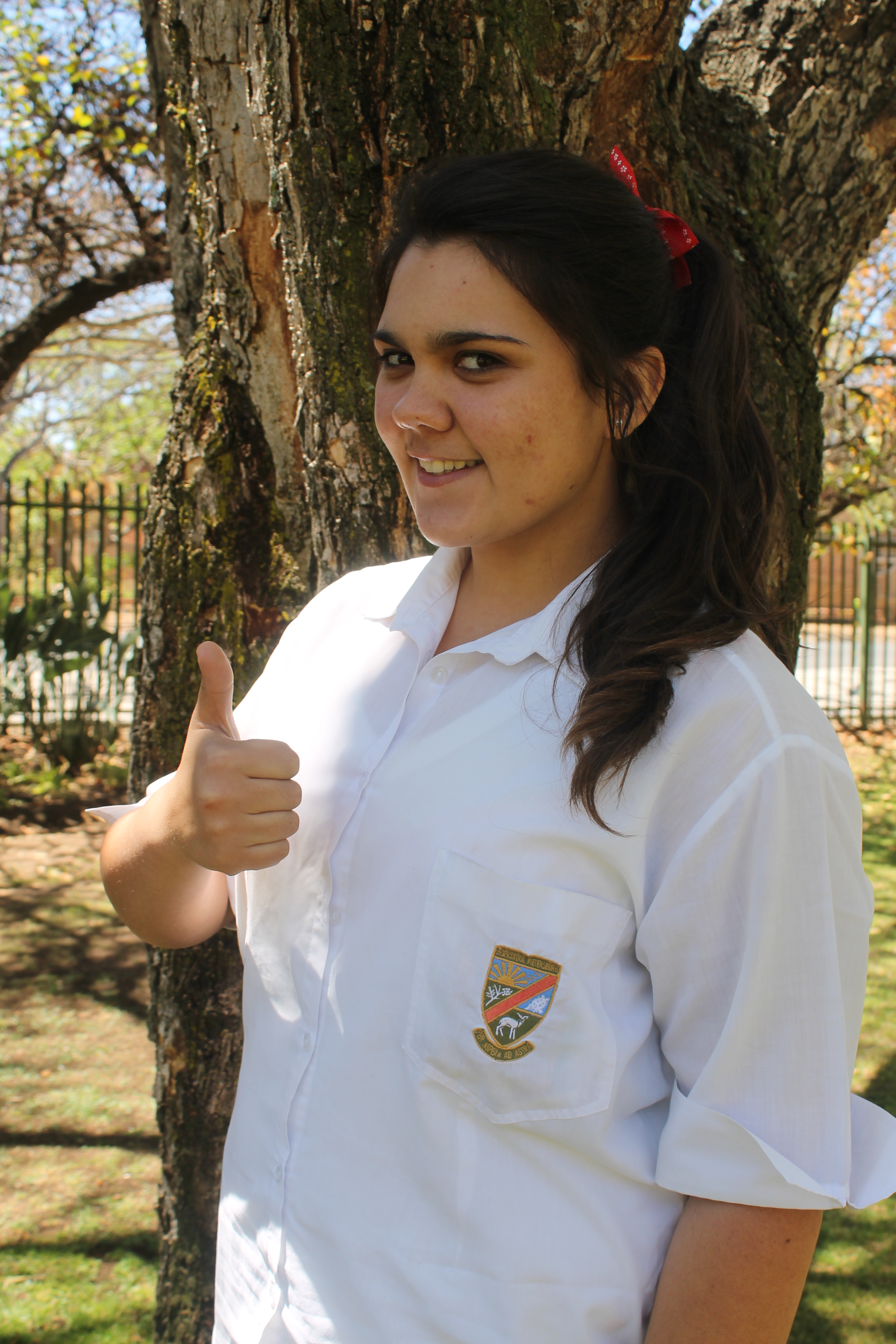
POLOKWANE – When Chante Jardim entered the Tritech Science Fair, winning this prestigious title was the last thing on her mind.
For this gr. 11 learner from Hoërskool Pietersburg, winning came as a great surprise.
“I entered the Tritech Science Expo in 2012 and fell out in the first round. Winning in 2013 was the last thing I ever expected,” she said. Chante won gold at the national final round of the expo and was appointed national winner.
Tritec Science Fair was started in 2009 by a group of Tzaneen teachers and representatives from local industry. The fair has since grown exponentially. Participants had to independently plan and carry out research projects, assessing the impact of the projects on the environment and how it could improve people’s lives.
Judges chose projects of the highest standard to be presented at the regional rounds and then at the national round. Having an immense love for horses and riding, Chante made her science project about the contributing factors that could influence the results in a show jumping competition, resulting in the difference between winning and losing.
In her analysis, Chante looked at the height that a horse must jump to clear the obstacles and at the angles that the horse and rider should take to make it a successful jump. She also looked at the timing of the jump. “I worked out a formula whereby the rider can be sure to make a jump without getting a penalty for knocking down any poles. It is an idea I have been playing around with for some time, since I started doing speed and graphs in maths. Because I ride horses myself, it is something that hits close to home and something I have a passion for,” she said.
Chante said the idea of creating a formula for successful showjumping came from watching the movie, Ice Princess, where a young girl could not ice skate and by using a scientific formula, she was able to become a champion ice skater.
“I believe that the combination of the physics and science training and experience I received in school made all the difference. I love science. It is one of the few things in life that is real. Nothing about it is made up, what you see is what you get and that is real for me. I am a very real person and that is why, amid the very strong competition and exceptional projects, my love for horses and science gave me a head start.”
The project took up much of her time and she spent school holidays working at the stables where she could take photos. She had some friends do jumps that she could analyse for her project. “It took some planning and keeping to a very tight schedule to get everything done, but it was all worth it in the end and it has taught me a lot,” she said.
Chante’s passion is working with horses. Because her mother is a neuro-nurse, she also developed a passion to work with neuro-patients. She plans to study forensic science.
This scientist in the making said she also loves stand-up comedy and has recently written a set that she performed at the talent evening held at the school.
“When I was younger being a stand-up comedian was all I wanted to be. I may even use it as a back-up plan. Making jokes and being funny is part of who I am,” she said.
Her advice to learners who would like to enter the competition is to take something they really love and make that the subject of their project. “There is no idea too weird or too big or too small; if it can be done by science it can work for you.”