
Ancient traditions, customs at centre of festival programme
Ancient traditions and culturally-inspired customs took centre-stage during last week’s annual Indigenous Games Festival that saw all nine provinces converge at venues in Seshego for a week-long programme of activities coinciding with the countrywide colourful commemoration of Heritage Day. As sporting activities contributed to a jam-packed festival programme, cultural and heritge-inspired slots received as much …
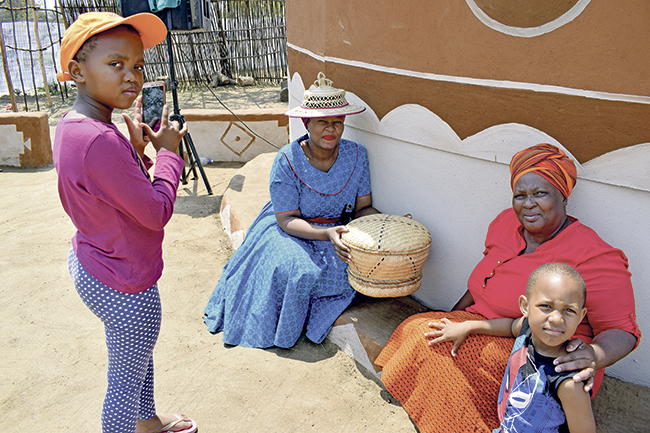
Ancient traditions and culturally-inspired customs took centre-stage during last week’s annual Indigenous Games Festival that saw all nine provinces converge at venues in Seshego for a week-long programme of activities coinciding with the countrywide colourful commemoration of Heritage Day.
As sporting activities contributed to a jam-packed festival programme, cultural and heritge-inspired slots received as much attention from participants and visitors alike. Evidently opportunities aimed at educating the young about their origin ranked high on the agenda, with exhibits displaying food, home-made drinks, traditional items, crafts and fashion were scattered across the far side of the premises surrounding Seshego Stadium, in the adjacent park and at alternative venues in the settlement.
As visitors made their way past designated areas for the likes of jukskei in full swing, drie-stokkies jumping matches, the modern-day version of morabaraba, mme ke lapile, the dealing of a deck of cards and dibeke ball game last Thursday, eventful travels into the rich legacy of the cultures and traditions of South Africa led them to an African village. There they were entertained on, among others, a mock trial in a traditional court held in the kgoro, storytelling for little ones, traditional dancing and engagements with a handful of tour guides available at respective huts depicting the most dominant cultures of Limpopo as well as that of the Seswatis to be found within a bigger South African environment.
With this purpose in mind representatives of Ditsong Museums of South Africa, an amalgamation of eight national institutions, were readily available to take visitors on a trip through the northernmost part of the country as they introduced them to the traditions of the Bapedi, Vhavenda, Tsitsonga and Ndebele. To the side traditional food was being stirred in big black pots, close to where the beckoning traditional healer’s hut was unoccupied at the time of the visit.
From Ditsong Museums of South Africa Curator of Anthropology, Motsane Gertrude Seabela it was learnt that it took three weeks to construct the village with its features.
The festival had to eventually come to an end, but its worth and the memories taken from it would probably live on in the minds of those who went to the trouble of investigating. This is believed to be the case with Seshego resident Esther Tlale and her companions who, by last Thursday have visited the premises every day since last Sunday’s opening. She alluded to the fact that the event was most enjoyable and educational. She advocated for the festival to return to Seshego for people to be knowledgeable about what was on display.
During an interview in the shade of one of the huts Thabang Mfusi, a visitor from Orkney journeyed back into the past by recalling how children used to engage in traditional and gumboot dancing and choir singing, which eventually also resulted in participation in competition, when he was young.
People have lost their tradition and it would take another 50 years to get back to that point again, he reckoned. He stressed the need for a return to one’s roots and for the young to be taught their roots. He emphasised the importance of the festival and the need for more frequent hostings thereof as well as for educating parents on cultural issues, who in turn had to educate their kids on it. “There is nothing wrong with kids learning English, but when they go home it is important for them to speak their home language.”
Prior to the interview Mfusi acted as interpreter for Mokopane-based Menang Traditional Dance Group member Anna Mamashila, who highlighted the importance of children having to have knowledge about their culture. Asked about her opinion of the festival, she responded by exclaiming “It’s beautiful. It’s nice. It’s lekker.”
Story & photos: YOLANDE NEL
>>observer.yolande@gmail.com