Power surges after load-shedding blamed for fires in Mankweng
Although the local community, Polokwane Municipality, Home Affairs and Social Development have provided relief services to a family whose house burnt, the family wants Eskom to account.
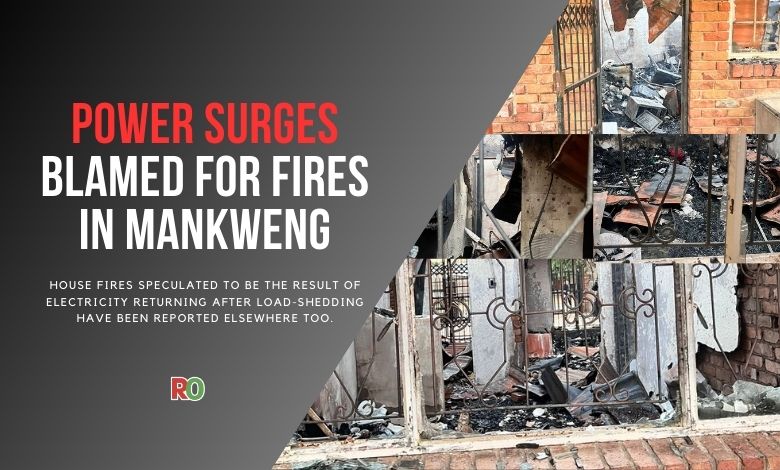
POLOKWANE – A house with an estimated value of R1m burned to ashes in Toronto Mankweng earlier this month, with the owners blaming load-shedding for the incident.
Although no determination of cause yet from the police’s forensic investigators, Maggo Bango is among several home owners who feel someone has to account for the many fires that start shortly after electricity returns after a period of load-shedding.
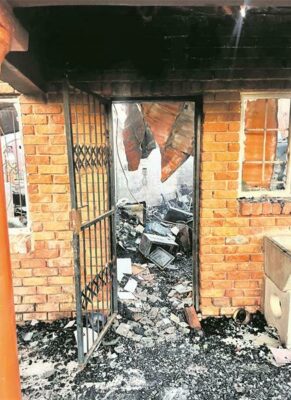
“The fire started in one of the bedrooms at exactly 11:00. My mother heard a ‘boom’ sound and upon inspection, the room was already on fire,” she told BONUS.
“By the time the local fire services arrived, the house and all its contents had been destroyed.”
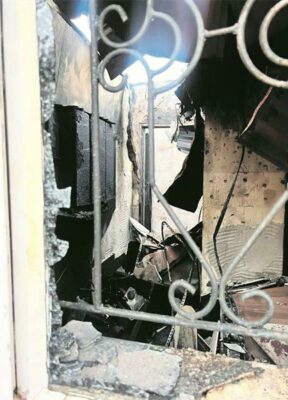
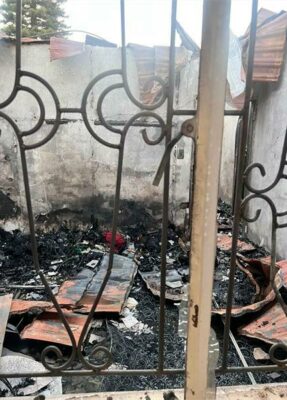
She said the water from the trucks soon ran out, and what delayed matters further was the fact that they then had to go and look for water elsewhere.
“That is how our house burned to ashes,” she said.
No one was injured in the incident, and although the local community, Polokwane Municipality, Home Affairs and Social Development have provided relief services to the family, the family wants the power utility, Eskom to account.
“My mother spent 20 years and her last cent, investing in the development of this house. I’m afraid she could die at anytime from the stress of this ordeal. She’s already sick from high blood pressure and arthritis.”
The house sheltered five people including two intellectually impaired children, who Bango says are missing their mid-year exams due to receiving psycho-social support.
They currently live in a two-roomed house situated in the same yard.
House fires speculated to be the result electricity returning after load-shedding have been reported elsewhere too.
On June 10, a house burned down in Seshego Zone 4, also reportedly after electricity returned.
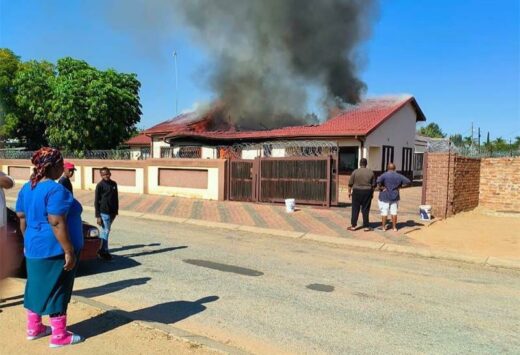
Forensic fire investigator, Thys Steenkamp has investigated at least 16 homes and businesses in a month.
According to Steenkamp, most house fires start from a DB board, around five or 10 minutes after the electricity has been restored.
“The preventive measure homeowners can take when there is a power surge, is to switch off the distribution board. Once the power is restored, DB boards can again be switched on. This will assist, but there is in reality no fool-proof protection.”
In a separate incident in the Western Cape, Eskom’s Kyle Cookson echoed Steenkamp’s sentiments that electricity should be turned off directly from the DB board before or during load-shedding, “in case power returns with a greater volatility”.
Comment could not immediately be sourced from Eskom.
In another recent incident the Ndini family from Seshego Zone 4 also lost all their belongings after a house fire. They are asking for donations to rebuild their house. According to Khomo Ndini, the fire started at 01:00, just after load-shedding and the cause of it is still unknown at the moment.
Ndini says they are not only requesting money to rebuild their home but are also in need of food and clothes. “The fire affected me and my family terribly as we are now left with nothing, we will gladly accept anything,” she said.
The family is finding it difficult to deal with the aftermath of the fire. “We are trying hard to adjust, especially my mom and the children. However, financially it is very tough and we pray that a Good Samaritan will help us.”
Anyone who can contribute to the family can call Ndini on 073 995 0994.