Economists question sustainability of Limpopo’s poverty decline
Limpopo's poverty rate dropped by 18%, but economists warn gains may rely on social grants, not jobs, raising sustainability concerns.

POLOKWANE – Economists have weighed in on government’s depiction of a Limpopo steadily rising from poverty, questioning whether recent gains are sustainable and reflective of lived realities on the ground.
The poverty puzzle
The Income and Expenditure Survey (2022/23), released last Tuesday, showed that 18.4% more residents earned enough to cover basic needs in 2022/23, using an upper-bound poverty line of R2 846 per person per month.
This shift means many moved from the lower-bound poverty line, where households cannot afford food, shelter, transport, clothing and other essentials, to the upper-bound category, where they are still considered poor but able to survive.
The figures suggest Limpopo’s people are not as poor as they were two to three years ago.
Unsustainable gains?
Economists have, however, raised key questions: Is the poverty threshold realistic in a tightening economy? Can this trajectory be sustained or improved? What is driving the decline, and what is it linked to?
Economist Ronewa Mudzanani said for a predominantly rural province, the improvement signals a commendable change, likely tied to employment gains. Limpopo’s narrowed unemployment rate declined from 31.4% in late 2023 to 28.2% in 2025.
But Baneng Naape argued the statistics must be read alongside the province’s growing reliance on social grants. Data from the South African Social Security Agency (Sassa) shows that 2 034 188 people, or about 33% of Limpopo’s roughly six million residents, depend on grants.
“It is not driven by job creation, but rather social grants,” Naape said. “Social grants are largely used for immediate consumption and are not a sustainable poverty alleviation strategy, but instead create economic dependency and strain the public purse.”
He added that a narrowed unemployment rate does not account for discouraged job seekers in a province with the country’s second-lowest matric performance and weak results in Stem subjects. Limpopo’s economy remains concentrated in mining and government, with limited industrialisation and manufacturing.
Lived realities questioned
Concerns were also raised about whether households can truly meet basic needs in areas such as Polokwane, where many residents rely on indigent and social support packages for water, electricity and refuse removal amid high municipal debt.
The municipality budgeted R281.7m in its 2024/25 mid-year adjustment to assist households earning R5 740 or less per month.
Although Limpopo recorded the highest poverty reduction nationally – from 66% to 47.6% – nearly half its residents remain poor.
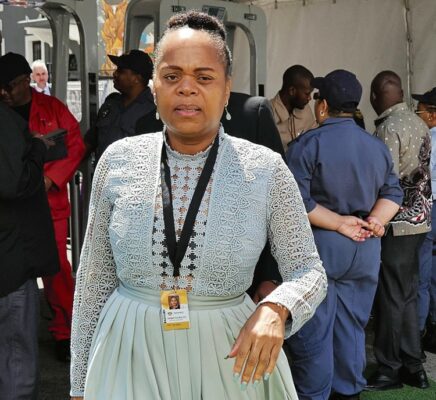
The Premier, Dr Phophi Ramathuba recently told President Cyril Ramaphosa that progress in reducing unemployment was deliberate and notable, but economists warn that without structural reform and economic diversification, the province risks remaining trapped within the bounds of poverty.