
Limpopo alumni campaign honors Dr. Moses J. Madiba
The memory of Dr MJ Madiba is kept alive as the secondary school named after him completes a successful alumni campaign for an infrastructure facelift ahead of its 50th anniversary.

Educationist, linguist, author and community leader Dr Moses Josiah Madiba, was born on 19 November 1909 in Uitvlucht, also known as Mahlwaneng near Setotolwane in Ga-Mashashane and he would be turning 116 years this year.
Madiba was born into a family of seven offspring and he had the same number of children. As a devout Lutheran, the number should have been significant for him as it symbolises completion or perfection from a biblical context.
Although he passed on 40 years ago in 1985, his influence on education in South Africa, Northern Sotho linguistics and literature continues. In 1973, the University of South Africa’s (Unisa) faculty of education conferred an honorary doctorate in education (DEd) on Madiba for meritorious services.
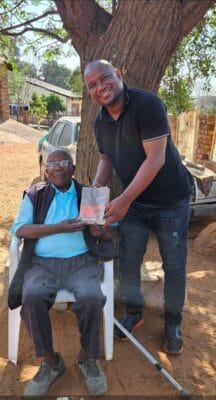
As I was reflecting on Madiba’s role in society and on the occasion of his birthday, I remembered a sit down with Professor Mogobo Boy Nokaneng (former announcer of Radio Bantu, forerunner to Radio Lebowa, now Thobela FM) on the foot of Leolo mountain. I had taken a Saturday, 13 September 2025 mid-morning drive on the R579-Jane Furse road across the Lepelle river (Ngwaritsi) to Schoonoord village, Ga-Tshesane in the Sekhukhune District.
Educationist
Madiba received teacher’s training (1926-1929) at Kilnerton Training Institute, a Methodist college Pretoria and he furthered his studies at the University of Fort Fare (then South African Native College), obtaining a Bachelor of Arts (1941) and U.E.D (1942).
He taught and was a principal at various schools including Makapanspoort primary school, Kalkspruit Amalgamated School (now Solomon Maraba primary school) and Kratzenstein higher primary school between 1929 and 1935. He was appointed as supervisor of schools in the Pietersburg West Circuit in 1936, where after he became principal of the Potgietersrus Bantu Secondary School.
In 1947, he transitioned from just an educator to an educationist thus nurturing a new crop of teachers. He was appointed as lecturer and warden at the newly founded Pretoria Bantu Normal College, a precursor to the University College of the North (now University of Limpopo), mainly lecturing Sesotho Sa Leboa home language and education methodology.
Prof Nokaneng is counted among the above-mentioned college’s former students and mentioned to me others such as Archbishop Emeritus Desmond Tutu, Bishop Emeritus Stanley Mogoba, Professors Mafori Mphahlele, Maje Serudu and Phihlo Mminele.
In 1948, Madiba became founder principal and superintendent of Mokopane Teachers’ Training Institution (defunct Mokopane College of Education), a state-owned college incorporating the Potgietersrus Bantu Secondary School.
Interestingly, in later years, many of the teachers trained at Pretoria Bantu Normal College such as Mafori Mphahlele, Ariel Koaho, Lucas Mokonyane, Kgomotshwaana Choshane and John Malapane (one-time Radio Bantu announcer), went on to teach at the Mokopane College of Education, which Nokaneng alludes to Madiba’s influence.
Dr Madiba later became involved in the monitoring of education and planning, with his appointments as sub-inspector of Bantu Education (1957), Bantu Inspector of Schools (1965), and the first education planner of the Lebowa government’s department of education and culture and Bantu (1969).
He served as the first chairperson of the advisory council of the newly established University College of the North, as well as chairing the university’s education committee during the period 1960-1973. On 13 May 1978, he was installed as the first African chancellor of the then University of the North.
Linguist
Even though Madiba’s mother tongue was Northern Ndebele (siNdebele sase Nyakatho), part of the Tekela group of Nguni languages which include siSwati, isiHlubi, isiBhaca and sePhuti, he is credited with the pioneering development of the Sesotho Sa Leboa orthography.
The Northern Sotho or Sesotho Sa Leboa language comprise dialects spoken by the Bapedi, Bakoni, Bahananwa and Balobedu among others with the tribes predominantly residing in Limpopo and parts of Mpumalanga and Gauteng.
His influence on the introduction of a Northern Sotho dialect other than Kopa or Pedi is asserted by late academic, principal and vice-chancellor of the University of the North, Professor Pothinus Carl Matsiri Mokgokong in his dissertation (1966) for fulfilment of the requirements of a Master of Arts in Bantu Languages at Unisa, “A dialect-geographical survey of the phonology of the northern Sotho area”,
Mokgokong submitted that “Like Kopa, Ndebele-Sotho has exerted a considerable effect on the written form of Northern Sotho mainly through the Mahlontebe primary school series written by M.J. Madiba, who, like many other Northern Sotho writers, represents dialects around Pietersburg.”
Prof Nokaneng indicated that Madiba influenced his work as a teacher, lecturer, radio announcer and author, having first met Madiba ‘a Motlapodi in 1959 when he was an inspector of schools and him a young teacher at Matladi secondary school in Zebediela.
The Pan South African Language Board (PanSALB) was established through amalgamation of various separate language boards. Madiba was the first chairperson of the Northern Sotho Language Board with Prof Mokgokong serving as one of the members, representing Radio Bantu of the South African Broadcasting Corporation (Lekgotlakgašo la Afrika Borwa) on the Language Board.
Other members who served on the old Sesotho Sa Leboa language board, representing academia, the government and cultural sectors among others, included Prof Mokgokong, Noko Ngoepe, Lucas Kganane, Matome Mangoakoane, Adam Mamoepa, Sepedi Molepo, and Adam Makwela.
Author
Madiba’s Christian grounding clearly influenced his writing which adopted a social standpoint, in addition to being educational and humorous.
His literary works are the subject of several master’s dissertations and doctoral thesis, especially as it relates to pioneering Sesotho Sa Leboa literature for education, language development and phonology, praise poetry and appropriateness as part of children’s literature among others.
Prof Nokaneng praised the Mahlontebe series as child friendly with its pictorial illustrations. He also enlightened me about Madiba’s contemporary and another pioneering Northern Sotho author of the book Motangtang, Alfred Malesela Phalane, been born in Maune village (Maune ‘a ntlo tša go fsa as Madiba would write in the Mahlontebe series), Ga-Mashashane.
Nokaneng tells me a story Dinaga di ka etelana di ka segana in Madiba’s book Nkotsana (1955), influenced late academic and author, Professor Maje Serudu’s drama book, Dinaga ga di etelane (1977). Former Presiding Bishop of the Methodist Church of Southern Africa (MCSA) and President of the Pan Africanist Congress (PAC), Reverend Dr Stanley Mmutlanyane Mogoba also told me that Madiba had influenced him to write a drama book, Nnang (1954).
Professor Lesibana Rafapa’s 2016 article “Oral literature and the evolving Jim-goes-to-town motif: Some early Northern Sotho compared to selected post-apartheid novels written in English” published in Literator – Journal of Literary Criticism, Comparative Linguistics and Literary Studies. The journal article is noteworthy as it shines light on Madiba’s literary works and the influence on modern literature.
In the article, Prof Rafapa compares Madiba’s novelettes Tsiri (1942) and Nkotsana, written in Northern Sotho, with English books by Phaswane Mpe’s Welcome to our Hillbrow (2000) and Kgebetli Moele’s The book of the dead (2009).
He submitted that “The progressive intensity of globalisation that forms a continuum from the Sotho-speaking world depicted by Madiba in the Northern Sotho novels Nkotsana and Tsiri, to that of Mpe and Moele in the post-apartheid period should not be mistaken as implying that Madiba’s novels are banal.”
Rafapa concluded that “On the contrary, the value of his work is demonstrated by Madiba’s skilful use of proverbs to signify communal thinking, as well as by his handling of theme and language in no less a profound manner than is the case with Mpe and Moele.”
Community leader
Madiba was a lay preacher and elder in the Lutheran Church and president of the Evangelical Lutheran Church Synod, Transvaal. He chaired the constitutional committee when the Northern and Southern Transvaal synods merged, and from 1963 served as first president of the new synod.
A decent baritone singer and choirmaster, hymns 245: Reta Morena wa matla! and 246: Thabang, thabang, lehlabuleng! in “Difela tša Kereke tše di nago le dinota tša tonic-solfa” (1960) written in the Northern Sotho language.
In the Northern Ndebele history, the Madiba family are listed as Indunas or headmen and indeed, Ga-Madiba village in the Ga-Mashashane tribal area which is under the custodianship of Nkrosi Magadangele II Mashashane, is overseen by Induna Madiba.
Madiba was from 1969 Deputy Chairperson of the Lebowa Territorial Authority and advisor to Nkrosi Joel Sibasa II of the Mashashane tribe, part of MaNdebele aka Ledwaba/Maune, until the chief’s death in 1970. Nkrosi Sibasa II’s wife, Mme Tlakale Mashashane, Nareadi ‘a Hlabirwa became acting chieftainness of the Mashashane tribe from 1971, with Madiba also her advisor until his death in 1985. Nkrosi Magadangele II took over the tribe’s traditional leadership in 2003.
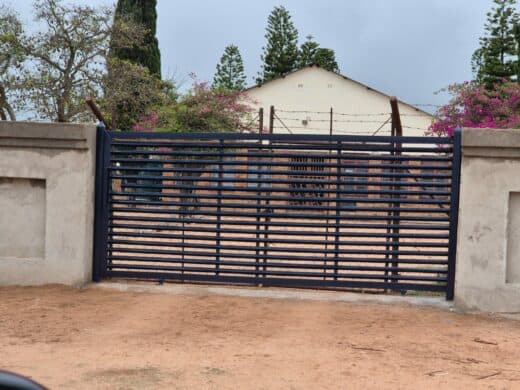
Madiba was a philanthropist and a community builder. It was therefore befitting that alumni of my alma mater, Dr MJ Madiba secondary school, Ga-Madiba village, Ga-Mashashane and named after the pioneering Sesotho Sa Leboa linguist, completed a successful #50ToFifty campaign on the BackaBuddy online platform.
The alumni campaign during the period June-September 2025 was inspired by the theme for South Africa’s Group of 20 (G20) Presidency, that is Solidarity, Equality and Sustainability. With the campaign having achieved the R20 000 set financial target, the second phase of the infrastructure facelift project, an inaugural alumni intervention, is well underway as the school builds up to the sixty-year celebration in 2026.
Besides academic prowess, the Golden Jubilee milestone will also be an opportunity to showcase the school’s rich sporting and choral music history thus in a way keeping the memory of Dr Moses Josiah Madiba alive.
Maubane is a non-practicing journalist, communicator and storyteller.