
Bottled water, yes or no?
The debate on plastic water bottles and if it is safe or not for usage, has been raging for decades and depending on what article on the Internet you are reading, many controversies can be unearthed.
POLOKWANE – When all is said and done, it is probably not a good idea to drink bottled water that has been kept in a hot car for a prolonged period or re-use a bottle without washing it properly.
Water in plastic bottles can be dangerous – and not only for you, but light reflected through water in a bottle or plastic container can cause a fire in a car, as has been reported on the Internet more than once.
There are many hoax e-mails and unreliable internet articles warning about the so-called dangers of plastic bottles, containers and films. The e-mails generally warn people about reusing plastic bottles, freezing water in them or leaving them in hot cars. Some of them also talk about microwaving food in plastic containers or covered with plastic films. Depending on the type of plastic, it can allegedly leach chemical compounds such as carcinogenics (cancer causing chemicals) into water.
Studies in the US at the University of Texas done by leaving bottles of water at a temperature of 70 degrees C for several weeks, showed that one in 20 brands had traces of BPA in the water. When leaving it for one day, there was no risk, apparently.
But what if you’ve decided not to buy bottled water, but to use a refillable water bottle to cut down on the plastic sent to landfill? One aspect that makes sense, is a warning that one should not drink water from a bottle and leave it to drink from it at another time, as bacteria which had a chance to grow in the water, may cause severe illness.
Plastic bottles
Most bottled water bottles nowadays are manufactured by using polyethylene terephthalate (abbreviated to PET or PETE) plastic bottles. While some preliminary studies have suggested water from PET bottles can contain as-yet-unidentified substances with ‘oestrogenic’ properties (which disrupt the body’s normal hormone regulation), no rigorous scientific review has backed these as yet.
The American Food and Drug Association, (FDA) has given the green light for the use of PET bottles and for the reuse so long as they are washed properly with detergent and water to remove bacteria.
The following tips and information can be attributed to articles and interviews with Public Health Association of Australia’s (PHAA)
CEO Michael Moore:
• Polycarbonate has been commonly used to make the sturdy reusable water bottles that many of us use. Polycarbonate is one of the plastics classed as ‘other’ in the recycling scheme. It has a recycling code of 7, but not all bottles stamped with a seven are made from polycarbonate.
Polycarbonate is made of a monomer called bisphenol A (BPA). As the plastic breaks down over time, BPA is released into the water held in polycarbonate bottles, particularly when the bottle is heated or repeatedly washed. Even though most national food safety agencies, including in Australia, say that the level of exposure to BPA is too low to be dangerous, food and drink companies are moving away from polycarbonate because of the bad press. Moore said there is a lot of ongoing work to look at the effects of this compound to see whether BPA genuinely represents a big issue. The position at present is that it doesn’t constitute a huge issue.
• One plastic that can be undoubtedly dangerous for making water bottles is polyvinyl chloride (PVC), which has a recycling code of 3. PVC often has phthalates added to make it flexible — though you can’t tell this by looking at the recycling code. PVC is not often used to make water bottles.
Choosing a bottle
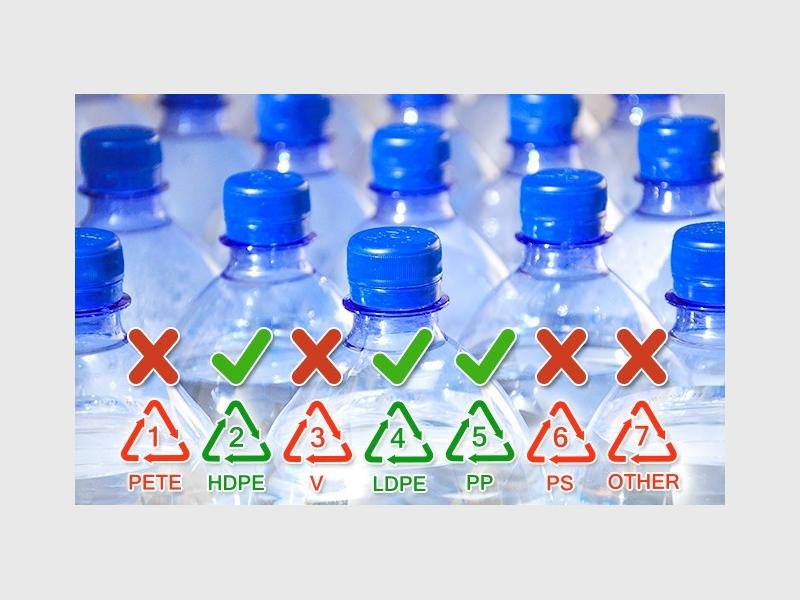
If you want to err on the side of caution, Moore suggests you avoid drinks bottles that have the recycling codes of three or seven particularly for children.
The best bottles to use and reuse are those with the recycling codes two, four and 5,2 and four are made from polyethylene and five is made from polypropylene.
“There’s absolutely nothing in polyethylene or polypropylene that could be classified as dangerous”, says Moore. But these bottles are more expensive to make, so while they are likely to be found more and more in reusable bottles, PET is likely to be the plastic of choice for single-use bottles for a while to come.
• You can also check that reusuable bottles say they are ‘BPA-free’, as some bottles may be made of number five plastic but use polycarbonate linings or mouthpieces.
• Another rule of thumb is to use clear plastic rather than coloured or opaque because they eliminate small potential risks from colouring agents added to the plastic
• And while stainless steel or aluminium bottles are often considered a safe bet, these still have some issues. Stainless steel can corrode a little over time and while the released iron won’t harm you, it’ll add an unpleasant taste to your water.
• Aluminium can also corrode and release aluminium salts into the water. One way of stopping this is to use a plastic liner, which takes you to square one. Glass is a good, but often impractical.