SEDIBENG – In recent months, the Gauteng Department of Health issued a statement on hundreds of unidentified bodies sitting in government mortuaries.
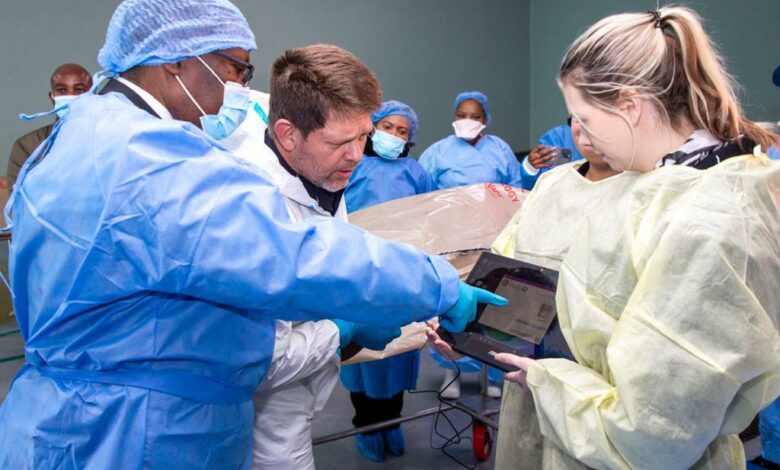
On Thursday, July 13, Gauteng Premier Panyaza Lesufi, together with Health and Wellness MEC Nomantu Nkomo-Ralehoko unveiled a digital fingerprint system to be used to identify deceased bodies at the 11 FPS mortuaries in the province.
The launch of this technology will afford many families an opportunity to find closure as they will be able to give their loved ones a dignified burial.
The innovation will help improve the quality of fingerprints collected as it uses biometric scanners and third-party access to the databases of Department of Home Affairs, South African Police Service and National Credit Bureau to identify deceased bodies.
Speaking at the unveiling, Nkomo-Ralehoko said that the introduction of the system stands as one of the transformative milestones in the field of forensic pathology.
“This innovative technology will improve quality of fingerprints collected from the deceased resulting in improved identification rate which in turn will lead to the tracing of families of known unclaimed bodies,” she said.
The system was piloted in January 2023 at five Gauteng FPS mortuaries which include Bronkhorstspruit, Johannesburg, Diepkloof, Pretoria and Ga-Rankuwa. To test the efficiency of the system, a sample of 65 body trace requests were done and 61 of these were successful identified, with 25 families traced.
Four of the bodies were found to have fraudulent identities.
Currently, there is a total of 841 unknown bodies across the 11 FPS mortuaries in the province.
150 were previously identified using fingerprints send to the Police and are still unclaimed by their families and relatives.
Efforts to trace the families are underway which involve using the super trace links to credit bureau, adverts in the local newspapers and cooperation with the SAPS to assist with the tracing.
Of the unknown deceased people, 691 are unidentified due various reasons such as burns and skeletal remains and undocumented individuals.
These would then be handed over to various municipalities for pauper’s burials.