NWU professor analyses innovation of Rassie Erasmus
Prof. Re-an Müller highlights how Rassie Erasmus’ leadership turned the Springboks into a team defined by trust, accountability, and internal culture-building, creating lasting performance beyond symbolic moments.
For years, the image of Nelson Mandela in a Springbok jersey in 1995 was seen as the moment rugby changed South Africa. But according to a leading academic, the real revolution didn’t start then; it started in 2018 with Rassie Erasmus.
Prof. Re-an Müller, deputy director of the School of Management Sciences at the North-West University, argues that while 1995 was a “powerful moment,” it was Erasmus who built a lasting culture from the inside out. He calls this the “Erasmus Effect.”
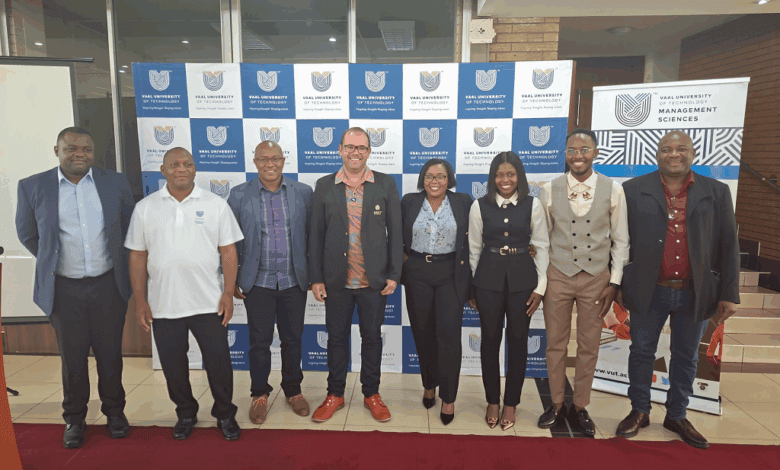
Speaking at a recent lecture as part of its 60-year celebrations, Müller explained how Erasmus changed the way the team viewed transformation. Instead of seeing it as a political box-ticking exercise, Erasmus turned it into a competitive weapon.
By appointing Siya Kolisi as the first black Springbok captain, Erasmus didn’t just meet a target; he built a team that truly reflected the nation. Müller says this created a sense of belonging that made the players perform better.
Drawing on the documentary series Chasing the Sun and his own research on internal branding, Müller highlighted how Erasmus reinforced this cultural foundation through innovation. From the “traffic light” decision-making system that enabled structured autonomy to the bold “Bomb Squad” bench strategy, Erasmus cultivated an environment in which experimentation was encouraged. Even long-serving players rediscovered enthusiasm in a system designed to keep them engaged and challenged.
However, Müller stressed that culture is ultimately tested under pressure. After losing to Ireland in the 2023 World Cup, Erasmus didn’t stay quiet. He challenged his top leaders, warning them that no one was above the standard. If they didn’t align with the team’s goals, they were out.
“If your culture depends on a single person, it is not a culture,” Müller noted, highlighting that the Springboks’ strength now lies in shared accountability.
Müller framed the Springbok journey as a powerful example of internal branding – the intentional shaping of organisational culture from within. He argued that Erasmus did not build a motivational programme, but rather a “trust architecture,” where players were willing to take risks because they believed in the system and each other.
“Play is not the absence of seriousness. It is the presence of trust. And trust is the foundation of every culture that has ever sustained excellence under pressure.”
In closing, Müller challenged attendees to apply these insights beyond sport. Whether in business, education, or organisational leadership, the principles remain consistent: trust, inclusion, and the freedom to experiment are essential to building resilient, high-performing cultures.
The lecture underscored a powerful idea: while iconic moments may inspire, intentional culture-building and trust are what drive lasting transformation.