Turtle hatchlings hatch in Southbroom
The endangered loggerhead turtle is one of the largest sea turtles weighing up to 450kg. They have crossed the oceans for over 200 million years and predate the dinosaurs.
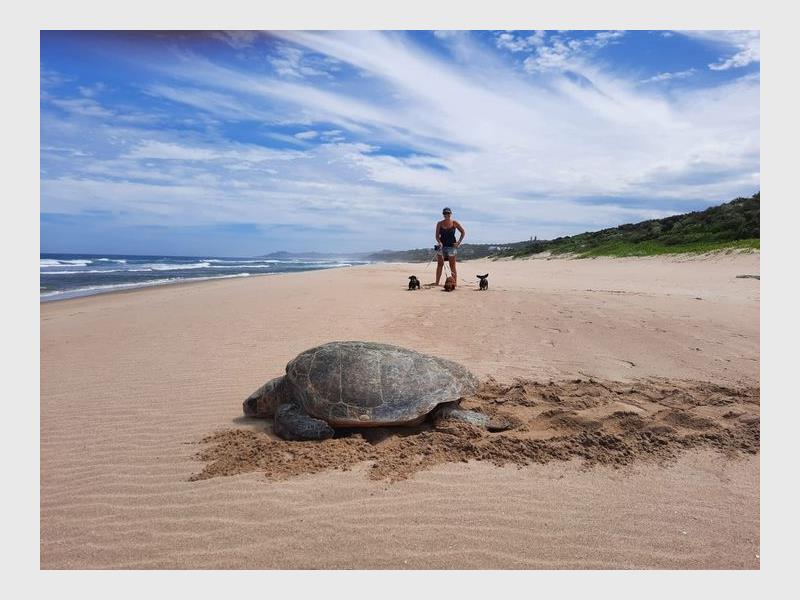
At the beginning of February this year, an endangered loggerhead turtle laid her eggs on one of Southbroom’s beautiful beaches.
This incredible event was witnessed by local residents, Lezelle and Stephen Stewart – husband and wife, vet and doctor team – who carefully watched the female lay her eggs.
Afterwards, she made her way back to the ocean leaving her little treasures in their nest.
The couple alerted Southbroom Conservancy chairman, Anne Skelton, and together they kept the nest’s location top secret, and monitored it with no interference.
The endangered loggerhead turtle is one of the largest sea turtles weighing up to 450kg. They have crossed the oceans for over 200 million years and predate the dinosaurs.
The normal incubation period for the eggs is 60 to 70 days when all the hatchlings from a clutch will be the same gender which is determined by the temperature.
Taryn Burns, who compiled an article on behalf of the conservancy, said that after monitoring the nest for almost two weeks past the incubation period, and thinking nothing would hatch, the team went to investigate the nest and after carefully digging a few small holes didn’t find anything.
Then just as they were turning to leave, Stephen had one more scratch in one of the holes and came up with a struggling hatchling.
The team carried on digging gently and found about 50 eggs and casings.
About half of the eggs had hatched, but sadly, only three hatchlings were alive and one barely alive.
The four of them were taken to the very edge of the waves and three managed to gain strength and swim away but unfortunately the weak one didn’t survive.
Hatchlings spend their first 10 years or so floating in a metre of water below the ocean’s surface, eating whatever comes their way.
Then the survivors seek better feeding grounds and return to South Africa’s beaches roughly 20 years later upon reaching sexual maturity, to the same beach to lay their own eggs.
Taryn said: “Let’s hope this is the start of something we all can look forward to protecting in years to come.”
Also, a reminder as to why dogs should be kept off the admiralty, where all these incredible things are happening including seabirds that often nest on these protected dunes.
HAVE YOUR SAY
Like the South Coast Herald’s Facebook page, follow us on Twitter and Instagram