
Bird of the Week – Whitefaced duck
The Zulu name is iVevenyane and in Afrikaans die Nonnetjie-eend.
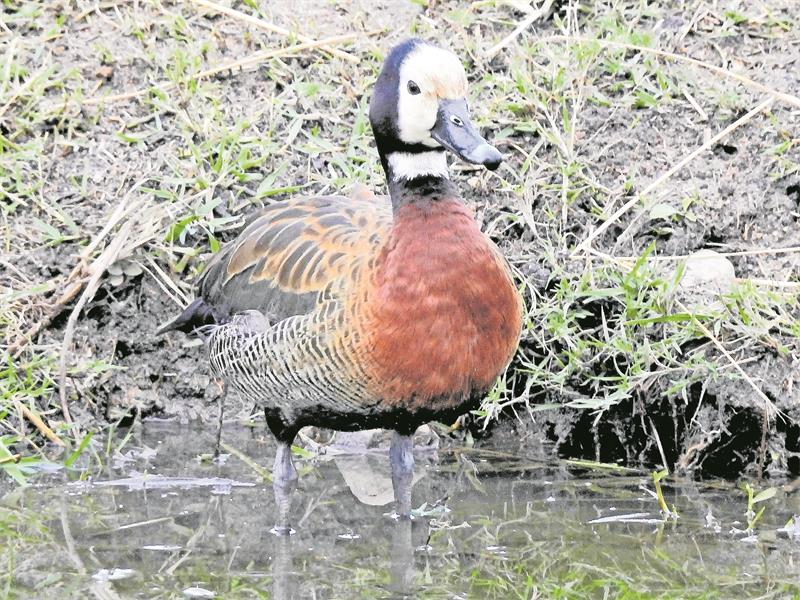
Absent from dry western parts of South Africa, also found over eastern Botswana, all of Zimbabwe and Mozambique.
They are gregarious, sometimes in flocks of hundreds of thousands of birds. On land they stand upright on longish legs, often allopreens. They swim high in the water with neck erect. Dabbles or up-ends for food and often forages at night. These ducks like large inland waters, rivers, lakes, dams, pans, sewage ponds and flood plains with some aquatic vegetation. Food preferences are buds, seeds, grain, rhizomes, tubers, grass, algae and fruit. They will also feed on mollusks and crustaceans.
LISTEN:
Both sexes have a characteristic three syllabled whistle swee swee sweeu usually in flight. Thus also called the whistling duck. Breeding takes place from October to April. The nest is a grass-lined hollow in tall grass or aquatic vegetation. They pull surrounding plants down to conceal the nest. Usually four to seven creamy, white eggs are laid. The incubation time is 26 to 30 days and they are fledglings for about 60 days.
The Zulu name is iVevenyane and in Afrikaans die Nonnetjie-eend.
DID YOU KNOW?
Click on the words highlighted in red to read more on this and related topics.
To receive news links via WhatsApp, send an invite to 061 694 6047
The South Coast Sun is also on Facebook, Twitter, Instagram and Pinterest – why not join us there?
Do you have more information pertaining to this story?
Feel free to let us know by commenting on our Facebook page or you can contact our newsroom on 031 903 2341 and speak to a journalist.
(Comments posted on this issue may be used for publication in the Sun)