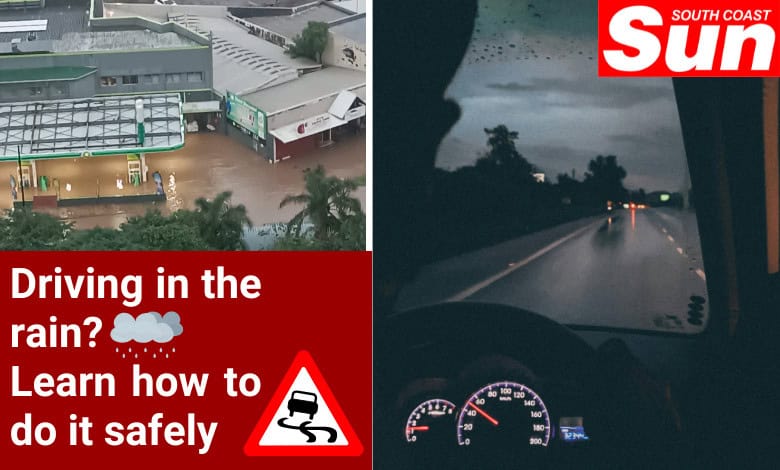
AS THE greater eThekwini area, including Amanzimtoti, has already exceeded its average annual rainfall of 1009mm midway through April, motorists are at a significantly increased level of vulnerability to road accidents due to damaged roads. A 2022 report by the Road Traffic Management Corporation found that wet roads and poor visibility caused 27% of South Africa’s road fatalities.
Also read: [Video] Amanzimtoti floods prompt warnings
Effects of heavy rain include poor visibility, further deterioration of roadways and potholes, and hydroplaning, which is when water causes a car’s tyres to lose contact with the road surface, reducing the driver’s ability to steer and brake.
The Automobile Association (AA) explained in a blog post that tyres only have around half as much grip on the surface of wet roads. Due to drastically different conditions, drivers are advised to brake earlier, enter corners at slower speeds, and maintain focus on the road ahead at all times. Furthermore, the AA said motorists should check that their windscreen wipers are functioning properly, their tyres are in good condition and their brakes are sound.
Some tips from AA include:
- Ensure your headlights and brake lights are working.
- Switch on your headlights, especially to alert other drivers of your presence on the road.
- Do not speed and maintain a safe following distance, bearing in mind that you will need more space to brake safely.
- Do not cross low-lying bridges even if you think your car can make it.
- Avoid areas where the conditions are known to be adverse.
Arrive Alive encouraged road users to never use the brakes suddenly because this may cause the car to skid. It is important to travel at slower speeds during wet weather driving.
It said, “If you find that an oncoming vehicle is overtaking from the opposite direction and will not likely do it safely, slow down and be prepared to move to the left shoulder if necessary. Only do so if you are able to clearly see around 150m ahead of you and be aware that pedestrians may be walking on the shoulder. Be careful of other vehicles to the rear and in blind spot areas as they are especially difficult to see through rain-spattered windows.”

Do you have more information pertaining to this story? Feel free to let us know by commenting on our Facebook page or you can contact our newsroom on 031 903 2341 and speak to a journalist.