
Fuel prices trend downward for South Africans
Minister of Mineral and Petroleum Resources, Gwede Mantashe, announced changes to fuel prices, with effect from January 7.
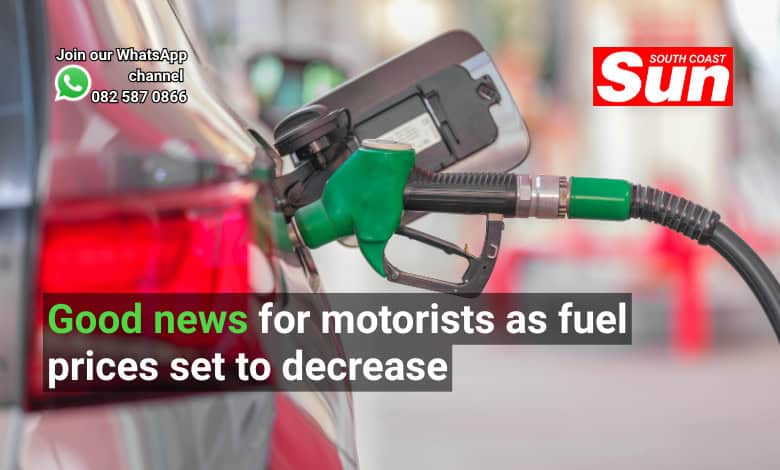
THE Minister of Mineral and Petroleum Resources, Gwede Mantashe, announced the adjustment of fuel prices, effective January 7, with prices dropping across the board for petrol and diesel.
Also read: How to maximise your leave in 2026
The price drops provide a welcome reprieve for motorists.
Based on current local and international factors, fuel prices will be adjusted as follows:
- Petrol 93 (ULP & LRP): Sixty-two cents per litre (62.00 c/l) decrease.
- Petrol 95 (ULP & LRP): Sixty-six cents per litre (66.00 c/l) decrease.
- Diesel (0.05% sulphur): One hundred and thirty-seven cents per litre (137.00 c/l) decrease.
- Diesel (0.005% sulphur): One hundred and fifty cents per litre (150.00 c/l) decrease.
- Illuminating Paraffin (wholesale): One hundred and ten cents per litre (110.00 c/l) decrease.
- Maximum Retail Price of LP Gas: Twenty-one cents per kilogram (21.00 c/kg) increase and twenty-three cents per kilogram (23.00 c/kg) increase in the Western Cape.
According to a statement issued by the Department’s media desk, South Africa’s fuel prices are adjusted monthly due to international and local factors. International factors include the fact that South Africa imports both crude oil and finished products at a price set at the international level, including importation costs.
Reasons for the price drop
- Crude oil prices
The average Brent Crude oil price decreased from 63.55 US Dollars (USD) to 61.47 USD during the period under review. The main contributing factor is the oversupply of oil in the market due to increased production by OPEC+ and non-OPEC producers.
- International petroleum product prices
The average international product prices of petrol followed the decreasing trend of crude oil. The prices of middle distillates, such as diesel and illuminating paraffin, decreased more significantly because of higher inventories for the winter season in the northern hemisphere. The prices of Propane and Butane increased during the period under review due to tighter global supply.
- Rand/US Dollar exchange rate
The Rand appreciated on average, against the US Dollar (from 17.22 to 16.85 Rand per USD) during the period under review when compared to the previous one. This led to lower contributions to the basic fuel prices of petrol, diesel and illuminating paraffin by 20,80 c/l, 22,31 c/l and 22,54 c/l respectively.
- Implementation of the Slate Levy
The cumulative slate amounted to a positive balance of R3.3b for petrol and diesel at the end of November last year. In line with the provisions of the Self-Adjusting Slate Levy Mechanism, the slate levy remains unchanged at zero cents per litre in the price structures of petrol and diesel.
- Octane differentials between 95 and 93 petrol grades
In line with the Working Rules to determine the Basic Fuels Prices (BFP), the differential between 95 and 93 octanes is adjusted on the first Wednesday of each quarter. The BFP Octane differential has changed during the previous quarter and therefore the retail prices of 95 and 93 petrol octanes will be different in each fuel-pricing zone with effect from January 7.
- The Maximum Refinery Gate Price (MRGP) for LP Gas that is imported through the Port of Saldanha Bay in the Western Cape province.
The Maximum Refinery Gate Price (MRGP) and the Maximum Retail Price (MRP) of LP Gas that is imported through the Port of Saldanha Bay will be R12 603.99 per metric ton and R33.22 per kilogram, respectively, effective from December 3, 2025.

Do you have more information pertaining to this story? Feel free to let us know by commenting on our Facebook page or you can contact our newsroom on 031 903 2341 and speak to a journalist.