
From gunpowder to global tradition: The story of fireworks across cultures
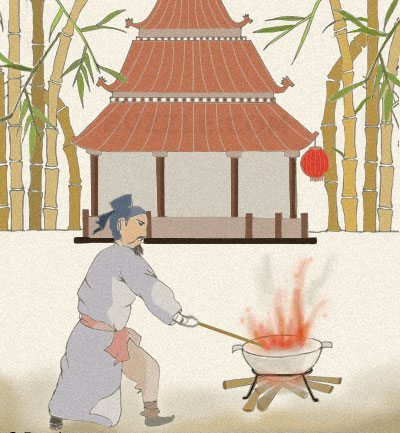
A Chinese alchemist mixed saltpeter, sulfur and charcoal, to produce a black, flaky powder – a crude version of gun powder.

FOR most pet owners, fireworks aren’t a dazzling celebration of lights and colour, they’re the exact moment blood pressure rises, teeth grind and the family dog attempts to dig a tunnel to another province.
While crowds ooh and aah at the sky, pet owners are inside negotiating peace treaties with trembling cats, wrapping dogs in blankets like anxious burritos, and loudly muttering words that are definitely not part of the festive spirit.
Also read: Fireworks warning: Illegal displays, heavy fines and safety risks
To them, fireworks don’t say “Happy New Year”, they say, “Good luck explaining to your pet that the world is not, in fact, ending.”
But, where did it all start? According to the American Pyrotechnics Safety and Education Foundation, many historians believe that fireworks originally were developed in the second century B.C. in ancient Liuyang, China. The first ‘firecrackers’ were bamboo stalks that when thrown in a fire, would explode with a bang because of the overheating of the hollow air pockets in the bamboo. The Chinese believed these natural ‘firecrackers’ would ward off evil spirits.
According to legend, a Chinese alchemist mixed three ingredients, saltpeter, sulfur and charcoal, to produce a black, flaky powder – a crude version of gun powder. The Chinese then filled paper tubes with gunpowder and inserted fuses made from tissue paper to make firecrackers. The Chinese used fireworks to celebrate the most important events in life – a birth, a wedding, a death, holidays and coronations.
The use of fireworks spread to Europe eventually, first to celebrate military victories and later in public celebrations and religious ceremonies.
Legend has it that Captain John Smith set off the first fireworks display in the American colonies in Jamestown, VA in 1608. He and other settlers used the fireworks to celebrate special events. Fireworks were used in the first July 4 celebration in 1776.
Americans use fireworks year-round to celebrate national holidays, sporting events, and other multicultural events, but the ‘big day’ is still the Fourth of July.
1. Eat 12 grapes at midnight (Spain)
Nochevieja, Spanish for ‘New Year’s Eve’, is a tradition from Spain and also a Mexican New Year tradition to bring luck for the next year. At midnight, celebrators eat las doce uvas de la suerte (12 grapes for luck) to symbolise the hours on the clock.
2. Bang on pots (Ireland)
No one wants bad spirits hanging around for the new year! Join the Irish and scare away unwanted spirits and poor fortune by banging pots and pans at midnight.
3. Serve oysters and Champagne (France)
A traditional part of French New Year’s Eve parties is Le Réveillon de la Saint Sylvestre or Le Réveillon du Nouvel An, a feast that often includes oysters, foie gras, and of course, Champagne. The custom alludes to Aphrodite, the goddess of love and beauty who emerged from the ocean on a beautiful oyster shell.
4. Welcome dark-haired visitors (Scotland)
Hogmanay is Scottish Gaelic for ‘the last day of the year’, and a tradition that dates back to the 8th century when the Vikings invaded Scotland. For good luck in the new year, Scots practise the tradition of ‘first-footing’, where the first person, preferably a dark-haired person for the best luck, to enter a home in the New Year brings a small gift for good fortune. They also burn large bonfires to reflect the Vikings’ winter solstice celebrations.
5. Burn down the old year (Italy)
The Italian New Year’s tradition of il Rogo del Vecchione (‘The Old Man’s Burning’) in the Italian city of Bologna involves burning down the old year, or in this case, the effigy of an old man, to burn last year’s bad luck and make way for good.
6. Wear coloured underwear (Mexico)
During the New Year’s Mexican tradition Año Nuevo, celebrators wear different coloured underwear for different wishes for the new year, red for love, yellow for happiness, green for wealth and white for peace.
7. Watch fireworks (Australia)
For many cultures, fireworks at midnight traditionally scare away evil spirits and bad luck, with the benefit of a wonderfully festive way to end last year.
8. Jump in the new year (Denmark)
In Denmark, partygoers leap from their chairs at midnight to start January with good luck (known as Hoppe ind i det nye år, or ‘jumping in the new year’).
9. Leave the door unlocked (Ireland)
Irish New Year’s traditions include honouring ancestors and lost loved ones, both by leaving doors unlocked for their spirits to enter and saving an empty place at your New Year’s Eve dinner.
10. Toss a coin into a river (Romania)
A gesture of luck in many cultures, tossing a coin into a river in Romania is supposed to bring luck on New Year’s Eve. If you don’t have a river around, a local fountain will do.
11. Dress in polka dots (Philippines)
Like many other cultures, Filipino New Year’s traditions involve wishing for good luck and prosperity for the next year. Wearing polka dots is traditionally thought to bring prosperity and wealth since the round shapes look like coins.
12. Throw plates (Denmark)
Another Danish New Year’s Eve tradition involves a lot of noise, and broken dishes. On December 31, Danish partygoers traditionally throw old plates and glasses against the front door to banish bad luck.
13. Clean your house (Japan)
Because New Year’s Eve is seen as a new beginning in Japan, Japanese New Year’s traditions include using December 31 to clean their homes as part of osouji (‘deep cleaning’) to welcome Toshigami, the god of the new year.
14. Wear white clothing (Brazil)
Put away the red and green and pick out something white for good luck this year, just like the Brazilians do every December 31.
15. Hang onions (Greece)
Welcome good spirits of fortune and fertility into your year by hanging onions above your door. Bonus: You can use them the next day for a delicious Greek New Year’s Day meal.
16. Go ice fishing (Canada)
Nothing says a new start like a trip to a freezing lake, followed by roasting delicious, fresh-caught fish.
17. Have 12 moments of silence (Russia)
Unlike many celebrations that become louder just before midnight, Russian New Year’s Eve parties get much quieter. They reserve the last 12 seconds of the year as a silent tribute to the year gone by, and to make a wish for the year yet to come.
18. Throw furniture from the window (South Africa)
Historically in South Africa, New Year’s Eve is a time for letting go of past baggage, literally. Many South Africans celebrated the new year by tossing unwanted furniture out their windows, preferably away from bystanders.
19. Run with an empty suitcase (Colombia)
Want to travel in the new year? Find an empty suitcase and run around the block with it at midnight. Colombians believe that doing this correctly will guarantee many safe travels in the year to come.
20. Tell your future with metal (Finland)
If a resolution isn’t enough for you, spend your New Year’s Eve interpreting messages from the future. Finnish celebrators cast molten tin into the water to see what foretelling shapes come up.
21. Visit a cemetery (Chile)
Chileans use New Year’s Eve to reflect on memories from the past. They hold mass in local cemeteries to honor and spend time with loved ones who are gone.
Paperless Post.

Do you have more information pertaining to this story? Feel free to let us know by commenting on our Facebook page or you can contact our newsroom at 031 903 2341 and speak to a journalist.