Reef looters decimate Garvies
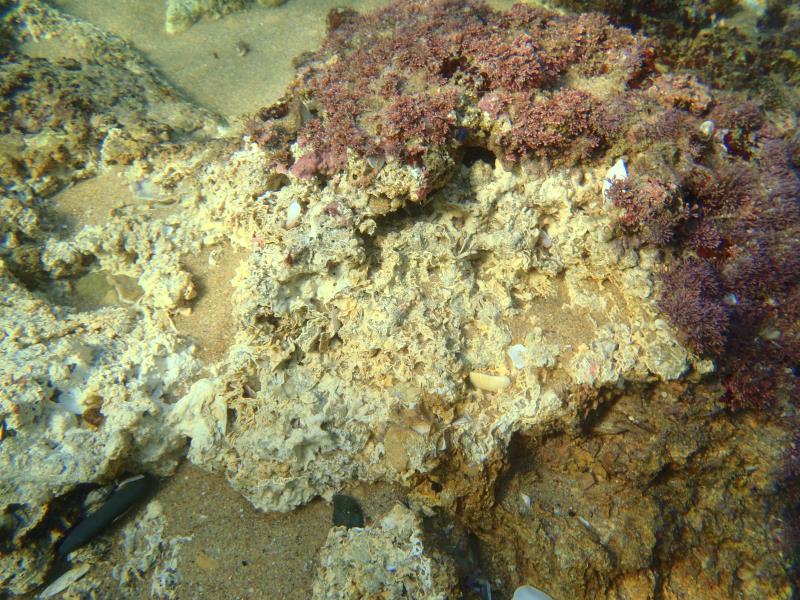
Large sections of the reef rock at Garvies beach has been removed by looters.
GARVIES reef looters have made off with more than R20,000 in illegally pillaged live rock, causing damage to the sensitive ecosystem and possibly killing small marine creatures.
While snorkelling near Garvies Beach on Thursday, 10 July Bluffite Graeme Hastie heard a peculiar tapping noise under the water. A search nearby revealed a man with an axe and a crowbar hacking at the reef.
“He was breaking huge chunks of rock and putting them in a container. There was another guy on the shore with more buckets of live rock. When I asked him if he had a licence, he got defensive and said the live rock was for his fish tank, although he clearly indicated he didn’t know what its function was,” said Hastie.

He told them what they were doing was unacceptable and the men left the area. “I snorkelled to where they were doing their operation and was disappointed to see how much of the reef had been hacked away. It’s evident this has been going on for a while – it’s definitely not an isolated incident.” He estimates the total area of damage was about three square metres and about 300kg of live rock was removed. “This particular type of live rock is sold in pet shops for between R70 to R150 per kg.”
Various South African acts prohibit the collection of live rock without a permit and even with a permit collection is limited to a few kilograms per day per person. The removal of this rock destroys the infrastructure of the reef and the environment for many small creatures. Some organisms will die off because the habitat was destroyed. This is why there are strict guidelines in place for the removal of live rock and other minerals.

“I’m proud of the Bluff beaches – I grew up diving and surfing on the Bluff. The ocean is very much part of the Bluff residents’ culture and this can’t continue. We are protective over our surf spots and we’ll protect our reefs with the same amount of enthusiasm if nothing is done to curb this.”
Requests have been sent to the KZN Wildlife for information. Updates to follow.