
A praying mantis that looks like a flower
The adults are aggressive mimics of flowers, waiting until prey approaches to grasp it with their foreleg.
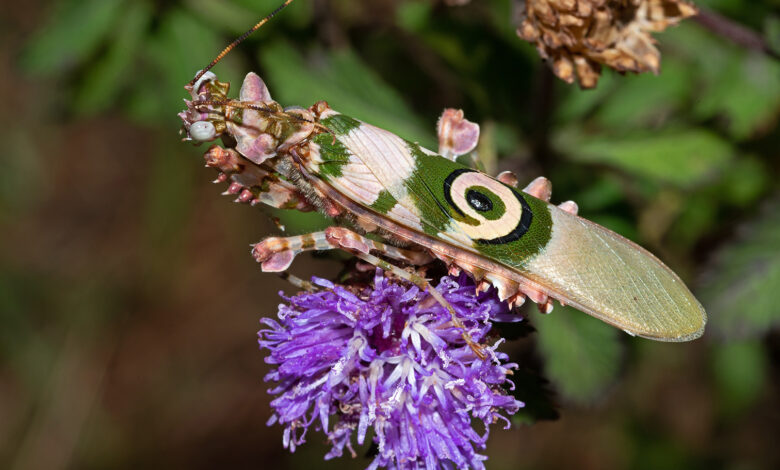
THE spiny flower mantis is a beautiful and colorful flower mantis. As nymphs (babies) they merely measure about 2,5cm in size and as adults they are about 10cm in length and able to fly. The scientific name is Pseudocreobotra wahlbergi.
“I saw my first spiny flower mantis in my own garden in July 2011, and have been fascinated by them ever since. It is amazing what kind of little creatures one can find in your own backyard if you just take the time to look. Once adults their abdomen flattens out, with wings covering their back. They also have eye markings on each forewing which also gives them their other common name of eyed-flower mantis,” said Warren Dick.
ALSO READ: Montclair pre-school wins in best verge competition
The spiny flower mantis is very common to grasslands and gardens in the greater Durban area, however, seldom seen due to their amazing camouflage.
“The Kenneth Stainbank Nature Reserve is my favourite place for finding and photographing them. If you have been for a walk in the reserve, I can guarantee that you have walked right past a few of these. Left undisturbed these mantises will happily live out their entire nymph life on the same plant, only flying off once they mature into adults.”
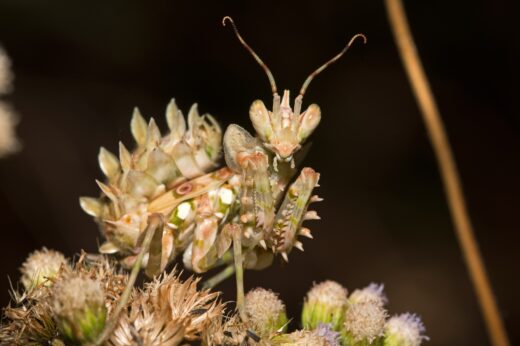
They are also able to change colour to adapt to their surroundings, as the plant that they live on changes through the seasons, however, they do not adjust their colour as quickly as a chameleon does. It can take these mantises about two weeks to adjust if they are moved to a different colour flower.
Like all other species of prey mantis, the spiny flower mantis is carnivorous, feeding on other insects. They often sit in the middle of flowers, or on another conspicuous perch where they take on the exact colour of their surroundings, leaving them invisible to the untrained eye. There they wait for unsuspecting insects to pay the flower a visit, and lunch is served.
Do not let their small size and dainty looks fool you, they are able to withstand the worst storms and are powerful enough to catch and feed on the largest butterflies.
The average life span of the spiny flower mantis is about one year. Their eggs hatch between the end of December and mid-February. The nymphs mature in spring, getting their adult wings. They then fly off looking for a mate, lay eggs and die, so that the new cycle can start again in summer.
“It is mostly an old wives’ tale that says female prey mantises eat the male after mating. If this were to happen 100% of the time, it would have a detrimental effect on the mantis population. It does happen, but very rarely,” added Warren.
Contact Warren to have some of your interesting insects, snakes or spiders identified. Call or WhatsApp him on 072 211 0353.
DID YOU KNOW?
Click on the words highlighted in red to read more on this and related topics. To receive news via our Telegram group, send a WhatsApp message to 084 418 2286.
For more Southlands Sun news, follow us on Facebook , Twitter and Instagram. You can also check out our videos on our YouTube channel or follow us on TikTok.