
Quest for an authentic South African heritage
As a youth born and raised in a post-colonial era, juxtaposing that with being of colour and having had the privilege of attending a multi-racial schooling system inclusive of both stages of childhood and teenage years, I suddenly feel extricated from the meaning of identity or identifying myself with my heritage.
As the day fast approaches, I am like many South Africans whose contextual existence resides within blurred lines of Western civilisation.
The intrinsic values of accepting where one comes from or more specifically, what defines us in the context of cultural heritage, is the most evident and current misnomer about heritage or Heritage Day that equates largely to culture.
However, defining it within the borders of Southern Africa requires an objective view.
Our heritage, I believe, is not my topic but encompasses various facets that make up our identity, namely, sport, music, spiritual heritage, beliefs and literature, to name a few.
Our heritage then cannot necessarily trickle down and be quantified as merely represented by “braai day” or “cultural” where persons on either end of the spectrum have a few beers or wear traditional attire.
The emphasis should be on celebrating firstly the ethnic diversity of our land and infusing it with a sense of journey and the transitions that we as a people have endured over the past two decades or so.
From the inception, September 24, is a celebratory day in honour of King Shaka to the myriad of staples that we have come to embrace as our heritage as people of the South.
Our being can strongly be identified with a wild animal because of us being resilient, headstrong and wild at heart.
Such values are the mortar and clay that create and mould the identity of South Africa.
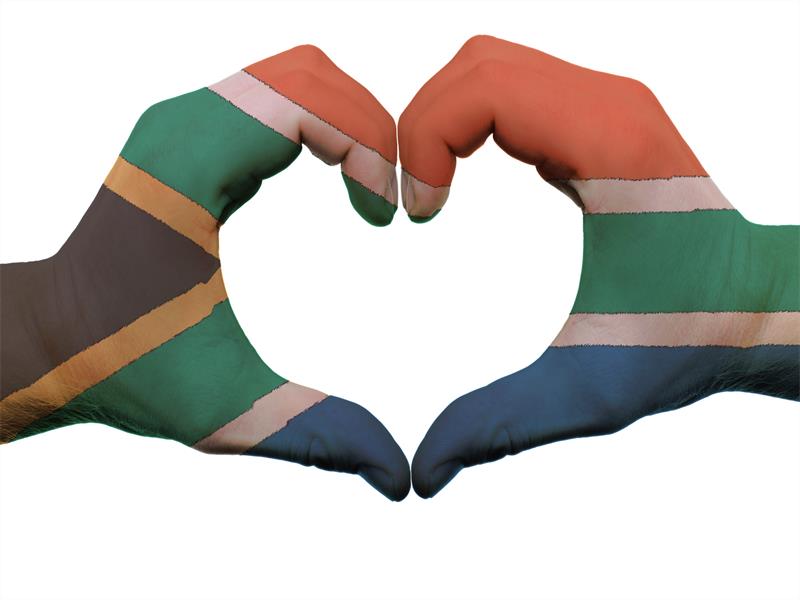
South Africa can now identify itself with the coat of arms, flag, national anthems, floral, bird, animal and other emblems.
The various people and cultures that paint the canvas of South Africa assimilate their different worldviews to create the picture of a rainbow nation. It’s these symbols, among many, that we need to celebrate, young and old.
Heritage, or Heritage Day, should not be a mere facade that South Africans put on to appeal to the world.
However, authoritative and constructive dialogue is needed in schools, homes and media in order to incorporate the various strands of the motherland.
It brings to mind a quote: “When South Africans celebrate the diverse cultural heritage that makes up a ‘rainbow nation’, it is the day to celebrate the contribution of all South Africans to the building of South Africa” – Stephen Lowry, 1995.
This quote highlights the importance of building South Africa and implies that as people of post-colonialism, it is time to engage in active citizenship with regards to heritage.
The indigenous values need to take root in all of us, whether one has had formal education or gone to multi-racial schools, to drive back the meaning of identity in the young by the old.