
Is the DWS presence in Emfuleni part of the 2021 Municipal Election Campaign?
Are the latest plans of the national Department of Water and Sanitation to restore Emfuleni’s wastewater infrastructure within the next three years merely part of a ploy to gain voter support for next year’s municipal elections? Or is it a sincere initiative?
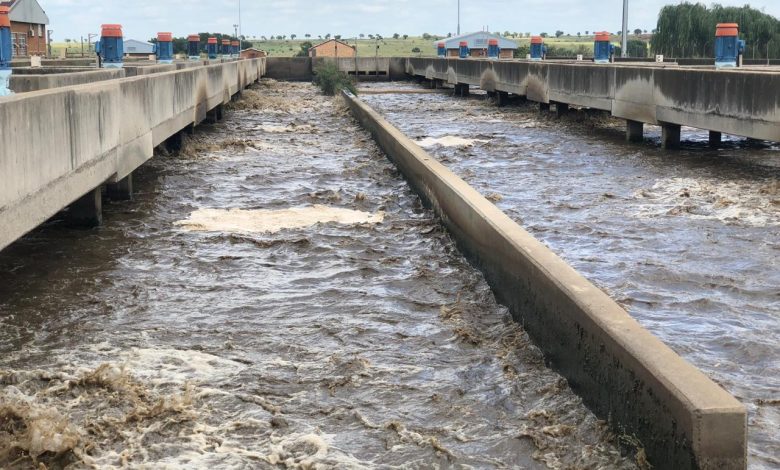
The past two weeks’ high-profile visits of Trevor Balzer, the new acting Directorgeneral of the Department to Vanderbijlpark and Emfuleni, obviously with the knowledge of Minister Lindiwe Sisulu, will have critical local residents seeing it as a mere instrument of political posturing. It is a legitimate standpoint. Since 2007 Emfuleni’s wastewater infrastructure have been subject to maintenance work, aborted attempts at upgrading the system. Prime role players have been Rand Water, the South African National Defence Force, ERWAT and now once again the DWS, working in collaboration with Rand Water as its implementation agent.  And still it is not the end. Another side of the coin is perhaps the daunting challenge we have in respect of water supply security. Rand Water’s operations of extracting Vaal Dam water for users in the province of Gauteng and parts of North West, Free State, Mpumalanga and even Limpopo rely on an assurance of supply to at least 14 million people – and numerous key industrial operations. Phase 2 of Lesotho Highlands Water to secure sufficient South Africa’s most densely populated region, Gauteng, up to 2035, is critical to the Vaal River system. Currently the Vaal Dam is only 32% full and the Lesotho Highlands Water Project’s storage facilities in Lesotho itself are less than 10% of capacity. Moreover, the upstream emergency water supply of Sterkfontein Dam has not increased substantially since the emergency ‘test run’ of supplies into the Vaal Dam way back in 2017. In short: we cannot afford the luxury of simply diluting the water of the Vaal River Barrage to diminish the bad polluted quality of the river’s water. Recently information in the water sector surfaced that the Lesotho Highlands Water Supply Phase 2 should be properly finished by 2026-7. The project’s planning started in 2015. It was scheduled to be finished by 2022. Assurance of drinking water supply is vital. In 2017 Rand Water, in view of a potential drop in available water from Lesotho, committed itself to only extracting 1600 megalitres per day from the Vaal Dam – well below it usual abstraction. Currently, with the Vaal Dam at 32% of capacity, the water quality of the dam is bound to deteriorate and potentially cause damage to Rand Water’s water purification technologies. Only the predicted and long anticipated high rainfall season can prevent potential water restrictions by the end of the year. At the coalface of Emfuleni’s water woes the wastewater crisis is paramount. Part of the crisis is over-consumption. At present 41% of Rand Water’s supply into municipal potable water systems are simply lost, as a result of leaking pipelines. Ultimately, leaking water flows into the Vaal River Barrage. More disconcerting is that by far the most water consumed in Gauteng is not paid for. Many disadvantaged households consume far more than the 6 kilolitres of free water, without paying for it. Per capita water consumption in Gauteng is well above 300 litres per day (in comparison with western Europe’s average of 176 litres per day. There are at present two conflicting demands on Emfuleni’s wastewater infrastructure problem. Urban ratepayers demand an end to wastewater leaking in all the nooks and crannies of residential areas, while unemployed protesting workers assert pressure on the authorities to secure jobs on the wastewater infrastructure projects. At last week’s meeting, Balzer said that 300 jobs had been set aside for unemployed people at the Sebokeng works. However, an additional 25 vacancies had been added, following deliberations. As a result of COVID-19, three million more people have become unemployed since the start of 2020. Government is walking a tightrope. There has to be evidence of virtuous governance and expenditure in all sectors of municipal water and sanitation infrastructure upgrades in the next three years. At the same time the country’s poor need more support. Government’s dealing with Emfuleni’s municipal wastewater crisis may in three years’ time be an iconic case study of how South Africans’ anticipation of recovery from a deep state of infrastructure collapse really panned out. By that time government will be preparing for the next national election in 2024. *The author is an extraordinary professor in the Faculty of Humanities at North-West University’s Vanderbijlpark Campus.