
Prime lending rate unchanged amid ‘favourable’ global conditions
Reserve Bank governor announces Monetary Policy Committee's (MPC) decision to keep the prime lending rate at 7%.
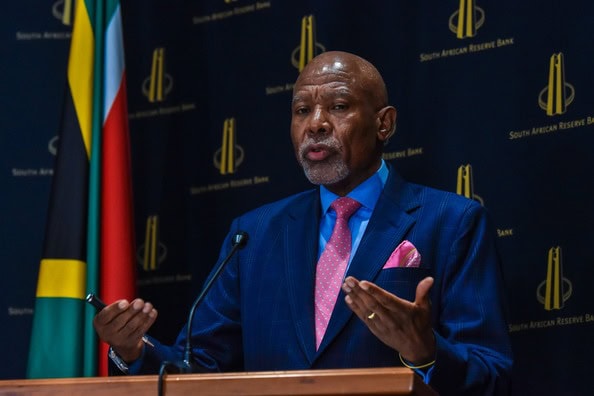
While the geopolitical environment remains difficult, and trade disruptions continue, growth is holding up and market volatility has subsided.
This was the sentiment of the Governor of the South African Reserve Bank, Lesetja Kganyago, who announced the Monetary Policy Committee’s (MPC) decision to keep the prime lending rate at 7%.
“Since our last meeting, policy rates have been cut in the United States and the United Kingdom, and the dollar has weakened. Various commodity prices have risen, although oil prices remain contained. These conditions are supportive for emerging markets like South Africa,” said Kganyago.
“However, while the cyclical factors mean global conditions are currently favourable, there are also more adverse structural developments, which are likely to prove challenging.
Long-term interest rates have shifted higher in several major economies. This reflects a range of pressures, especially high and rising debt levels, as well as inflation risks.
Positive indicators for second-quarter output
“Last week’s GDP release still surprised on the upside, with the highest quarterly growth rate in two years. We have therefore marked up our growth forecast for the year, from 0.9% to 1.2%. This is despite a weaker export outlook, given higher tariffs,” said the governor.
“Although the strong GDP report was welcome, we do not want to overstate the importance of one good quarter. We continue to see modest output gains over the next few years, helped by structural reforms. There are also some cyclical indicators, such as credit extension, which look positive. However, reaching a healthy growth rate will require much higher investment levels than we are achieving now.”
The MPC further anticipates that headline inflation will rise over the next few months, peaking at around 4%.
The forecast now incorporates higher electricity price inflation, of nearly 8% rather than 6%, given the recent pricing correction by NERSA.
This is a reminder of the serious dysfunction in administered prices, which undermines purchasing power and weakens growth.
The solution to this crisis is not a higher level of inflation, but rather sector-specific reforms to improve efficiency, added Kganyago.
“Against this backdrop, the MPC decided to keep the policy rate unchanged, at 7%. Four members preferred to keep rates on hold, while two favoured a cut of 25 basis points.
Since September last year, we have reduced rates by 125 basis points, and we want to see how this is affecting the economy, how expectations evolve, and how inflation risks are resolved,” said the governor.
Don’t have the ZO app? Download it to your Android or Apple device here:


HAVE YOUR SAY
Like our Facebook page and follow us on Twitter.
For news straight to your phone invite us:
WhatsApp – 060 784 2695
Instagram – zululand_observer