To curb road fatalities.

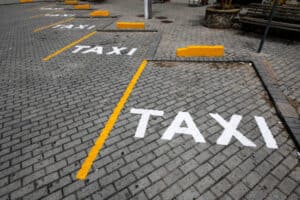
Before a taxi driver takes a trip, they must do a breathalyser test, which will be linked to the vehicle. Picture: Moneyweb


A total ban on any drinking and driving is coming for South African motorists while breathalysers are to be installed in taxi vehicles that will prevent drivers who have been drinking from operating the vehicle.
South African National Taxi Council (Santaco) President Abnar Tsebe said on Thursday the breathalysers are to be installed in taxi vehicles “immediately”, with the focus on long distance taxis “for now”, especially ahead of the Easter holidays.
Speaking at a briefing on the 2025/26 festive season road safety performance, Tsebe said before a taxi driver takes a trip, they must do “a breathalyser”, which will be linked to the vehicle.
If it shows the driver has been drinking alcohol, the vehicle will not start.
Tsebe said drivers must do another breathalyser test after driving a certain number of kilometres and there are camera systems in vehicles “so we are able to monitor that they are doing the right thing”.
He said it will take a lengthy period to install breathalysers in all taxi vehicles but Santaco will be starting at the taxi ranks with its marshalls in collaboration with its taxi associations.
ALSO READ: Minister Creecy proposes total ban on drinking and driving after festive season claims 1 427 lives
Stats improve but ‘national shame’ remains
Minister of Transport Barbara Creecy said preliminary data indicates a 5% reduction in fatalities and accidents during the latest festive season compared to the same period the previous year.
She said 1 427 fatalities were recorded from 1 172 road accidents in the 2025/26 festive season, with the data showing the season recorded the lowest number of accidents in five years, and the same number of fatalities as in the 2023/24 festive season.
Creecy said the number of deaths caused by road accidents is nonetheless “a reason for national shame”.
“Analysis of reported crashes throughout the year confirms that human behaviour, and particularly reckless driver behaviour, remains the leading cause of road trauma, with speeding and drunk-driving a major cause of road accidents.”
ALSO READ: Drinking and driving? Here’s how many drinks you are allowed
‘We have to do more’
Creecy said the Department of Transport (DoT), South African Police Service (SAPS) and traffic law enforcement will continue with enforcement and behaviour change operations but stressed “we have to do more”.
“Our driving and drinking policy was formulated almost 30 years ago. In today’s South Africa it is totally unacceptable that there is a law that allows people to drink and then drive.
“I have never understood this. I cannot explain this to anyone who has lost a parent, a brother, a sister, a child as a result of a road accident.
“The time has come for us to amend the law so we have a clear-cut, easy-to-understand and unambiguous policy that says drinking and driving is not allowed,” she said.
“A law that allows drivers to drink a certain amount and then get behind the wheel of a car must be scrapped – so we will begin an amendment to Section 65 of the National Road Traffic Act.”
Creecy added that the road accident death toll is “way, way too high”, which is why the DoT will be introducing the new measure to prevent any form of drinking and driving because all scientific evidence indicates that alcohol intake diminishes concentration.
She said 40% of accidents occurred between 15 and 28 December and did not occur on the national highways but on back routes, and they involved private vehicles and occurred in the evenings.
“Those factors tell us that these were not travellers who were moving to a long distance destination. These were party revellers who had accidents, serious accidents that resulted in several deaths.”
Creecy stressed that taxis are not responsible for the majority of accidents, with only 7% of accidents involving taxis although there is a likelihood of multiple deaths in taxi accidents.
“The majority of accidents were private citizens travelling on minor roads after partying,” she said.
Tsebe said that when the taxi industry launched the Hlokomela Road Safety Campaign in 2010, it (the industry) was alarmingly responsible for nearly 48% of accidents during peak travel periods.
However, since then, through focused leadership and close collaboration with the DoT, its agencies and private-sector partners, Santaco has driven a significant reduction in accidents.
ALSO READ: Call for responsible drinking to save lives on roads
Fines and Aarto
Creecy said in January last year when releasing the 2024/25 festive season road safety report that the DoT was planning to hit motorists in their pockets with increased fines for reckless and drunken driving and other traffic violations following an alarming increase in festive season fatalities from road accidents.
She said on Thursday that traffic fines have not increased but the DoT is rolling out the Administrative Adjudication of Road Traffic Offences (Aarto) Act, which is the legal framework through which road traffic laws will be implemented.
The DoT in November 2025 postponed the implementation of Aarto to 1 July 2026. Its national rollout was initially scheduled to begin on 1 December 2025.
The DoT said the postponement followed an assessment of the state of readiness in some of the municipalities identified for the first phase of implementation.
Creecy said on Thursday the DoT increased the discussions it is having with municipalities about the implementation of Aarto and what they have to do to implement it and how long it is going to take.
“We are trying to move away from a blanket extension [of Aarto] to a conditional situation.
“It [Aarto] is a huge change and we know that municipalities are not always the strongest level of government, so we march on,” she said.
This article was republished from Moneyweb. Read the original here.