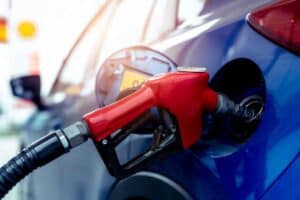
Inflation is driven higher by fuel, electricity, logistics and other administered or imported costs.
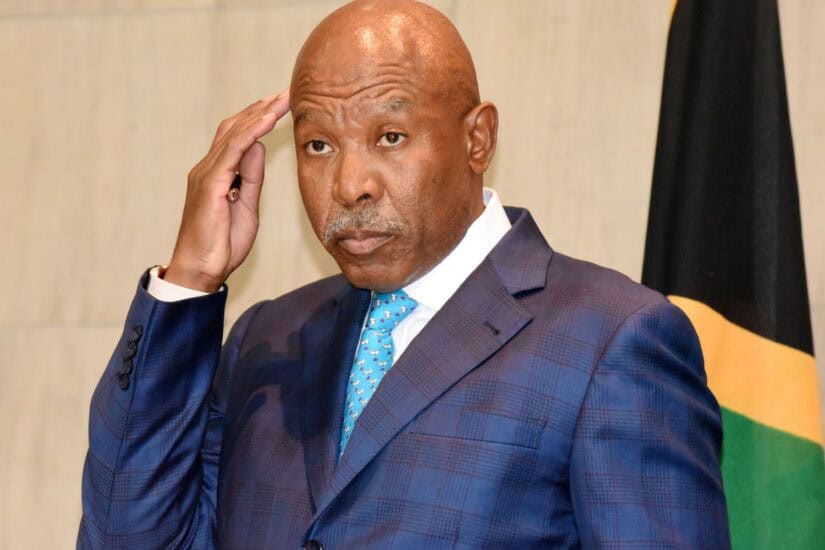
South African Reserve Bank Governor Lesetja Kganyago. Picture: Gallo Images / Business Day / Freddy Mavunda


The South African Reserve Bank’s (Sarb) Monetary Policy Committee (MPC) will on Thursday announce whether it will hike the repurchase rate (repo rate) as a response to the Middle East conflict.
Currently, the repo rate is 6.75%, which brings the prime lending rate to 10.25%. The MPC primarily hikes the repo rate to control inflation and prevent the cost of living from rising significantly.
Adriaan Pask, chief investment officer at PSG Wealth, said inflation in April increased to 4.0% – from 3.1% in March – underscoring the difficult trade-off facing policymakers: protect a fragile consumer and weak economy, or move early to prevent inflation expectations from becoming entrenched.
Inflation puts Sarb in tight position
Pask said the sharp increase in inflation is due to steep fuel prices and the knock-on effects of higher transport and input costs across the economy.
“For households already under pressure and for an economy still struggling to generate meaningful growth, that is unwelcome news,” he added. “But for the South African Reserve Bank (Sarb), it also sharpens an uncomfortable policy dilemma.”
Pask noted that the latest inflation move is being influenced by supply-side pressures rather than a booming domestic economy. “South Africa is not facing an overheating demand cycle,” he said.
“Growth remains subdued, consumer balance sheets are stretched, and the broader economy is still highly sensitive to any further erosion in disposable income. Under those conditions, higher interest rates risk adding pressure to exactly the segment that has been carrying much of the economy: the consumer.”
Increasing interest rates won’t solve problem
Pask said hiking interest rates is a straightforward response to higher inflation because it curbs demand.
By increasing the cost of credit, policymakers reduce spending in the economy and help contain price pressures. He added that when inflation is driven higher by fuel, electricity, logistics and other administered or imported costs, rate hikes do not solve the root problem.
“They can dampen demand, but they cannot directly lower oil prices or remove structural bottlenecks in the domestic economy,” said Pask.
What the Sarb can do
Pask said the Reserve Bank has been clear in recent years that it wants inflation outcomes anchored closer to 3%, not merely drifting somewhere within the old 3% to 6% range.
“If policymakers appear indifferent to a renewed acceleration in inflation, they risk a more damaging outcome,” he added.
“Higher inflation expectations becoming embedded in wage demands, price-setting behaviour and investor sentiment. Once that happens, the cost of restoring credibility becomes much higher.”
Pask firmly stated that tighter policy cannot be dismissed. “If inflation risks are left unanswered early, the danger is that medium- to longer-term inflation starts to settle at a higher level,” he said.
“For a central bank, that is a far greater threat than the discomfort of taking a cautious tightening step in the near term. It is also not only a domestic issue. Monetary credibility matters for the currency, for capital flows and for the confidence foreign investors place in South Africa’s policy framework.”
Consumer spending
Pask said it is important to note that consumer spending remains a critical engine of the country’s gross domestic product (GDP), and households are already contending with elevated debt-servicing costs, higher administered prices and weak income growth.
He added that any additional tightening would place more strain on mortgage holders, vehicle finance customers and businesses dependent on discretionary spending.
“Retailers and other interest-rate-sensitive sectors are likely to remain vulnerable if borrowing costs stay higher for longer,” he said.
Different responses needed
“This is also why interest rate policy cannot be the only answer,” said Pask. “South Africa’s inflation challenge is increasingly shaped by supply-side realities: energy costs, fuel prices, logistics constraints and other structural inefficiencies that raise the cost of doing business.
“These pressures require a different policy response. Lowering input costs through energy reform, improving logistics efficiency, reducing regulatory friction and supporting a more competitive operating environment would do more to ease inflation sustainably than relying on the interest-rate tool alone.”
He said there have been signs that policymakers need measures to cushion fuel-price pressure, the gradual opening of the electricity market, and attempts to improve logistics performance all point to a better understanding of where inflationary pressure is originating.
But reforms work with a lag, and markets will want to see consistency, continuity and execution before they assign meaningful confidence to the growth outlook.
Tight spot
Pask noted that the Sarb finds itself in a tight spot as monetary police can only partly solve the problem.
But if inflation is allowed to drift higher without a credible response, the long-term consequences for the economy could be more severe than the short-term pain of restraint.
“That is why, despite the fragility of the recovery, the Reserve Bank may still have to lean against inflation now,” he said. “The more durable solution, however, lies in reforms that reduce supply-side costs, improve productivity and give South Africa a stronger, more sustainable growth platform.”