


Tuberculosis is preventable and curable, yet it remains one of the country's deadliest infectious diseases.
 Sponsored
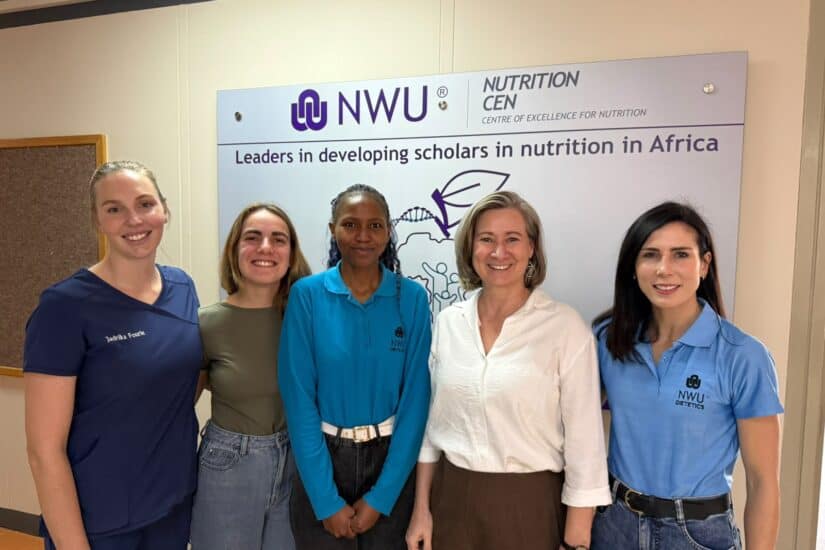
From left to right students _ Jadrika Cilliers – Chere le Hanie – Zoleka Zuma – prof Linda and Prof Arista Nienaber


In South Africa, about 249 000 people develop tuberculosis (TB) annually. An estimated 54 000 die from it.
Those are staggering numbers, says Prof. Linda Malan from the North-West University’s (NWU) Centre of Excellence for Nutrition.

“Although TB receives significant research attention, there is concern that investment in new diagnostics, drugs, vaccines and implementation strategies remains insufficient relative to its global burden,” Prof. Malan says.
She says continued research is critical to develop shorter, safer treatments, better diagnostics and vaccines, and to improve prevention and patient outcomes.
That is precisely why Prof. Malan and her team at the NWU are looking beyond the treatment of TB itself. Their question is simple: What if, alongside standard TB treatment, nutrition could help the body respond more effectively to the disease?
This potential is at the heart of the NWU’s research into omega-3 fatty acids.
The TREAT3 clinical trial, part of the Clinical Nutrition Sub-programme at the NWU’s Centre of Excellence for Nutrition, Faculty of Health Sciences, builds on 10 years of preclinical research. It is investigating whether adding long-chain omega-3 fatty acids to standard treatment can influence inflammation and the body’s response to TB.

The aim is not to replace TB medication, but to investigate whether omega-3 could help the body cope with the disease and its inflammatory effects.
“TB treatment kills the bacteria, but the body’s immune response also plays a major role in recovery,” says Prof. Malan.
Inflammation is a necessary part of fighting TB, Prof. Malan explains, but when that response becomes excessive or prolonged, it can damage lung tissue and contribute to ongoing symptoms and impaired recovery.
“That is why we are interested in the balance of the immune response,” she says. “Not simply suppressing inflammation, but helping the body respond appropriately.”
This is where omega-3 comes in.
Exploring new possibilities
Omega-3 fatty acids are essential fats involved in the immune system and regulation of inflammation. They occur in foods including oily fish, seafood, nuts and seeds. The NWU research, however, focuses specifically on long-chain omega-3 fatty acids (EPA and DHA), which are abundant in fish oil.
When consumed, EPA and DHA become incorporated into cell membranes and can influence how immune cells communicate. They also provide building blocks for molecules involved in regulating and resolving inflammation.
The NWU team is investigating whether increasing omega-3 intake alongside standard TB treatment can regulate the immune response, potentially helping the body fight infection while limiting unnecessary inflammation and tissue damage.
“We’re investigating whether adding omega-3 fatty acids to standard TB treatment can safely reduce harmful inflammation and improve the body’s response to infection, while potentially contributing to faster control of TB,” says Prof. Malan.
This host-directed approach looks beyond the bacteria to support the patient’s immune function while limiting inflammation and harmful tissue damage, Prof. Malan explains.
The NWU team’s earlier preclinical work provided encouraging evidence for this approach.
In infected mice, omega-3 supplementation reduced excessive inflammation, improved markers of anaemia of infection and showed inflammation-resolving effects without increasing bacterial load. The effects were particularly evident in animals with low omega-3 status before infection.
“Interestingly, longer-term omega-3 supplementation performed better than the anti-inflammatory drug ibuprofen in some measures, suggesting that this nutrition-based intervention warrants further investigation as a potentially safe and effective way to reduce inflammation,” Prof. Malan says.
“These findings supported the concept of omega-3 as a potential adjunct, or host-directed, therapy alongside standard TB treatment.”
Taking research into practice
The crucial question is whether laboratory findings can benefit people.
That is now being tested at the Perinatal HIV Research Unit at Tshepong Hospital in Klerksdorp. The setting is particularly relevant in a country where HIV co-infection remains one of the factors complicating the fight against TB.
The clinical trial began in August 2026 and aims to enrol 40 participants, with eight enrolled to date. Participants take two grams of omega-3 fatty acids daily with standard TB medication for two months and are followed until completing treatment at six months. The trial should be completed by the end of 2027.
“The work brings together nutrition, immunology and TB research,” says Prof. Malan.
For the researchers, the appeal lies in what the findings could mean beyond the laboratory.
If omega-3 improves outcomes, omega-3-rich foods could be incorporated into TB care alongside standard treatment instead of relying solely on supplements.
In South Africa, Prof. Malan highlights affordable oily fish such as pilchards because they provide EPA, DHA, high-quality protein and other nutrients that may support recovery.
A food-based approach could potentially be more sustainable and accessible in resource-limited communities.
“What excites us most,” she says, “is the possibility that a simple, affordable nutritional intervention could complement TB treatment while addressing both infection and the patient’s broader nutritional and inflammatory needs.”
Content supplied by our select Partners and paid for content ad advertisement.


