This follows a Labour Court judgment citing there is no harm arising from proposals made by Pick n Pay.
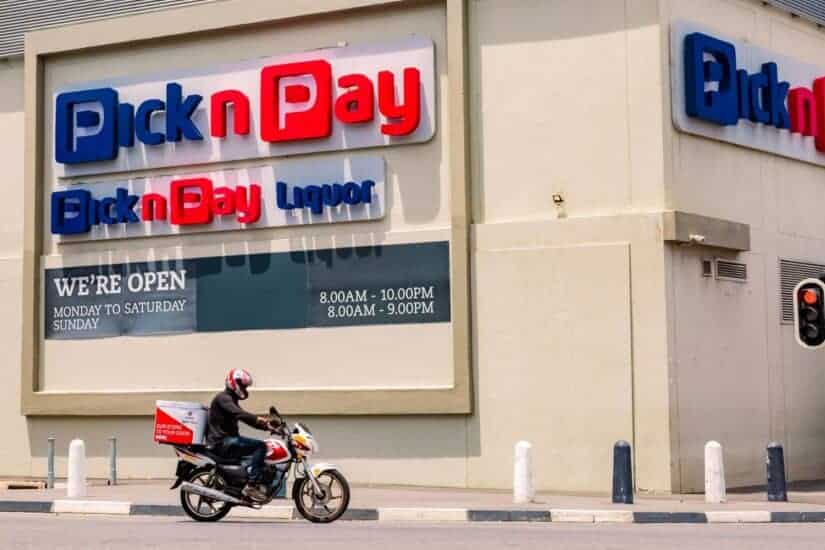
Picture: iStock


Pick n Pay has withdrawn its section 189A consultation process, which affected at least 22 000 workers.
This is a win for the labour union, South African Commercial, Catering and Allied Workers Union (Saccawu), as it has been at the forefront of stopping any outcome that would harm its members.
There was a point when talks intensified to the point that the minister of Labour and Employment, Nomakhosazana Meth, had to intervene. However, this saw little fruit as Pick n Pay continued with consultations.
Pick n Pay plans to cut salaries
Technically, the retailer was not looking to retrench the affected employees; it wanted to change some of their working conditions, including reducing salaries and other benefits.
Although section 189A sets out a structured consultation and legal framework for mass retrenchments by larger employers, Pick n Pay has always maintained its aim is not to lose jobs, but to return the retailer to profitability.
The retailer has not returned to profitability, as it told shareholders it expects a loss per share (EPS) and a headline loss per share (HEPS) for the first half of 2027.
Pick n Pay withdraws talks
Pick n Pay told shareholders on Thursday that it has reached an agreement with Saccawu, so the section 189A talks will not continue. The retailer said more details about the agreement will be released on Monday, 26 October 2026.
“Shareholders are advised that Pick n Pay has reached agreement with Saccawu, its primary labour partner, marking a successful conclusion to the consultation process. As a result, the Company has formally withdrawn the consultation process initiated in terms of section 189A of the Labour Relations Act.
“Further information will be provided as part of our H1 FY27 results publication on Monday, 26 October 2026.”
Difficult process
Pick n Pay added that it recognises that the consultation process has been difficult for those affected.
“The company acknowledges the constructive and respectful manner in which our labour partners and employee representatives engaged throughout the process,” it added.
Labour Court judgment
The withdrawal of consultations follows a Labour Court judgment that ruled Saccawu cannot halt the consultations because talks are still ongoing and the union cannot prove harm to employees.
“In the light of the ongoing consultations, one cannot seriously speak of any imminent threat or harm, for the Court to conclude that substantial relief cannot be obtained in due course,” said Judge Edwin Tlhotlhalemaje.
“Effectively, this application was premature. What Saccawu seeks depends exclusively on one of numerous possible outcomes of the consultation process as correctly pointed out on behalf of Pick n Pay, and it is not for the Court to grant relief based on speculation and predictions on the possible outcome of the consultation process, as this would clearly be prejudicial to Pick n Pay.
“It follows in line with the authorities set out regarding urgency, that in the absence of any evidence of harm flowing from the ongoing consultation process, Saccawu cannot lay claim to immediate court intervention.
“To the extent that it has been concluded that the application is premature, it follows that Saccawu has not established any right which is harmed in any manner, arising from the proposals made by Pick n Pay.
“Accordingly, it is concluded that the requirements for urgent relief have not been met in this case, and the application ought therefore be struck from the roll. Further, in light of these conclusions, there is no basis for the alternative relief that Saccawu seeks.”