


Business and government elites have been in Davos this week sharing ideas and prompting South Africa as an investment destination.
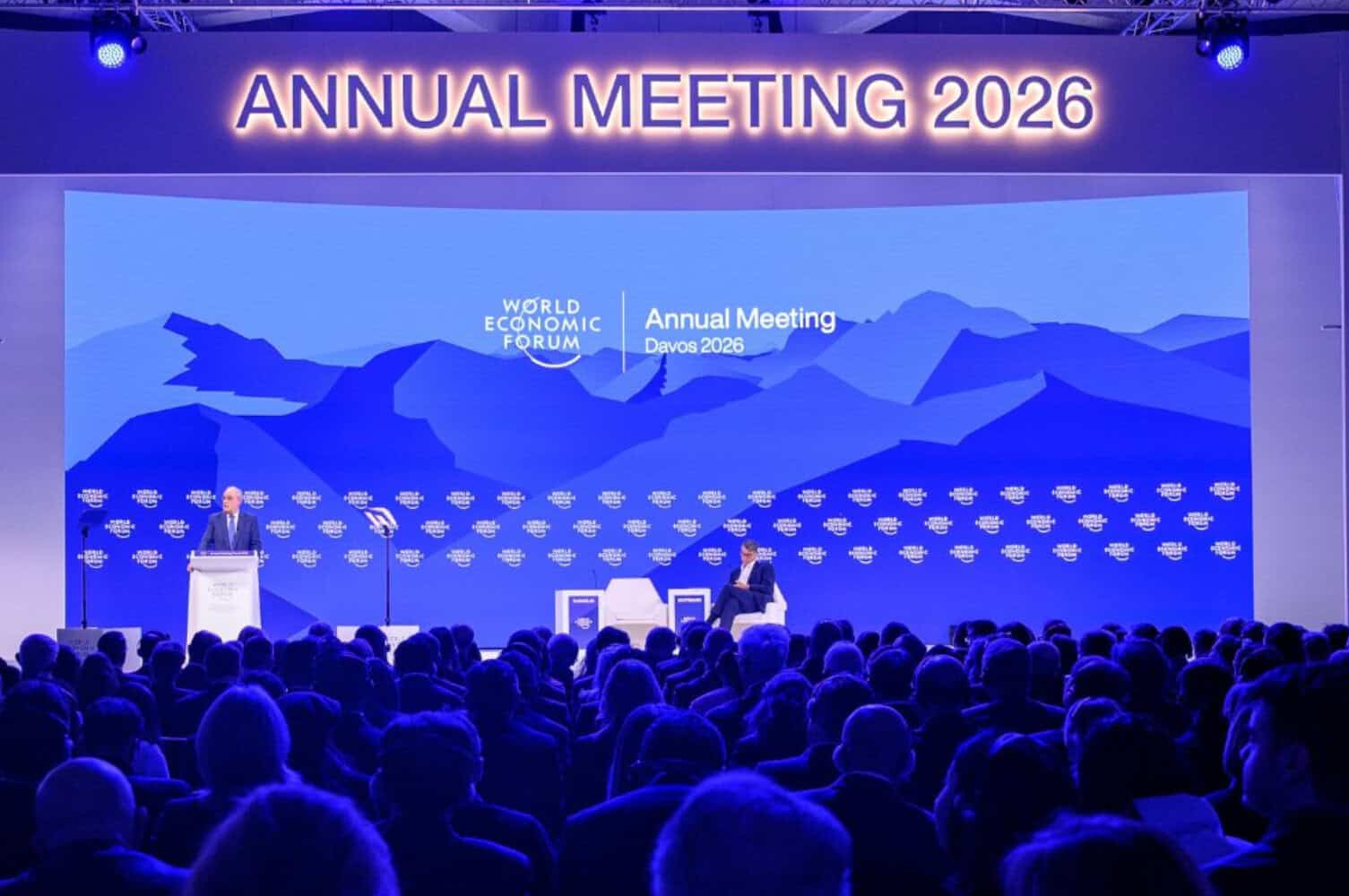
The main stage at the World Economic Forum in Davos. Picture: X / @wef


The World Economic Forum (WEF) will conclude on Friday, with time being the only measure of any future impact.
While government entities promoted South Africa’s policy positions, business executives laid the foundation for private equity injections.
Companies that touch the everyday lives of South Africans were in Davos this week, but how does their attendance affect matters on the ground?
Team South Africa
Business Unity South Africa (Busa) assisted the WEF with its annual global risks report, while the South African Reserve Bank, Development Bank of Southern Africa, Industrial Development Corporation, Transnet, Brand South Africa and Telkom were the government-owned entities listed as WEF partners headquartered in South Africa.
“We are coming to Davos to demonstrate tangible progress. The reforms are real. The progress is measurable, and the opportunities are substantial,” stated Brand South Africa CEO Neville Matkie.
Busa explained that WEF attendance by South African entities was “an enabler rather than a standalone driver” of progress in the country.
“Although the WEF operates at an international level, its value lies in sharing tested approaches on issues such as economic growth, employment, energy security, infrastructure and skills development,” Busa told The Citizen.
Telkom agreed that “the WEF is not a delivery platform”, but an event to share ideas.
“Telkom contributes as a national digital infrastructure provider, engaging on how reliable connectivity and digital systems enable economic growth, service delivery, and inclusion,” the entity’s media team told The Citizen.
Domestic success stories
South Africa’s corporate representation in Davos included its top banks and financial institutions, promoting the interests of their shareholders and clients.
One insurance and investment firm said Davos provided access to global capital flows as it was where investors, sovereign wealth funds and development banks assessed market opportunities.
“Old Mutual’s participation in the WEF is a deliberate one. The platform provides an opportunity to gain insights on the global economic and political decision-making pulse and the potential impact on our continent and our business.
“The dedicated ‘South Africa Investment Forum’ at Davos 2026 presents bankable projects to institutional investors and development banks such as high-speed rail, port expansions, and renewable energy facilities,” Old Mutual told The Citizen.
Stressing that WEF-related success stories in South Africa were systemic and not company-specific, Old Mutual listed several positives that had come from the country’s Davos trips.
These include an S&P credit upgrade, removal from the FATF grey list, reduction in data costs, freight rail reforms, renewable energy projects and an upcoming removal of the country from the European Union’s high-risk jurisdictions list.
Healthcare innovation
The biggest player in South Africa’s health industry listed the same national successes, stressing the importance of a “credible, data-based” message communicated to an international audience.
“Davos is the perfect platform to showcase this. Investment and foreign direct investment is a critical driver of economic growth, which is necessary to create jobs, directly impacting citizens,” Discovery Health told The Citizen.
“From a Discovery perspective, attending Davos exposes us to the latest thinking in health and healthcare innovation and developments, and our CEO attends and participates in a number of high-level sessions.”
Banking is a globally interconnected industry, and Davos allows South African executives to foster closer ties.
“Standard Bank’s attendance at WEF in Davos delivers tangible value to our clients by strengthening insights into market and technological developments, providing expert analysis of global economic, policy, and regulatory trends.
“We believe that this translates into greater access to capital, trade finance, and cross-border opportunities for our clients operating in or with Africa,” Standard Bank explained to The Citizen.
Technology in banking
Advances in cybersecurity and the prevalence of artificial intelligence as they relate to financial regulation is also a hot topic of conversation.
“Through WEF-linked public-private dialogues, South Africa is exposed to thought leaders in this space, which helps in advancing our own country and corporate responses to developing trends.
“WEF themes usually track the evolving trends and priorities that are likely to have an economic, technological or social impact down the line. Exposure to these issues earlier enables us to consider the impact these transformations will have onto our clients,” a Nedbank spokesperson told The Citizen.
The overarching goal of Team South Africa’s attendance at Davos is to strengthen corporate ties and present a positive governance environment to ensure the country stays relevant on the global stage.
“For South Africa and the broader continent, this visibility matters, especially when shaping perceptions of Africa as a credible, long-term investment partner,” stated Absa.
“Absa’s engagement at the WEF has strengthened global relationships and investor understanding of South Africa’s long-term growth potential.
“While not a dealmaking platform, these interactions can support capital mobilisation into areas such as infrastructure, renewable energy, trade finance and SMMEs,” Absa concluded.
NOW READ: Domestic policy key to addressing SA’s five major risks identified by WEF — analyst
Support Local Journalism
Add The Citizen as a Preferred Source on Google and follow us on Google News to see more of our trusted reporting in Google News and Top Stories.

