South Africa’s creative economy faces collapse as filmmakers, performers and crews prepare mass action.
Picture: Facebook


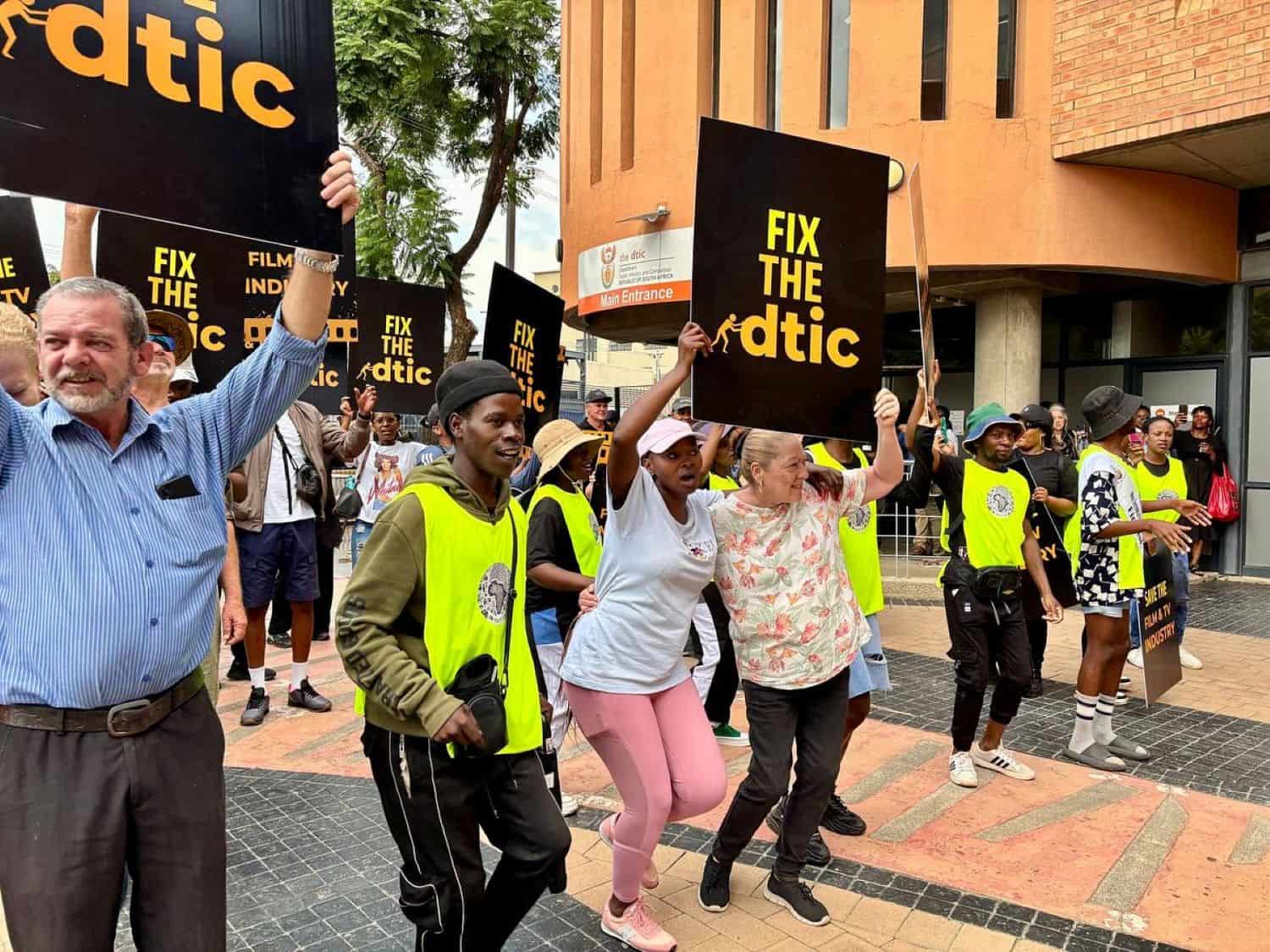
A year after the last protest with no response, South Africa’s film and television industry is preparing for what could be its most decisive moment yet, as thousands of workers gear up for a national shutdown-style march later this month.
On 28 and 29 January 2026, creatives from across the country will take to the streets of Cape Town and Pretoria under the banner Save SA Film Jobs, in what organisers describe as a direct call-out to everyone working in the arts.
At the heart of the protest is a collective cry from an industry that says it has been left in limbo for nearly two years.
Actors, writers, directors, animators, producers, crew, post-production professionals, agents, managers and disgruntled creators are to take to the streets asking to be heard.
“The scale of this march reflects the scale of the crisis,” says the Save SA Film Jobs Coalition. “This is an industry fighting for survival after months of inaction and silence from the DTIC.”
According to Save SA Film Jobs Coalition, the march organisers, the upcoming demonstrations are expected to dwarf the February 2025 protests, both in numbers and in reach.
What was once seen as a sector-specific issue has now become a shared crisis, with production houses closing, freelancers without work and international projects quietly taking their business elsewhere.
At the heart of the frustration is the Department of Trade, Industry and Competition’s Film and TV Incentive, which industry players say has effectively ground to a halt.
Adjudication meetings have not resumed, approvals remain stalled and millions of rands in foreign direct investment are reportedly trapped in bureaucratic delays.
For an industry that relies heavily on momentum, timing and trust, the consequences have been devastating.
“This is an industry fighting for survival,” says the Save SA Film Jobs Coalition, which is coordinating the marches.
ALSO READ: Careers don’t always start at university
The group argues that the scale of the action reflects the depth of the damage already done, with job losses rippling far beyond sets and studios into hospitality, transport, post-production and small service businesses that depend on film and television work.
Unity
For the first time, actors, writers, directors, producers, editors, animators, crew members, agents and managers will march side by side in a coordinated national action. From established professionals to entry-level creatives, the message is clear: this crisis touches every corner of the value chain.
The call extends beyond the industry itself.
Organisers are urging ordinary South Africans to join the demonstrations, framing the issue as one that affects the country’s ability to tell its own stories. Without a functioning industry, they warn, local narratives will disappear from screens, replaced by imported content and lost opportunities for emerging voices.
Backing the action is a broad coalition of industry bodies, including Animation SA, the South African Guild of Actors, the Independent Producers Organisation, the Writers Guild of South Africa, and the South African Screen Federation, among others.
Mobilisation has already been confirmed from Gauteng, the Western Cape, KwaZulu-Natal and other key production hubs, signalling rare national alignment.
With just days to go, the coalition says its patience has run out.
Despite repeated attempts to engage the DTIC, there has been no meaningful movement towards fixing the incentive system. The result, they warn, is an industry sliding towards deindustrialisation, with transformation gains at risk of being reversed.