
How learning about women's health can help keep the productive cycle going in the workplace.
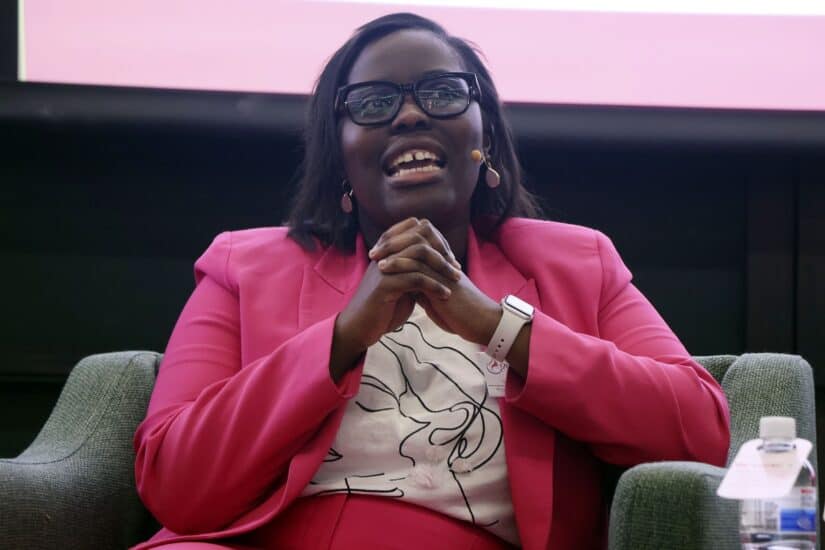
Minister of menstruation, Candice Chirwa participates at the Women’s Health Matters Conference 2026, on Product to Policy, what it will take to end period poverty at Gordon Institute of Business Science (GIBS) in Johannesburg, 3 September 2026. The panel explores afordable access, school and workplace surport, menstrual health education, stigma and the role of public private partnerships. Picture: Lerato Thooe/The Citizen


A 34-year-old marketing manager who missed three client meetings in a month because of pelvic pain was told by her line manager to “push through it” – until an ultrasound finally revealed stage III endometriosis and she needed emergency surgery.
Her story, shared anonymously to The Citizen at the inaugural Women’s Health Matters Conference on Thursday, illustrated a pattern clinicians and employers say is costing women promotions, income and long-term health.
‘Ignorance is not bliss,’ clinicians tell employers
Held at GIBS Business School, the conference brought together roughly 200-250 clinicians, HR leaders, insurers, academics and advocates to challenge the normalisation of chronic pain and menopausal symptoms in the workplace.
Professor Michele Ruiters, senior lecturer at GIBS, put the struggles of societal pressure to be a woman aptly:
“We get told to be rocks. I don’t want to be a rock.”
Dr Noluthando Nematswerani, chief clinical officer at Discovery Health, warned that accepting suffering as “part of life” delays diagnosis and can derails careers.
“Supporting women’s health requires a life-course approach,” Dr Nematswerani said.
“Improved outcomes are achieved through a strong focus on health promotion, disease prevention, early intervention, and timely access to appropriate care.”
She added that data shows that the rate at which women get screened is low, even though a lot of women suffer from a range of health issues.
“People are not accessing the care to get screening,” she continued. “It makes us ask: why are women not taking care of their health?”
The years lost to suffering in silence
Speakers described how delayed diagnosis of health conditions like endometriosis – often dismissed as “bad periods” – amplifies pain, infertility risk and workplace disruption.
Dr Sumayya Ebrahim, an obstetrician and gynaecologist, said repeated sick notes and performance warnings often precede a specialist referral that should have happened years earlier.
“If a woman is repeatedly missing work because of pain and is simply told to ‘manage it,’ both her health and her job are at risk,” Ebrahim said.
She urged early referral and specialist assessment because they change treatment options and long-term outcomes.
One patient advocate recounted how a 29-year-old teacher was labelled “dramatic” after collapsing in a staff room, only to be diagnosed with endometriosis after a private scan; by then, she had lost a term’s pay and missed a promotion panel.
Panellists called for better training for employers and managers, noting that you can’t help someone if you don’t know what they need.
Menopause: peak career, least support
The conference drove the nail into the coffin that menopause often coincides with peak career responsibilities, yet workplaces remain largely unprepared.
Some citing that their coworkers would invalidate their symptoms by dismissing their hot flush episodes, or lack of concentration for ‘it’s just menopause.’
Speakers recommended menopause education and normalised conversations that remove stigma.
Policy changes on the table
Panels explored concrete steps employers and healthcare providers can implement immediately:
Update absence and performance policies to account for fluctuating conditions, train line managers to recognise and respond to health-related performance changes, and partner with health systems to accelerate diagnosis and care.
Those policies should also recognise episodic chronic conditions – including flexible scheduling, appropriately structured sick leave, and even the introduction of menstrual leave.
“Ignorance matters. When workplaces and health systems default to ‘it’s normal,’ women pay the price. We can close these gaps with targeted policies and timely care.”
Tracey Malawana from advocacy group I_Menstruate puts to rest the possible fears that offices are losing out on work because of women taking menstrual leave – a policy debated for its implementation.
“We work in an environment where we implement this policy, but you’ll find that out of the 14 of us, only two take it. We only take it when we truly cannot go on with work.”