



'Alarm bells about AI replacing jobs may be misplaced.'
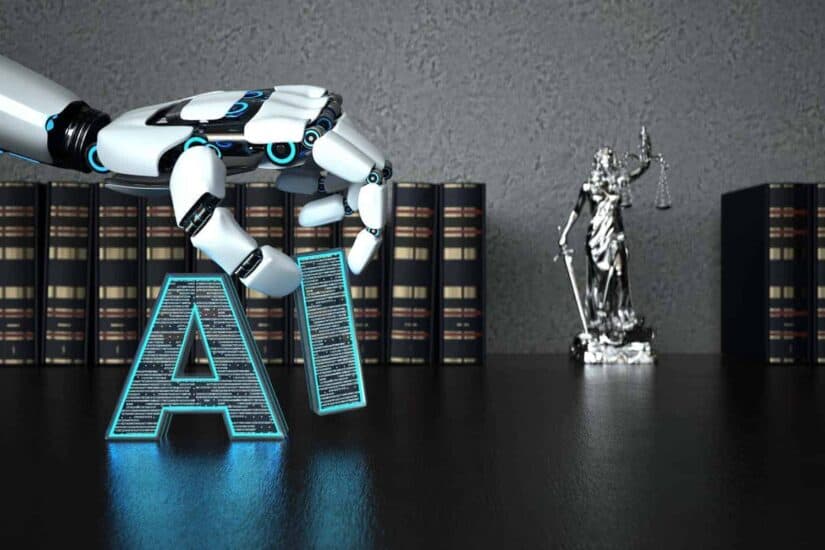
The impact of AI will be defined not by the technology itself, but by the people and institutions that control it. Picture: iStock


As artificial intelligence (AI) becomes increasingly woven into everyday life, its impact will be defined not by the technology itself, but by the people and institutions that control it.
This is particularly critical in the realm of employment. The real danger is not that AI will eliminate jobs but that unchecked power will determine who keeps them.
AI replacing jobs
According to Professor Linda du Plessis, senior deputy vice-chancellor at North-West University (NWU), alarm bells about AI replacing jobs may be misplaced.
“This fixation on job loss may be asking the wrong question. The real issue is not whether AI will take jobs; it is about who controls AI and how it will be used.”
She emphasises that AI is not autonomous, nor a corporation with its own incentives.
“AI’s impact is shaped by political decisions, corporate incentives and the values of those in power, not by the technology itself. A small group of individuals controls the most prominent, powerful and widely used AI software, and it is the motives of these individuals that should be questioned.”
Shaping AI
Du Plessis argues that the challenge is not to stop AI but to ensure its power is shaped in the public interest. Public universities, she says, must act as moral custodians to guarantee society – not just corporations – has a voice in AI’s future.
“Whilst the world is speculating about the impact of AI on the future of jobs, my view is that this is not the right question to ask, as it frames the future as a technological issue. A deeper and more important question is: who is leading the change and in whose interest? AI does not develop in a vacuum. Therefore, the future of work is not just about technology; it is about leadership, governance and ethics.”
She notes there are two possible directions for AI.
“AI can either replace or empower humans. History has a way of humbling our certainty when it comes to technology and has repeatedly shown how augmentation can lead to empowerment.”
Universities
Du Plessis stresses that universities will play an increasingly critical role in setting and maintaining a moral course for AI’s owners and users.
“Universities are not just producing workers; they are producing critical thinkers, ethical decision-makers and future leaders. They also provide the social environments where students learn to collaborate, communicate, and engage with diverse perspectives.
“AI can process large volumes of data, but humans must decide what is right, fair and meaningful. Education must ensure that humans remain in control of technology, not controlled by it. With good leadership, AI can reduce inequality, improve the quality of life and lead to the creation of new industries and jobs.”
Who controls AI
“AI is not the problem. The real issue is who controls it and whether we have a voice in that future. The real danger is not AI but rather a passive society. Our future depends on the choices we make and the people we trust to lead.”
Although these concerns carry weight, Du Plessis urges learners and parents not to respond passively but to actively shape their place in future job markets.
“To allay fears about being replaced, the best way is to make yourself irreplaceable. That requires lifelong learning, disciplinary expertise that enables you to think critically and creatively, and the ability to use AI as part of your work.
“The most realistic future is humans working with AI, not being replaced by it. Those who learn to use AI will have an advantage. AI is not just a tool; it is becoming a core building block of the future, like electricity or the internet,” she said.



