Local pilot soars to second in toughest air race on earth
The Icarus X Series is a series of weekend-long paramotor races and events held across the globe.
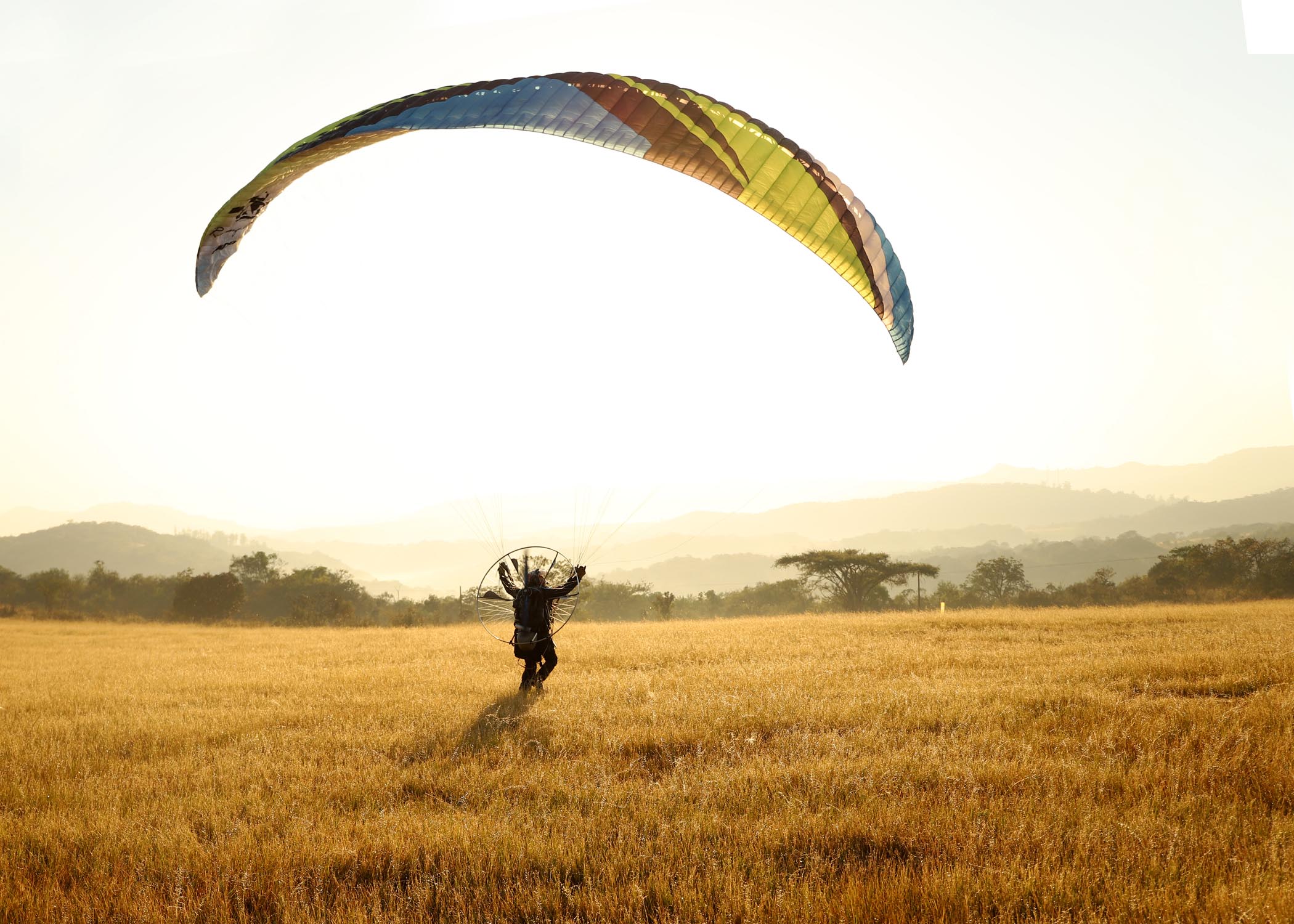
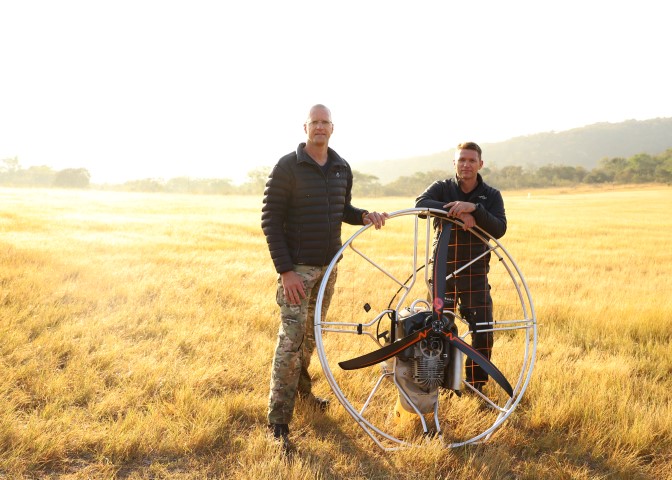
For local paramotoring pilots Eugene Cussons and Francois Theron, this year’s Icarus X was the country’s most exciting one to date.
Sweefvlieëniers pak moeilikste wedvlug ter wêreld
The Icarus X Series is a series of weekend-long paramotor races and events held across the globe.
The Icarus X started in Bethlehem this year. It took highly skilled pilots on a circular route of about 350 kilometres, skimming the Lesotho border and flying over the Golden Gate National Park, before finishing at Clarens Golf Club on the weekend.
Out of the 14 race pilots only five finished the race class. Seven withdrew having experienced some form of catastrophic failure.
Theron finished day one 34 kilometres behind the race leaders and completed the last day in the adventure class status.
There is still hope to save our planet: five things that give Jane Goodall hope
There were several factors that forced pilots to downgrade or withdraw from race class. In his case, it was an incorrect fuel calculation and technical issues that forced him to divert away from a fixed checkpoint.
Cussons, who missed out on first place by a mere 13 minutes, said it was not only great practice for newbie paramotorists, but also offer a chance for more seasoned pilots to flex their muscles and win a free spot on the Icarus Trophy proper.
The 14:00 race start time was chosen to force the pilots to overnight at an unknown location along the route.
A pilot must have done some pre-planning on possible points to reach along the route, taking into account headwind. Any pilot still airborne after the cut-off time of 17:00 would be automatically disqualified.
At the start of the race at least seven of the 14 pilots were locked in a battle to get to the front position and Cussons was one of them. After about two hours, he was able to claw his way up front to lead the group. With a strong headwind and thermals they were facing, his calculations showed that he was not going to be able to make his final destination, some 219 kilometres from the start.
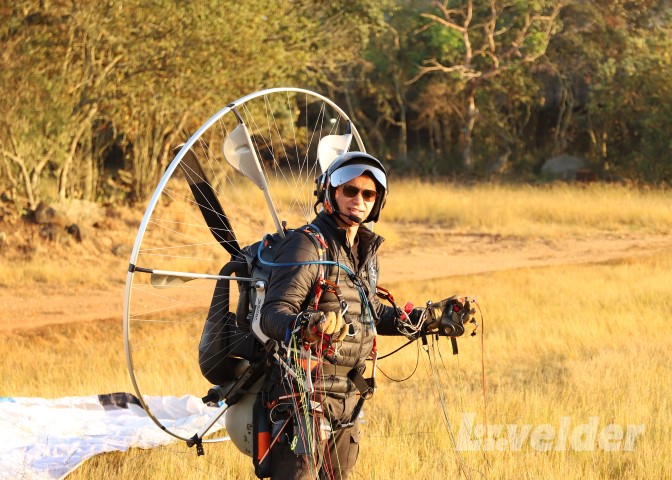
“I therefore chose the closest town along his heading,” he said.
With a keen understanding of fuel burn, he was able to make Clocolan at exactly the moment his fuel ran out, some three hours and 15 minutes after takeoff, and glided in for a landing on the town golf course.
“This gave me the lead along with Nic Petropoulus. Most of the pilots landed some 34 kilometres short of our location for various reasons including fuel or time constraints. Alard Hufner, the winner of the previous two Icarus races, tried his best to close the gap but was forced to land in a open field some 15 minutes short of the leaders location. The determining factor for all the pilots was the speed which they could maintain without depleting their fuel. Personally I was confident enough in my machine that I was pushing it to within only two degrees Celsius of seizing the engine.”
A pilot could only take off after 06:30 in the morning, sunrise. Petropoulus was able to get a head start with a takeoff at 06:30 and where as Cussons only managed to get airborne six minutes after him.
“The day saw very exciting progress with me catching up to Petropoulus at the third to last checkpoint located at Ficksburg where there were only very few options for landing and takeoff next to the Sasol Fuel Station. At this point Hufner was in third position some 30 minutes behind. I tended to be slightly more conservative in managing my risk whereas Petropoulus executed a ‘Hail Mary Pass’ by taking off from inside the parking area of the station, giving him a major advantage.”
At the filling station the pilots were given a new coordinate to hunt down. A private and extremely challenging airstrip, surrounded on both sides by high trees. Only Petropoulus and Cussons were able to land on and takeoff from the strip. Others utilised an open field some distance away.
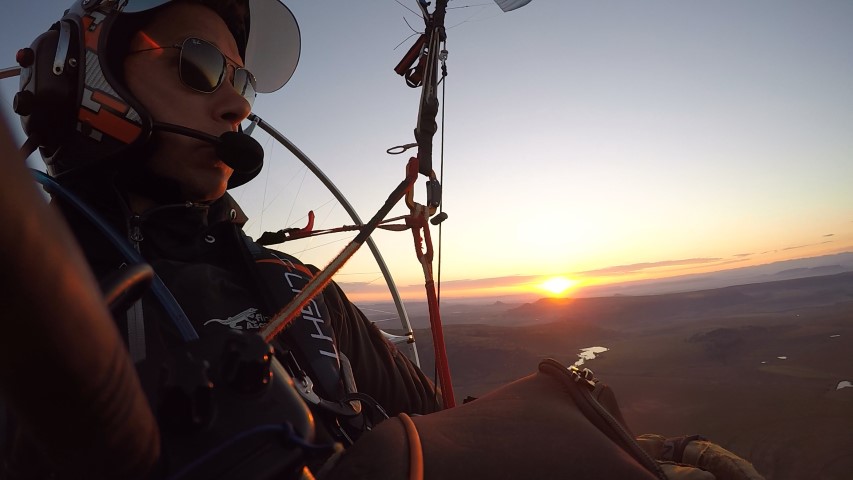
“I finished in second position some 13 minutes behind Nic and 45 minutes ahead of Hufner. Although I’m disappointed that I could not take the pole position I think that the quality of the race this year speaks for itself with such a small time gap over a total flight time of more than six and a half hours,” he added.
This was Cussons’ third Icarus race in which he was able to take second place. “I noted that I could see the colour of fellow pilots eyes for nearly two hours on day one as we flew next to each other until our machines experienced engine failure or fuel depletion. I really appreciate the level of competition. The focus now moves on to the next race with our brand manufacturers figuring out how they can develop technical advantages to help us push the limits,” Cussons concluded.