Mining Matters 2025

Council pushes back on chrome interventions
The Minerals Council South Africa recently said that it is fully supportive of adding value to the country’s minerals, however, the process to create an environment conducive to beneficiation must include all stakeholders to ensure unintended consequences are avoided in other industries, and do not negatively impact economic growth and associated jobs.
The council referred to a cabinet statement issued on June 26, stating that cabinet had approved three interventions for the chrome and ferrochrome industry to stop the decline in South Africa’s smelting capacity in producing the key ingredient in stainless steel manufacturing.
The Minerals Council, which represents 90% of South Africa’s mineral production by value, said in a counter statement that it is disappointed that there was no consultation between the relevant government departments, ministers and the Minerals Council on these proposed interventions, to ensure alignment that will deliver the goals South Africa desperately needs – economic growth, job creation and a sustainable mining and processing sector.
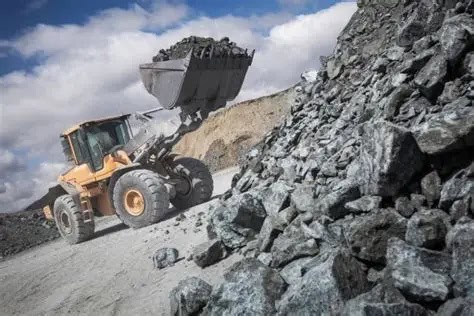
South Africa remains the world’s largest producer of chrome concentrate. Photo: Sourced/Chrome mining stock
“The Minerals Council will urgently engage with the ministries of Electricity and Energy, Mineral and Petroleum Resources, Trade, Industry and Competition as well as National Treasury regarding the proposals in the cabinet statement, seeking dialogue and clarity to ensure the best outcomes for all stakeholders in South Africa,” the statement read.
It also stated that South Africa remains the world’s largest producer of chrome concentrate, yet it has lost its position a number of years ago as the leading supplier of ferrochrome – a title now held by China.
This shift is largely due to structural advantages in China, including significantly lower electricity and labour costs, as well as the lower cost of capital. In contrast, South African ferroalloy smelters have increasingly been mothballed or shut, unable to compete with the substantial incentives offered by the Chinese government, most notably cheap and plentiful electricity.
“As a consequence of electricity prices increasing by nearly 900% in the past two decades, South Africa’s chrome industry has opted to export chrome concentrate rather than beneficiate it at a loss,” the council said.
It went further to say that a particular concern in the cabinet statement is the approval of the concept of an export tax on chrome concentrate. Such a proposal has been raised a number of times over the years, each of which was followed by extensive engagements with the Minerals Council’s chrome members.
“This included conducting research that unequivocally demonstrated why such taxes would not achieve the government’s aims of sustaining the ferrochrome industry and the preservation of jobs, but would instead have a negative impact on chrome producers and the significant contribution this industry makes to both South Africa’s economy and the jobs it sustains and grows.”
Chrome mining has been one of the best-performing subsectors of the South African mining sector.
According to Stats SA, in real inflation-adjusted terms, chrome production increased by an average of 8.4% between 1994 and 2024. This vastly outpaced an increase of 1.3% in total non-gold production over the same period.
The chrome mining sector has also consistently increased employment, while data from SARS indicates record export volumes of 20.5m tonnes in 2024, earning the country R84.6b in export revenue.
The council reiterated that for this reason, export taxes have not been implemented to date. and there remains no reason why export taxes would support increased beneficiation in South Africa now.




‘The mining industry might make wealth and power for a few men and women, but the many would always be smashed and battered beneath its giant treads.’
Katharine Susannah Prichard.