
Future ready – Next Chapter, New Adventure

Children and teenagers: Coping skills in times of stress
When children and teenagers are stressed, they may resort to unhealthy coping mechanisms that can harm their emotional well-being and overall development.
“A common unhealthy strategy is bottling up emotions, which can lead to anxiety, anger, or depression,” says Alicia Oosthuizen, a clinical social worker and the co-owner of Counselling Matters Training.
Pent-up frustration may be released through aggressive behaviour or outbursts, leading to conflicts at home or school; withdrawal and isolation, which increase feelings of loneliness and worsen their emotional state; and self-harm, such as cutting, as a way to release overwhelming emotions or to find temporary relief in physical pain.
Risky behaviours such as experimenting with sex, drugs and alcohol are also common, as are over- or under-eating.

Age-appropriate coping strategies
For younger children, simple techniques such as breathing exercises, counting to 10, or using ‘calm-down’ spaces can help regulate emotions, says Oosthuizen.
“Physical activities, games and sports can also provide a space for their energy and emotions to be expressed. Creative expression, such as drawing or storytelling, allows them to process feelings in a non-verbal and non-threatening way. This is especially useful for children who struggle to express emotions through words.”
As children grow into their teenage years, they may benefit from more advanced coping strategies, she says. While exercise is important at any age, journaling can help teens make sense of their feelings, and yoga or martial arts can provide physical and emotional balance.
Teaching mindfulness techniques, such as meditation or focused breathing, can help teens manage anxiety and stay grounded. Introducing them to problem-solving strategies, such as breaking large tasks into smaller, manageable steps, can also help them cope.
Encourage teens to talk to trusted friends, parents or counsellors when they feel overwhelmed to foster open communication and reduce feelings of isolation.

Let kids be kids
A healthy balance needs to be struck between leisure and organised activities.
Mhlanga says that children who are overscheduled rarely get downtime, which is essential to their general well-being because it enables them to unwind, decompress and refuel.
“It offers a chance for contemplation, introspection and the growth of
self-awareness. Children who don’t get enough rest may become more stressed, have trouble focusing, and become less resilient mentally and emotionally,” he says.
SIgns to watch out for
Parents can identify when children or teenagers are using unhealthy coping mechanisms by being attentive to changes in their behaviour, mood and daily routines. Watch for:
- Mood shifts
- Sudden isolation
- Lack of interest in activities they used to enjoy
- Changes in appetite or sleep patterns
- Unexplained cuts or bruises, which could indicate self-harm
- More frequent tantrums
- A drop in school performance
- Skipping school or experimenting with drugs or alcohol.

Uplands - where strong foundations are built
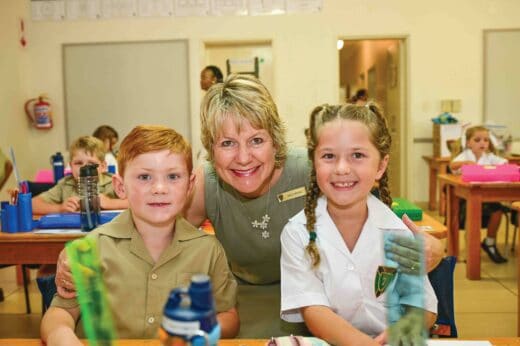
Grade One is so much more than the first year of formal schooling. It is the beginning of a child’s relationship with learning – a year when confidence is built, curiosity is encouraged and the foundations for future academic success are carefully established. At Uplands, we believe that getting these early years right matters.
Our Grade One journey provides children with a nurturing, stimulating environment in which they are known as individuals and encouraged to discover what they are capable of achieving. Strong foundations in literacy and numeracy are balanced with opportunities to explore, create, question, play and participate.
Learning extends well beyond the classroom. Sport, music, culture, creativity and the outdoors all contribute to developing confident, capable and well-rounded young people. Just as importantly, children begin learning the values that will accompany them throughout their school journey – kindness, responsibility, resilience, independence and respect for others.
Set within our beautiful Lowveld campus, Grade One pupils have the space to learn, move, explore and simply enjoy being children.
Starting school is a significant milestone for every family. At Uplands, our aim is to make those first steps happy, purposeful and exciting, while providing the academic and personal grounding upon which the years ahead can confidently be built. It begins with giving them the very best foundation.
Begin the journey at Uplands.

Matric results didn’t go as planned? Don’t panic!
It is not the end of the road If your matric results are not what you hoped. Dust yourself off, and consider your options.
Rewrites: If you missed your target marks for a specific university or course, consider rewriting those subjects. Go to the National Department of Basic Education’s website and click on the ‘Second Chance Matric Support Programme’.
The IEB also offers rewrites.
Go to www.ieb.co.za and click on FAQ.
Bridging courses: These courses, offered by most universities and other educational institutions, can help you meet the academic requirements for university admission.
Distance learning, private colleges, and FET colleges: If university is not immediately feasible, consider these options to continue your education.
Flexibility: Don’t be afraid to change your mind. If you start university and realise it is not the right path, it is OK to re-evaluate your choices.
Mentorship: A mentor can offer valuable support and guidance as you navigate your next steps. Consider contacting a teacher, family member, friend, or professional mentor.
Internships and learnerships: Gain practical experience and earn a stipend while studying through a learnership or internship programme. Or consider volunteering to gain work experience.

Pros, cons and tips: Navigating your gap year
When it comes to weighing up the benefits of a gap year, there is no one-size-fits-all approach. People are unique, and their needs vary substantially.
“What works for one person might not fit another,” says Prof Kobus Maree of the department of educational psychology at the University of Pretoria.
A gap year can enhance students’ employability by providing opportunities to develop skills like IT proficiency or language learning. Maree notes that some students find a gap year rejuvenates their academic motivation and allows them to save money for future studies. Moreover, international travel broadens students’ horizons and exposes them to diverse cultures.
However, potential drawbacks include decreased motivation to return to their studies and difficulty adjusting to structured learning. Maree says others report falling behind and becoming isolated from their peer groups. In some cases, negative experiences abroad, such as mistreatment by employers or host families, can have a lasting impact on students’ well-being.
Maximise the benefits
If properly planned, a gap year could bolster students’ power skills, such as compassion, confidence, understanding of others, patience and developing their sense of creativity. “For instance, once you have walked across the Bosphorus Bridge in Istanbul, which spans two continents, your sense of vision and creativity is powerfully kindled.
“Involving themselves in business or entrepreneurial activities, such as starting a small business or working on a business-related project, should bolster students’ sense of innovation and entrepreneurship,” says Maree.
If youngsters are undecided about their career path, they can use their gap year to consult a career psychologist. “These psychologists will help plan a strategy to navigate the transition from the school context to post-Grade 12 studies, and, ultimately, the occupational world.”
Eduvos Mbombela: Your next step starts here
For matriculants planning their next step and working professionals looking to advance their careers, Eduvos Mbombela offers opportunities to build knowledge, develop practical skills, and work towards their future ambitions.
With over 30 accredited undergraduate and postgraduate qualifications across five faculties – Applied Science, Commerce, Information Technology, Humanities, and Law – you can explore fields that align with your interests and career goals. Eduvos qualifications are quality-assured by the Higher Education Quality Committee of the Council on Higher Education, with qualifications registered on the National Qualifications Framework.
 At Eduvos, learning extends beyond theory. Work-Integrated Learning connects academic knowledge with practical application, helping students understand how their studies relate to the workplace. The Work Readiness Programme further supports students in developing the skills and confidence needed to navigate the world of work, while further study offers an opportunity to build on existing knowledge and pursue new career goals.
Recognising that students have different educational backgrounds and aspirations, Eduvos offers a range of pathways into higher education, from access and pre-degree options to higher certificate, undergraduate and postgraduate programmes.
Applications for the first 2027 intake are open. Explore your study options at Eduvos Mbombela and find a pathway that aligns with your ambitions.
Visit eduvos.com to find out more and apply.

Penryn College swimmers make their mark at Nationals
Penryn College Grade 11 scholars Miela Banza and Kaamil Carimo made a strong impression at the South African National Short Course Championships, hosted by Swimming South Africa in Pietermaritzburg from September 24 to 27.
Miela, who recently represented Mpumalanga at the SSA Senior National Championships in Gqeberha, was the province’s standout swimmer. She competed in the 50m, 100m and 200m breaststroke, 100m freestyle, and 200m individual medley, recording personal bests in every event. Her highlight was a medal-winning performance in the 200m breaststroke with a time of 2:30.26.
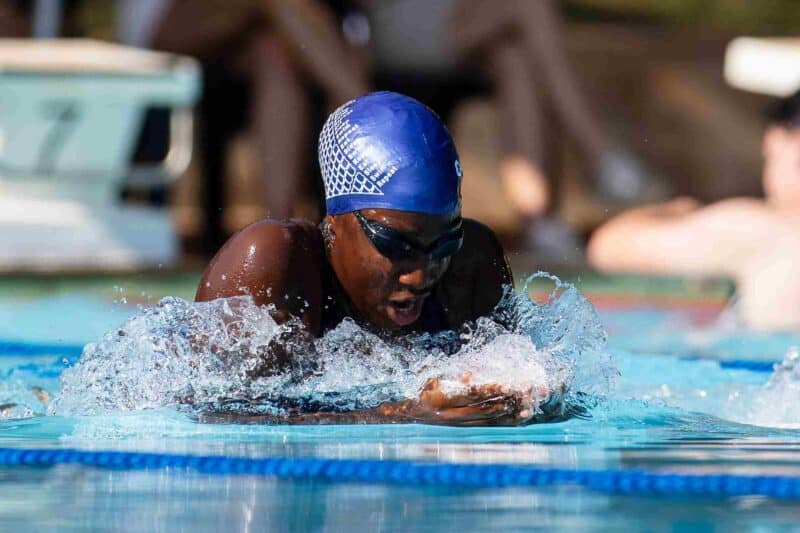
For Miela, the ultimate highlight was sharing a final with her swimming hero and Olympic champion Tatiana Smith (Schoenmaker).
Kaamil, who recently captained the Mozambique Swim Team at the CANA Zone IV Championships in Gaborone, Botswana, also made a splash at the championships.
He competed in the 50m, 100m, 200m, and 400m freestyle, as well as the 50m, 100m, and 200m butterfly, achieving personal bests in the 200m and 400m freestyle.
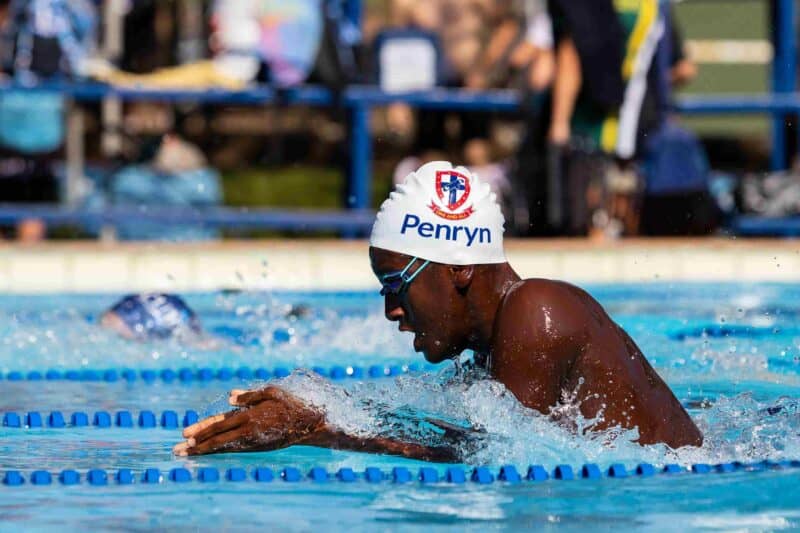
He particularly relished racing against KZN Seals and Botswana international Rayhaan Khonat.
Both swimmers are now targeting the 2027 World Aquatics Junior Swimming Championships and the 2027 Commonwealth Youth Games, with ambitions of earning US swimming scholarships after Grade 12, following in the footsteps of previous Penryn College swimmers.
They credit their success to their coaches at UniSwim Nelspruit and the support of Penryn College. With their sights firmly set on the future, Miela and Kaamil are swimmers to watch as they continue to raise the profile of Mpumalanga swimming.