Barack Obama urged to impose sanctions
EIA and IRF filed a petition under this law to certify that Mozambique has been in constant violation of international rhino and elephant regulations for many years through ongoing illegal trade in rhino horn and elephant ivory.
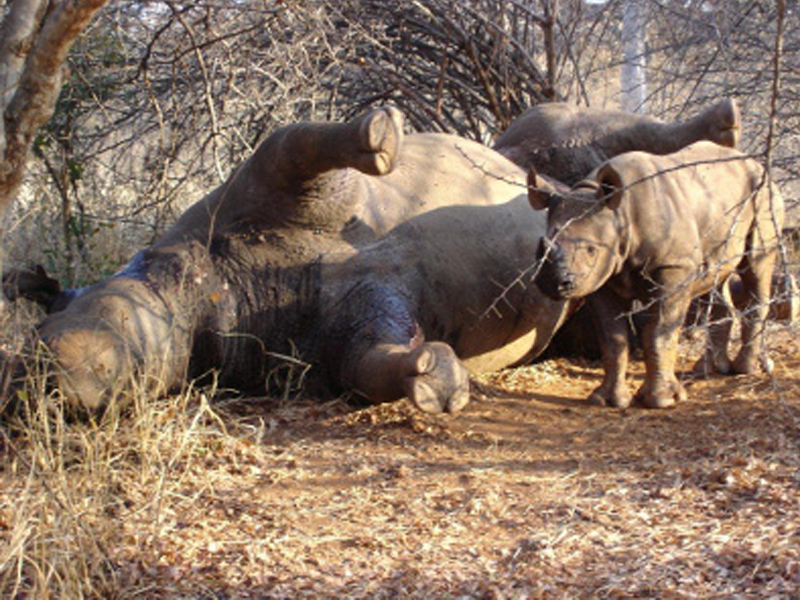
NEW YORK – Rhino horns have become an investment commodity and demand seems to be increasing due to the high prices they fetch.
Two international environmental organisations are calling on the American president, Mr Barack Obama to institute a trade embargo against Mozambique for its failure to address poaching issues.
They want Vietnam included in the embargo because of its consumer market for rhino horns as well as the failure to ban the trade.
The Environmental Investigation Agency (EIA) and the International Rhino Foundation (IRF) filed the petition under the Pelly Amendment, which authorises the US to impose sanctions on any country that contravenes an international conservation agreement, in this case various CITES agreements.
Since 2010 Mozambican poachers have been involved in the slaughter of thousands of rhino and tens of thousand of elephant.
At a CITES meeting in 2013, Mozambique was singled out for its lack of commitment to tackle poaching – and has narrowly avoided CITES-backed sanctions for failing to implement improved wildlife legislation.
Mozambican wildlife authorities admitted their failure to contain poachers in July 2014.
The IRF released research done since then which revealed that 14 suspected poachers were arrested during the first half of 2014 and hefty fines were levied against those convicted, but less than five per cent of the fines have been paid and all have since been released on bail.
According to Ms Susie Ellis, executive director of IRF, these statistics emphasise the government’s lack of political will to address the problem.

Mr Allan Thornton, CEO of EIA, said, “Trade sanctions are urgently needed to persuade the government of Mozambique to enact a comprehensive crackdown on the poaching gangs and the criminal syndicates that arm and fund the poachers.”

The two organisations are also sceptical about South Africa which, according to them is also turning a blind eye, saying that one has to wonder why it has been necessary for international conservation agencies to step in and call for reform, while the government has taken no such action, despite the blatant attacks across its borders.
Despite the memorandum of understanding (MoU) signed in April 2014 between South Africa and Mozambique, more than a 1 000 rhino have been poached since then.
Mozambican poachers are known to be involved in 80 to 90 per cent of rhino poaching incidents in the Kruger-Limpopo Transfrontier Park.
Despite more than 300 of them having been killed and arrested in South Africa, the pace of rhino poaching shows no sign of slowing.
Ellis said, “Mozambican poachers are highly organised and are slaughtering rhino and elephant on a daily basis, while the South African government turns a blind eye.”
The country’s wildlife organisations report that anywhere from 10 to 15 hunting parties are present inside KNP on any given night.
Thornton added, “Currently it seems more attention is being focused by the department of environmental affairs on attempting to push through an application to legally sell its 25-ton stockpile of rhino horn, than enforcing real action against poaching.”
Obama is authorised under the Pelly Amendment to the US Fishermen’s Protective Act, to enact trade sanctions against any nation certified to be undermining an international conservation agreement.
EIA and IRF filed a petition under this law to certify that Mozambique has been in constant violation of international rhino and elephant regulations for many years through ongoing illegal trade in rhino horn and elephant ivory.
Mozambican government officials and nationals were undermining Obama’s Executive Order on Combating Wildlife Trafficking, that was signed in 2013. “Trade sanctions are urgently needed to persuade the government of Mozambique to enact a comprehensive crackdown on the poaching gangs and the criminal syndicates that arm and fund the poachers.”
The end-market user countries are known to be China and Vietnam, with China a member of CITES, under which international trade in rhino horn and elephant ivory is banned.
During expert interviews in several poaching communities in Mozambique, researchers for EIA highlighted the existing conditions that promoted poaching in these communities:
• All the communities visited were economically marginalised populations
• Anger against the status quo and lack of development by Mozambican government
• There are huge financial incentives that comes from poaching
• Widespread corruption and the porous borders
• Criminal syndicates are highly organised. The EIA confirmed that rhino are killed on order and not just in hope that somebody will buy the horn. They found several special orders by Asian consumers.
“Ending the Vietnamese domestic order for rhino horn can only happen with the assistance of the Vietnamese government, by banning rhino horn and enforcing penalties and ending the domestic demand,” Thornton concluded.