Private sphere discrimination – can it be justified?
Can racists, homophobes and the likes claim "right of admission reserved" or the right to freedom of association?
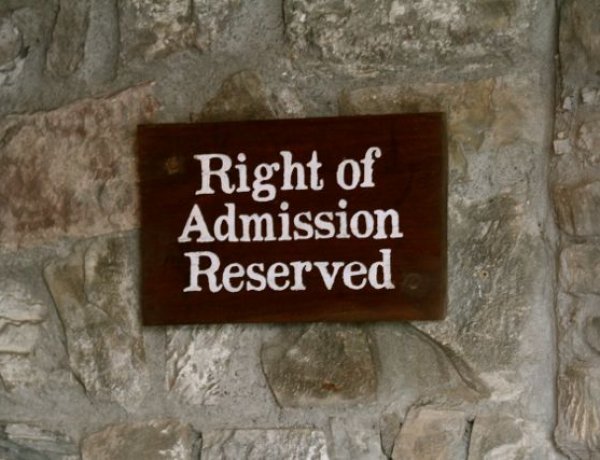
“Right of admission reserved”. Do these four words give private business owners the capacity to discriminate against prospective customers as they please? Does the right to freedom of association allow racists, homophobes, sexists and the likes to discriminate freely?
Contrary to what some believe, it does not. Lowvelder researched applicable law to provide clarity on where the lines must be drawn when it comes to the rights to freedom of association and a business owner’s right to refuse admission.
READ: WEDDING VENUE SHOWS GAY COUPLE THE DOOR – HERE’S HOW THEY JUSTIFY IT
The Constitution is our country’s supreme law. Our democracy is guided by the values of freedom, equality and human dignity. The Bill of Rights states that residents have the right to equality in section nine. Section 18 guarantees the right to freedom of association. This is often misunderstood as the right to associate with others based on discriminatory beliefs.
Section 39 of the Constitution requires that the Bill of Rights be interpreted in accordance with the “spirit, purport and objects” thereof.
This means that one’s freedom of association cannot be interpreted to mean non-acknowledgement of another’s right to equality. A “right of admission reserved” sign may not be used to justify discrimination. Neither of these rights may be exercised in a way that is inconsistent with the spirit and values of the Constitution.
The right to equality was entrenched when parliament passed the Promotion of Equality and Prevention of Unfair Discrimination Act (Pepuda). This act illegitimates unfair discrimination aimed against any group of persons, be that members of a certain race, sexual orientation or gender.

A business owner who refuses a patron access to his establishment is not barred from doing so based on justifiable reasons. Such would include barring a drunk person from a bar or denying patrons seating because a restaurant is full. Unjustifiable discrimination exists when someone is denied access based on discrimination. This can happen directly or indirectly.
READ: NINE PEOPLE DIE IN HORRIFIC ACCIDENT
An example of direct discrimination would be showing someone the door because they are homosexual and explaining that reason. Indirect discrimination is a wide term. An example is a business owner showing black persons the door by explaining that an establishment is full, while whites are allowed there.
The Pepuda Act accommodates those who feel they may have been discriminated against. Once this has been alleged, the alleged discriminator bares the onus of proving that his actions were not grounded on discrimination. If he cannot, he will be considered to have discriminated unjustifiably.

When someone’s right to equality has been unfairly infringed upon, he or she may approach the Human Rights Commission. If the matter cannot be mediated, it may be escalated to the Equality Court.
If the court finds that human rights have been unjustifiably impugned, it may punish the wrongdoer as it sees fit. This court does not impose jail time.
Locals who want to report human- rights violations may contact the Human Rights Commission telephonically on 013-752-8292.