
Sappi apologises for the recent stench
"We are sorry and disappointed that in some areas of our community, people were inconvenienced by the intense odour from the mill over the weekend."

MBOMBELA – Along with the cold temperatures came a strong odour that filled the Lowveld air this past weekend.
Especially in the early mornings, a sulphur smell, to which humans are incredibly sensitive, assaulted the senses. “When Sappi’s Ngodwana Mill cooks timber chips to extract the fibres for the pulp-making process, organic sulphide compounds in the wood are released as total reduced sulphur (TRS) gases. Although Ngodwana Mill’s processes collect the bulk of TRS gases, a small amount unfortunately escapes, causing an unpleasant odour similar to that of cooking cabbage at home. TRS gases are detectable by the human nose at extremely low concentrations (less than three parts per billion),” said Sappi’s regional communications manager, Elsabe Coetzee.
Also read: Seven things you need to know about Sappi’s smell
She again reiterated that humans are so sensitive to the smell that if a drop the size of a pinhead was present in an Olympic size swimming pool, we would immediately be able to detect it. “For this reason, the Ngodwana Mill’s pulp-making odour can never be totally eliminated,” she said.
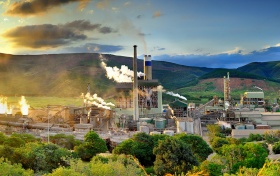
Sappi’s efforts to reduce the smell have been continuous. “The mill is upgrading the lime kiln which incinerates odours (TRS gases). Results from previous upgrades show that over time there has been a significant reduction of both the area that is affected and the concentration of detectable gas particles. As part of Sappi’s sustainability journey we are continuously improving our technology, and when the pulp production process changes, we also make changes and improvements to the gas collection system. Unfortunately it is impossible to contain the odour to a specific area and the impact is made worse by climatic conditions,” said Coetzee.
She emphasised that though it is sometimes unpleasant, the emissions pose neither a health nor an environmental risk. “In fact, the mill’s odorous gas emissions are significantly below acceptable world health standards. We measure ambient gas concentrations at the mill’s ambient air monitoring station on an ongoing basis to monitor our performance.”
Coetzee added that not only are the mill’s air emissions monitored and evaluated by the authorities to comply with legal requirements, the mill’s environmental performance is also observed and evaluated quarterly by an independent monitoring committee comprising local residents, representatives from various regulatory authorities and other interested and affected parties. “The mill also works with world-renowned experts in their fields in the measurement and modelling of the air emissions,” she concluded.
Who to contact with complaints about odours?
Phone 013-734-6111 or send an email to mia.smith@sappi.com.
“We are sorry and disappointed that in some areas of our community, people were inconvenienced by the intense odour from the mill over the weekend,” said Coetzee, and added that the mill is hosting its next public mill tour in October. “Seats are limited and to book your seat, please email maureen.ried@sappi.com. To attend the mill’s quarterly environmental monitoring and liaison forum meeting, please email mia.smith@sappi.com.”