Living and thriving a month after release
Camacho’s assistance has contributed massively to the success they have had introducing this species into the game reserve.
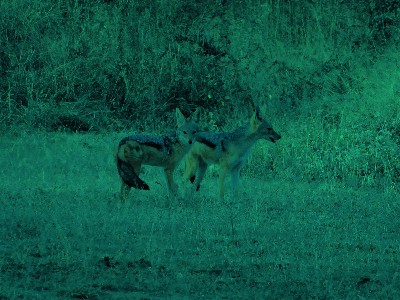
HECTORSPRUIT – A month after six black-backed jackals were released on a private game reserve in the area, the team from Wild and Free Rehabilitation Centre are excited to report that the project is a huge success so far. The jackals were rescued from a farm in Secunda last year and raised by Wild and Free founder, Deidré Joubert until their release on April 11.
WATCH: VIDEO: Voting stations in Mbombela #ImadeMyMark
One of the jackals, named Jack, was fitted with a special tracking collar donated by Wild Heart Wildlife Foundation to gather information on the animals and their habits. Jack and his five friends are the first blackbacked jackals to be released in the Lowveld in 20 years and have already contributed valuable information to research, Joubert explained.
The jackals are monitored on a daily basis and all their interactions, including calls, are recorded. These animals have become extinct in several areas in South Africa but are essential to the ecosystem, as they kill sick animals and prevent diseases from spreading. Through the release, Wild and Free hope to bring more jackals back into the Onderberg’s ecosystem.

Two of the six jackals have splintered off from the main group and been seen at two of the other lodges on the reserve. They appeared to be in good condition and have picked up weight, which indicates that their hunting skills are up to expectations. The other four are hunting rats and mice, which is their staple food until they are able to hunt bigger game.
ALSO READ: #ImadeMymark: Only minor incidents reported in first hour of voting
Joubert said volunteers will still supplement their food on a daily basis until the end of winter. Wild and Free wants to give special credit to local vet Dr Peet Venter and state vet Pieter Kieviet for keeping the jackals in tip-top condition and attending to all their medical needs, and Gerrie Camacho from the Mpumalanga Tourism and Parks Agency for his professional input and knowledge.
Camacho’s assistance has contributed massively to the success they have had introducing this species into the game reserve. Joubert and the volunteers have learned a lot from Camacho regarding the beautiful animals’ natural behavioural patterns, as well as the specialised release procedures.
The Wild and Free team are also cautioning Onderbergers that baby owl season is starting soon. They usually get a lot of phone calls about owlets that have seemingly been abandoned during this time. Joubert explained that not all owls spotted on the ground need help. Some fall out of their nest during flight attempts, while others actually nest on or near the ground.

Owls will continue to feed and care for their babies when they are on the ground. She advised community members to observe an owlet from a distance, as their presence may scare off the parents. If you can see the nest, put the owlet back and continue watching from a distance, if you are still worried. Only contact Wild and Free if the parents were killed or have not returned to the nest after a while.
Joubert warned community members not to try to raise the babies themselves, as it is illegal and incorrect care may result in the baby’s ill health or even death. During their other activities, Wild and Free volunteers are also building new enclosures to ensure they can house all animals in need and request the community’s assistance to complete it.
They need:
• 6 000 bricks
• Cement
• Builder sand and ready mix
• Shade cloth
• Corrugated iron roof sheeting.
For more information on their work, advice on wildlife or to make donations, contact Joubert on 079-988-5748 or deidre@fwrc.org.za.