
Dangerous pest not found in Kruger park
No sign has been found of the destructive shot hole borer beetle in the Kruger National Park (KNP), but park management is taking pro-active steps to prevent its possible entry.
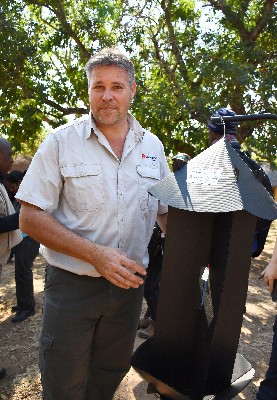
SKUKUZA – They are setting up traps at the boundaries, major rest camps and picnic spots to monitor the possible presence of the invasive polyphagous shot hole borer beetle (PSHB).
Bringing firewood from outside is not banned, though should the beetle be found by researchers, such a ban may be imposed, says Navashni Govender, senior conservation manager in the KNP.
Read More: Unreasonable demands by your employer – know your rights
Currently they advise visitors to “buy where they burn” wood. The invasive PSHB beetle hails from South East Asia and was first discovered in South Africa in 2017.
SANParks has, however, found it in the Tsitsikamma National Park.
The beetle attacks indigenous as well as exotic species. Trees are killed because beetles bore holes into trees where fungus grows.
It is actually this fungus that kills trees, as it blocks the tree’s vascular system preventing water and nutrients from circulating.
According to Govender, it has been found in all provinces except Limpopo.
In Mpumalanga it has only been spotted in a single tree in Mbombela, after which the tree was demolished.
SANParks is following a threefold strategy to curb distribution of the beetle: monitoring and detection through more than 30 traps (more may follow); training of staff, like rangers, gate officials and local communities; and creating awareness among visitors and tourists.
The traps were set up by Rudolf Nieuwenhuys of Biosecurity Africa.
Rest camps were favoured because they are a place where visitors burn firewood, presumably one of the vectors of distribution for the beetle.
Also Read: Two businesses damaged by fire
A chemical to kill the PSHB is not yet registered in South Africa, so Dr Llewellyn Foxcroft, the KNP’s invasive species specialist, feels that SANParks’ research and action on the issue may be of tremendous help on the whole.
Nieuwenhuys explained how the traps work.
The beetle is just 2 millimetres long and does not fly very far.
A trap simulates a tree, with an attractor placed inside a set of panels into which the beetle would collide and fall into a bucket underneath.
It would not be able to escape from there.
The traps are not set up in trees, so as to not accidentally lure beetles to trees, should they be present.
Tourists are warned by explanatory stickers what the traps are for.
The stickers also contain contact details if a tourist wants more information about the monitoring project.
Traps are currently surveyed monthly and data collected with a mobile app.
If a beetle would be found, scientists in the park will immediately know where it is. Govender also said that if a ban on firewood would become necessary, they will have to find an alternative first.
Currently they have only amended the species list of woods sourced sustainably outside the park and brought into shops to exclude black wattle, a possible vector for the beetle.