Meters are not certified by the SABS
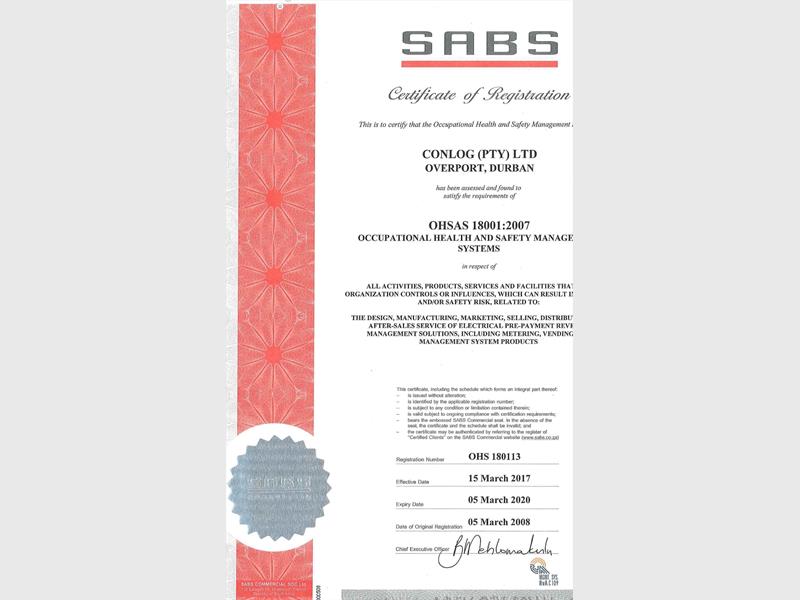
All previous Conlog prepaid meters that were removed before the Hexing meters were installed, were SABS, SANS, RCC, IEC and STS approved.
LYDENBURG – The Hexing Electrical prepaid meters installed in households are not found on the South African Bureau of Standards’ (SABS) database.
For the past couple of months, residents have complained about units disappearing, an increase in electrical usage, and faulty meters not taking bought tokens.
On Steelburger/Lydenburg News’ Facebook page, residents indicated that keypads are not connecting, that they cannot buy electricity, and that unit usage has doubled since the installation. The latest complaints led the newspaper into launching an investigation to the quality and standard of the meters.
The meters were installed in households in the CBD area in 2018. This was done in accordance with the construction of the much-debated Duma substation. On numerous occasions, the newspaper asked China Sinogy Electric Engineering Co (CSEEC) to supply it with its Hexing Electrical meter’s SABS certificate. CSEEC is the company responsible for building the substation and is also the supplier of the electrical prepaid meters.
This company could, however, only supply the newspaper with a partial testing report by SABS. The newspaper contacted the bureau to find out whether these meters are indeed SABS-approved or at least on the bureau’s database. Steelburger/Lydenburg News has now formally established that these meters are not warranted by the bureau.
This was confirmed by Garth Strachan, the acting CEO of SABS. According to Strachan, the SABS has tested electrical meters for Hexing Electrical, with its last test report issued to the client in September 2019. “SABS testing and a test report is for the use of the company and is in no way an indication that SABS has certified the product. Currently, electrical meters require mandatory testing as declared by the National Regulator for Compulsory Specifications (NRCS). The South African National Standards (SANS) that are referenced in the regulation that applies to electrical meters is SANS 10142-1: The wiring of premises.”
To attain the SABS mark, the product must pass product testing by SANS. He continued to explain that SABS recommends that all providers of electrical meters apply for certification as certification schemes, like the SABS Mark Scheme, to ensure peace of mind through regular conformity assessments that include product testing and an audit of quality processes.
“When a client submits a sample for testing it could be a ‘golden’ sample or a prototype, and a single test report does not imply that all similar products will produce the same test results.” He said the attached SABS test reports (the partial testing report submitted to the SABS by Steelburger/Lydenburg News) indicate partial tests and not tests to the full standards.
“We cannot comment on the validity of the Static Transfer Switch report (STS).”
A STS switch works in a very efficient and reliable manner, monitoring both the power supply sources. As soon as it senses that one of the sources is about to break, or is failing to provide the required power, it switches instantaneously to the alternate backup source.
“The National Regulator for Compulsory Specifications (NRCS) will be able to provide more detail on the quality of the meters by the company, as well as the regularity of testing that is required.”
The newspaper also contacted the NRCS to find out whether the company is on its database and whether the components of the meters are regulated by the NRCS. The regulator confirmed receipt of the enquiry and confirmed that Hexing is on the regulator’s database.
All previous Conlog prepaid meters that were removed before the Hexing meters were installed, were SABS, SANS, RCC, IEC and STS approved.
WHAT CAN RESIDENTS DO?
An expert in the field told the newspaper that should residents feel that the meters are not fit for purpose, they should report the matter to the National Energy Regulator (NERSA).
NERSA is a regulatory authority established as a juristic person in terms of Section 3 of the National Energy Regulator Act, 2004 (Act No. 40 of 2004).
The mandate of NERSA, as contained in relevant legislation, is summarised as follows
• Issuing of licences and setting pertinent conditions
• Setting and/or approving tariffs and prices
• Monitoring and enforcing compliance with licence conditions
• Dispute resolution, including mediation, arbitration and the handling of complaints
• Gathering, storing and disseminating industry information
• The setting of rules, guidelines and codes for the regulation of industries
• Determination of conditions of supply and applicable standards
• Registration of import and production activities.
The source said that residents could also lodge complaints at the South African National Consumer Protection Act (CPA). The act is aimed at promoting fairness, openness and good business practice between the suppliers of goods or services and consumers of such goods and services.
All suppliers of goods and services need to comply with the act. According to this act, consumers are entitled to receive goods or services that are of good quality, in good working order and free of any defects, and that comply with any applicable standards set under the Standards Act, No 29 of 1993 or any other public regulation.
This was done in 2017 in Pretoria when AfriSake won a case against another Chinese company, Peu, for a similar incident. The court then ruled that the R950 million prepaid electricity meter contract and termination agreement between the City of Tshwane and contractor Peu Capital Partners is constitutionally invalid and must be set aside.