Is traditional advertising making a comeback?
The tide may be turning to traditional advertising due to growing distrust on modern influencing.
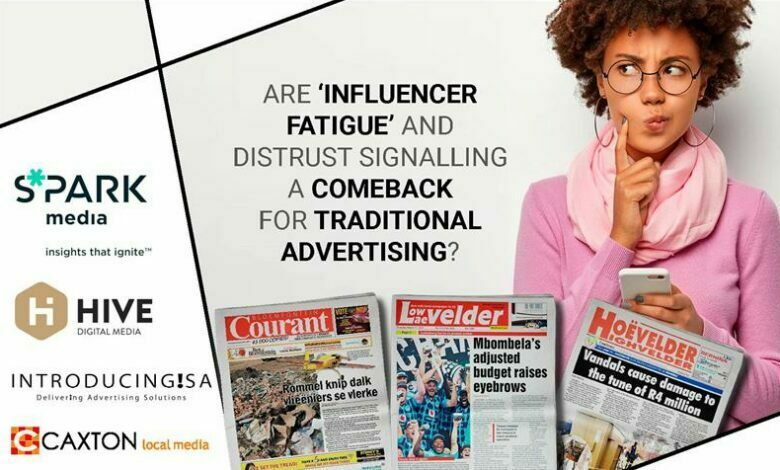
Are “influencer fatigue” and distrust signalling a comeback for traditional advertising?
Traditional advertising having been deemed unfashionable by some for the past decade, the tide may be turning for news brands as consumers begin to question the credibility of influencers and other non-traditional advertising platforms.
In an age of Tinder swindlers, inventing Annas and Fyre festivals, it is increasingly important for marketers to adapt their game plan in line with the latest consumer media habits and preferences.
A rise in distrust by consumers might mean having to strike a balance between new and innovative advertising solutions and safe or traditional advertising channels.
Influencer influx:
Global research shows consumers are not only worn down by the disingenuous ads often posted by influencers, but that there seems to be a great deal of mistrust of influencers.
When it comes to social media marketing, the UM media agency’s insights show that influencer marketing appears to be the least trusted form of marketing. This is in line with another survey by YouGov and Grey London. They attribute this to a lack of clarity and transparency; that things might not be all they seem when people are paid to place products in posts.
In 2018, Unilever, one of the world’s largest advertisers, stopped working with social media influencers who buy followers, citing unethical practices that defeat the purposes of a business choosing influencer marketing.
This raised the questions of whether influencers are knowledgeable about the brands they promote and if they follow due diligence before aligning themselves to a brand. In the recent Hello Darlings holiday fiasco, influencers who were used by the “travel agency” to promote the business, were left with their reputations in tatters. https://twitter.com/…/honest…/status/1501469292604403712
It is important for brands to remember that influencers can bring both positive and negative attention to a brand. The behaviour of an influencer can directly cause negative impressions of an associated brand, and the risk exists that consumers will associate people with brands, which rarely happens with local media. There is a direct link between the credibility of both the advertiser and the advertising medium and the impact on the audience. This is not to say that there is no space for new media and innovation. However, these days, research shows that consumers prefer non-disruptive advertising in “safe” spaces.
Caxton provides a brand-safe environment with many measures in place to ensure that we are trustworthy and unbiased when it comes to marketers’ needs.
Source: Spark Media