The answer is not at the bottom of the bottle
According to the South African National Council on Alcoholism and Drug Dependence (Sanca), about 92 per cent of alcoholics are people who have jobs and seem to be leading fairly normal lives.
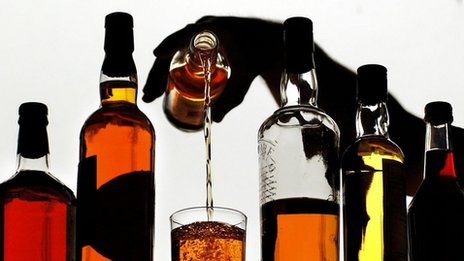
What does an alcoholic look like?
When trying to identify an alcoholic the first picture that springs to mind is the dishevelled, park-bench squatter or the beggar at the traffic light? Think again.
According to the South African National Council on Alcoholism and Drug Dependence (Sanca), about 92 per cent of alcoholics are people who have jobs and seem to be leading fairly normal lives.
“Many believe that having a drinking problem means that the person ‘looks like’ an alcoholic, can’t keep a regular job and had, hit rock bottom before needing professional help, but that is not true.
“Many alcoholics are able to ‘pretend’ to themselves and to other people that they are not addicted to anything and that they can stop whenever they want to.
“They seem to be the life and soul of the party – always ready for a good time,” according to Sanca.
But how can we accurately describe an alcoholic then? The definition Sanca favours is that an alcoholic is someone who cannot control his drinking at all times and who will therefore encounter problems in other areas of his life including marital, financial, social and health.
Differentiating between an alcoholic and social drinker is thus very important.
According to Sanca, a social drinker is always in control, whereas an alcoholic has no guarantee of being able to control the when, where and how much he/she drinks.
Also, unlike the alcoholic, the social drinker does not experience problems as a result of his decision to imbibe alcohol.
In the work situation, an alcoholic would be someone whose drinking definitely and repeatedly interferes with his job performance.
Sanca identified a few warning signs that might help you to determine whether someone might have a drinking problem.
Alcoholism warning signs
• Drinking alone or in secret
• Experiencing blackouts
• Making a ritual of having drinks before, with or after dinner and becoming annoyed when ritual is disturbed or questioned
• Losing interest in hobbies or activities that bring pleasure or not associated with alcohol
• Feeling a need or compulsion to drink
• Irritability when normal drinking time approaches, especially if alcohol is not available
• Keeping alcohol in unlikely places at home, at work or in the car
• Gulping drinks, ordering doubles, becoming intoxicated intentionally to feel good or drinking to feel normal
• Having legal problems or problems with relationships, employment or finances
• Drinking with inferiors.
What is alcohol and what does it do to your body?
According to Sancait is the chemical, ethyl, alcohol, C2H5OH, to which the alcoholic is “allergic”.
It is burned up in the body by the liver at a fixed rate and if alcohol is consumed in whaterver form – whisky, beer, gin, vodka – at a rate faster that the liver can metabolise it, intoxication is bound to result.
It takes the average drinker’s body one hour and 15 minutes to metabolise one drink.
As the amount of alcohol consumed exceeds the body’s ability to metabolise it, the user’s blood alcohol concentration increases, and he or she begins to feel the effects of alcohol intoxication.
Short-term effects
• Slowed reaction times and reflexes
• Poor motor coordination
• Blurred vision and speech
• Lowered reasoning ability or impaired judgement
• Memory loss
• Confusion, anxiety and restlessness
• Slowed breathing rate
• Heavy sweating
• Nausea and vomiting
• Dehydration
• Death from respiratory arrest.
According to Sanca, a person who consistently uses alcohol over a period of time will develop tolerance to the effects of drinking; that is, it takes progressively more alcohol to achieve the same effect.
Over time, that person may grow dependent and in some cases that can lead to a vicious cycle of addiction.
Long-term effects
Over time, heavy drinking can cause permanent damage to the user’s body and brain.
Several factors affect the severity and extent of this damage, including the drinker’s age and gender as well as the duration and extent of abuse.
The physical damage caused by sustained alcohol abuse includes
• Liver damage
• Accumulation of fat in the liver
• Cirrhosis (heavy scarring of the liver preventing flood flow – usually fatal)
• Alcoholic hepatitis – swelling of liver cells, causing blockage
• Liver cancer
• Brain damage
• Mental disorders: Increased aggression, antisocial behaviour, depression and anxiety
• Lowered cognitive abilities
• Destruction of brain cells, producing brain deterioration and atrophy
• High blood pressure
• Coronary disease – narrowing of the arteries, leading to heart attack or death
• Enlarged heart
• Irregular heartbeat, which can lead to a heart attack or death
• Stroke
• Osteoporosis – severe back pain, spine deformity and increased risk of fractures
• Pancreas damage
• Cancer: Alcoholism increases a person’s chance to develop a variety of cancers of the pancreas, liver, breasts, colon, rectum, mouth, pharynx and oesophagus
• Sexual problems: Reduced sperm count and mobility as well as sperm abnormality
• Menstrual difficulties, irregular/absent cycles and decreased fertility
• Early menopause
• Birth defects – drinking any alcohol during pregnancy can cause permanent, severe damage by putting the child at risk for foetal alcohol syndrome.
Shocking statistics in South Africa
• 6/10 drivers who die in accidents have dangerously high alcohol levels in their blood
• 70 per cent of adult pedestrians who are killed in motor accidents per year, are drunk when killed
• 1/7 drivers at night are drunk
• One single drink doubles your chances of causing an accident
• 37 per cent of South Africans binge drink over weekends – that is
14,8 million
• Only 17 000 South Africans receive treatment for addiction per year
• 60 per cent of all hospital trauma cases are the results of drunkenness.
Where to go to for help
Sanca Nelspruit: 013-752-4376, a social worker or clinical psychologist who has experience dealing with substance abuse, Alcoholics Anonymous, Lifeline, Drugwise or a rehabilitation centre or clinic near you (Sanca offices have this information).