Official addresses sanitation issues within rural communities
Two women from Mangweni received environmentally friendly double-pit toilets on March 10 during a governmental celebration of International Women's Day, with the focus on helping rural women.
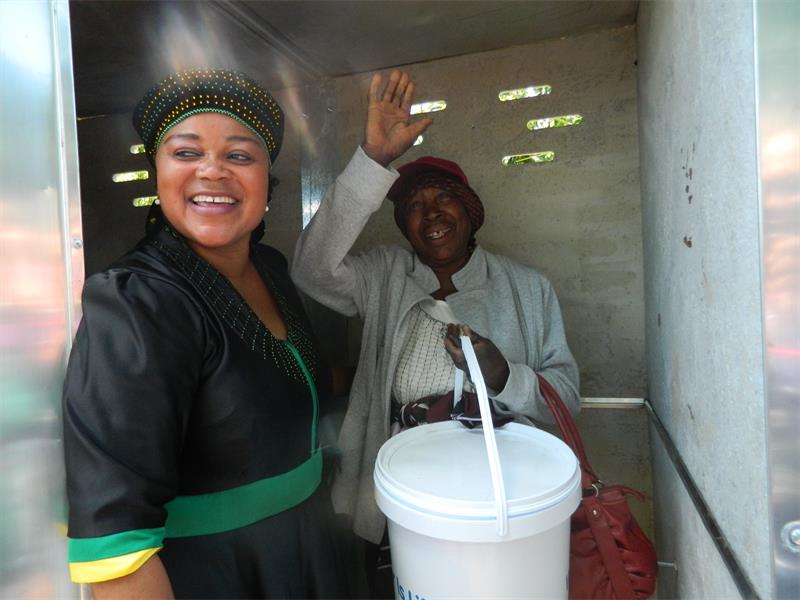
KAMHLUSHWA – The 87-year-old, Ms Selina Mazibila, and 102-year-old, Betty Marikhele, were delighted with their new sanitation facilities, which were handed over by the Department of Water and Sanitation and Nkomazi Local Municipality’s mayor, Cllr Thulisile Khoza.
The two women were thankful for the toilets.
During the main event at KaMhlushwa Stadium, Khoza highlighted the various challenges that children, women, the disabled and elderly face in their day-to-day lives.

Locals spoke about the challenges they face, especially regarding water. Thereafter they were given sanitary buckets.
Ms Nomsa Nyambi from Mzinti stated, “We do not have water at our place. They say we must draw a pipe from that other line but we will have to get several metres of pipe to get water. My request is for us to get a mainline pipe so we can connect to the water.”
“We fetch water from Madadeni using wheelbarrows. When our children come from school, we send them to fetch water, because we don’t have, ” said Ms Annah Mtseftwa from Skhwahlane.
Ms Sibongile Mahlalela from Mgobodzi explained, “We don’t have water, we are suffering. We drink with cows and donkeys. When you want water, you have to wake up very early in the morning and we find all sorts of dirt in the well where we fetch it.”
A resident from Sibange said, “Sometimes we abuse one another as neighbours. You find a home with four JoJo tanks and they use pressure pumps to pump water into those tanks. All the water goes to one home. Before there were those things we used to get water. Sometimes a person buys clamps and connect to the mainline pipe, and the water can no longer reach other places.”
The mayor urged women not to dispose of nappies in rivers as this has a very negative effect on the drinking water.
“We should also be responsible for taking care of it. All the villages carry the waste into the river. The cycle of water revolves. What we dispose carelessly, we also eat again,” said Khoza.
Dr Jennifer Molwantwa of the Inkomazi-Usuthu Cachment Management Agency said that the organisation wants to work with the community and government to keep the water clean.
“If we work together as women we can be a defeat our everyday challenges. All the issues that you have raised, government accepts them, and we will bring you answers,” Khoza concluded.