Land-reform partnerships are under scrutiny by industry leaders
Experts in the agriculture industry recently discussed land reform and practical ways how it can be implemented.
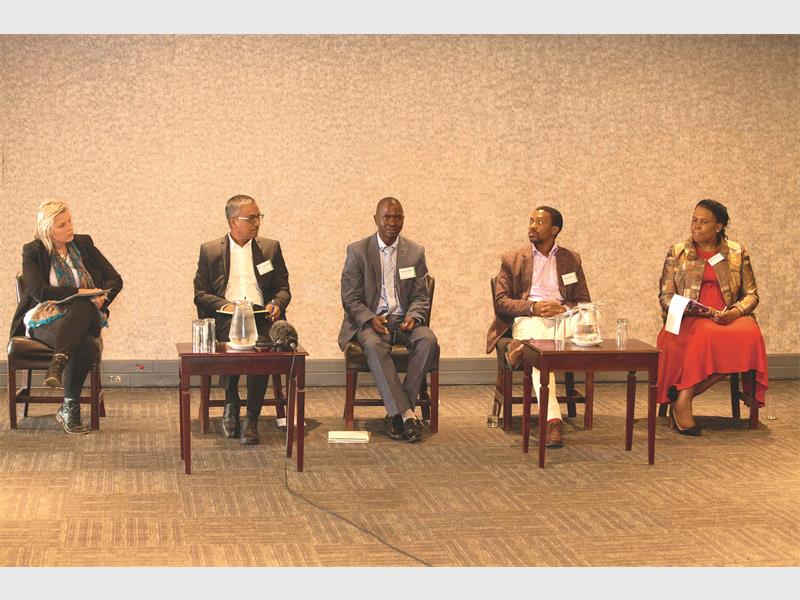
MALALANE – Land reform and land restitution have many farmers, landowners and players on the edge. While parts of the Onderberg have already gone through the land-claims process and are involved in land-reform projects, it remains a serious issue.
Last week the Vumelana Advisory Fund, a non-profit organisation, held a round-table discussion with industry leaders in Johannesburg to give stakeholders practical insight to help implement policies.
The discussions focused on partnerships for land reform and the role of the private sector and other stakeholders in fulfillingthe targets of the National Development Plan (NDP).
“We have the right plans in place, we have the right policies in place, but not all stakeholders have come to the party to ensure that these policies and plans are taken to the ground to achieve the desired results.” -Mr Peter Setou, chief executive stated.
The NDP acknowledges the important role of various models of land acquisition and redistribution to resolve the slow pace of land reform and the lack of successful implementation of policy at local level.
“With under 13 years to go until 2030, a more aggressive approach to partnerships must be taken to help government to effectively implement current land-reform policies. All parties must come on board,” Setou stated.
READ: Hundreds trespass to claim land near Kaapmuiden
According to the NDP, agriculture has the potential to expand and create an additional 1 million jobs.
While some progress has been made in the programme, research findings show that a lot more needs to be done. Industry research shows that to date only 8 million hectares of arable land have been transferred to black people, which is only 9,8 per cent of the 82 million hectares of arable land in South Africa.
It also shows that there has also been a 19 per cent decline in households involved in agriculture, from 2,9 million households in 2011 to 2,3 million in 2016.
Mr Mazwi Mkhulisi, programmes manager of Vumelana said, “Community private partnerships present a plausible solution to addressing some of the current challenges in land reform. Typically, the communities bring their land and labour and the private partner brings capital and skills to the partnership. The role of collaborations with industry players cannot be underestimated.”
According to Ms Annelize Crosby, Agri SA policy adviser on land reform, partnerships are probably the only way sustainable land reform in this country can be achieved, because neither the government nor the private sector can do it on their own.
READ: Land claimants to benefit greatly from compensation
“Financing, social facilitation and management of expectations are some of the key elements in the partnership relationship. The biggest role we can play in making land reform sustainable is ensuring that beneficiaries are part of the full value chain,” said Crosby.
Chief land claims commissioner, Ms Nomfundo Ntloko-Gobodo of the Commission on Restitution of Land Rights stated that they were looking for long-term partners because “land reform is not going to be a project that ends in 2030 or a quick-fix. It will continue to affect the next generations”.
Mr Anwhar Madhanpall of the South African Sugar Association, highlighted that the country’s sugar industry is the largest agricultural employer, representing direct employment of approximately 85 000 work opportunities, and indirect employment of an additional 350 000 jobs.
This represents 11 per cent of the total agricultural workforce in the country. Approximately 1 million people, more than two per cent of South Africa’s population depend on the sugar industry for a living. Among this percentage is a large section of Nkomazi’s population, who are dependent on sugar-cane farms, sugar mills and related businesses.
“In order to achieve transformation in land reform, we have to consistently evolve and adapt different models to the needs of the community, to adequately address their needs,” said Madhanpall.
Mr Hezekiel Nkosi of the Moletele Communal Property Association, shared some of his experiences as a beneficiary of the land-reform programme.
He highlighted that while Moletele is doing well in its partnership relationships, continuous learning about the industry and business of agriculture, as well as a hands-on approach in the process, is necessary to sustain the partnership, with trust being the key driver. ”
There needs to be a lot of information sharing with the community to create an understanding of what land ownership is about. This way, we will also effectively manage perceptions. Considerations that explore and enhance what has worked to date within land reform have the potential to assist in ensuring a successful and sustainable land-reform programme for the future,” said Setou in closing.