
Local newsNews
What is a stem cell transplant?
Mienke's mother, Verna, wrote on their Facebook, Please Pray for Mienke, on Saturday that they were considering a stem cell transplant. This after various people suggested the procedure.
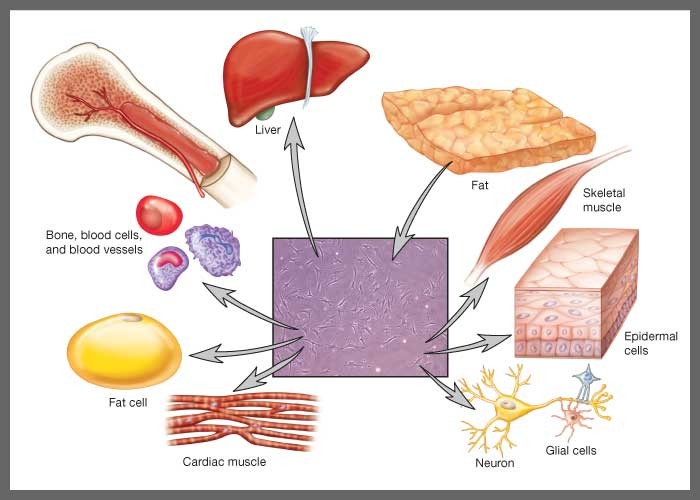
Stem cells have been known to heal some of the most complex injuries. Lowvelder approached stem–cell specialist from White River, Dr Hein van Wyk to learn more:
What are stem cells?
- They are primitive cells in the body that does repair work in the body.
- They lie dormant within the body, ready to work once activated.
- Stem cells are activated when you cut yourself or graze your knee. Blood clots form to stop the bleeding, after which stem cells get to work to close the wound.
- They have the potential to differentiate into different cell types; for example, skin, muscle and bone.

Why are they important?
- They do all the repair work and replace cells that die.
- Stem cells are only active in living animals.
- “They can be cultured and kept alive in certain labs to be used again for various reason,” said Van Wyk.
Types of stem cell transplants.
- The newest type of transplant is platelet-rich plasma (PRP)
- Your plasma, not to be confused with your television set, is the translucent “goo” that can be seen when blood has been drawn from the body.
- After it has been separated out in a centrifuge, it is transfused back into the body.
- “Stem cells are an entity on their own,” says Van Wyk. “The platelets activate the stem cells to work,” he adds.
- It is a relatively new treatment that can treat skeletal and muscular, orthopaedic and brain-related injuries.

How are stem cells harvested?
- They are harvested from the body by liposuction or bone marrow aspiration.
- The cells are removed from the fat cells or marrow and are then mixed with a growth factor and then put back into the body.
Recovery.
- Recovery is patient- and injury-dependent. For example, an athlete may never run again, despite having fully recovered physically.
- The recovery of those with brain injuries, according to Van Wyk, is dependent on the part of the brain that was affected.
- Patients with muscular injuries may see results after four to six weeks; knee injuries, two weeks; cerebral palsy, three weeks; and spinal injuries can take up to three months.
- Neurological injuries might take up to two years to recover
According to Dr Van Wyk, if nothing else helps, stem cell transplants might be the solution patients need.
At Caxton, we employ humans to generate daily fresh news, not AI intervention. Happy reading!